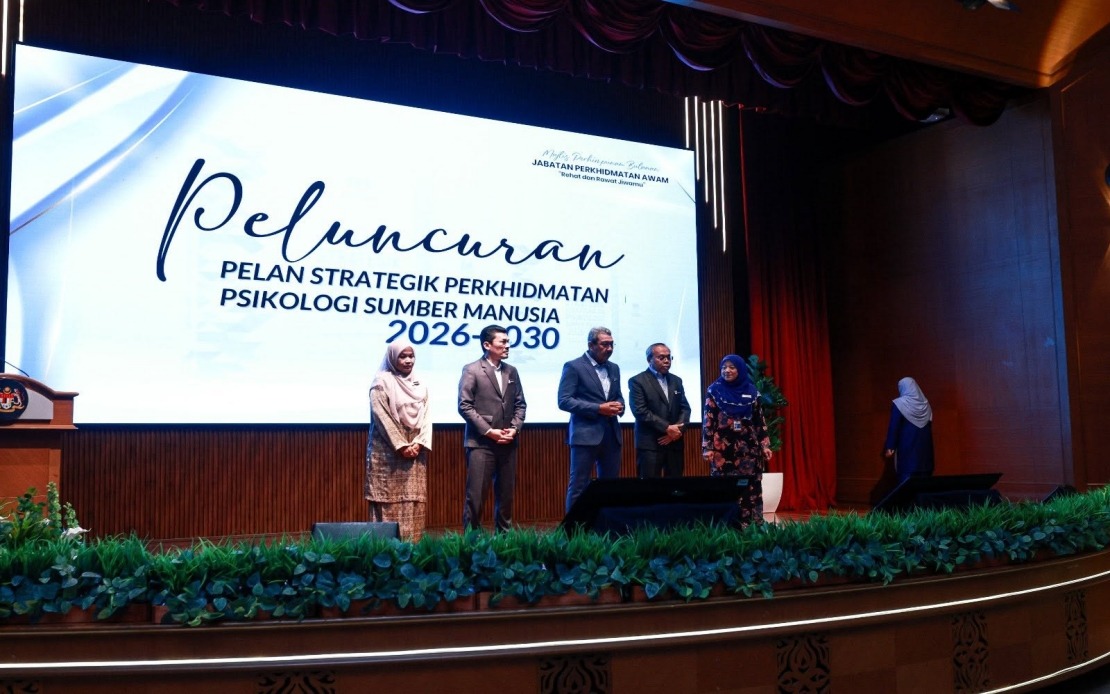
The Public Service Department has launched a comprehensive five-year strategic framework designed to elevate psychological wellness across Malaysia's civil service. Unveiled during the June 2026 PSD Monthly Assembly in Putrajaya, the Human Resources Psychology Services Strategic Plan 2026-2030 represents an institutional commitment to addressing the mental health needs of the nation's workforce. The initiative encompasses 12 integrated strategies, 22 dedicated programmes, and 48 performance indicators that will guide implementation across federal, state, and local government agencies. The plan was officially launched by Tan Sri Wan Ahmad Dahlan Abdul Aziz, Director-General of Public Service, reflecting the importance placed on this agenda at the highest levels of the civil service hierarchy.
Central to the strategic plan is a conceptual framework built on the "R&R (Rest and Treat) Your Soul" philosophy, which emphasises both recovery and proactive intervention in mental health management. The messaging prioritises psychological wellness not as a peripheral concern but as foundational to organisational effectiveness and employee satisfaction. Tan Sri Wan Ahmad Dahlan stressed that organisational success ultimately depends on the wellbeing of individual civil servants, establishing a clear causal link between employee mental health and institutional performance. This approach marks a deliberate shift away from treating psychological support as a remedial service toward positioning it as an integral component of human resource management and workplace culture.
A critical element of the plan focuses on dismantling stigma associated with seeking psychological assistance within the civil service. The "Treat" concept outlined in the strategic framework calls on civil servants to move beyond passive acceptance of mental health challenges and instead adopt active intervention strategies. This includes encouraging employees to voice concerns openly, seek professional support without fear of judgment or career repercussions, and recognise that accessing mental health services reflects wisdom rather than weakness. Historically, the civil service culture has sometimes discouraged open discussion of psychological issues, with employees fearing that such revelations might negatively impact their career progression or standing within their organisations. The new strategy directly challenges this stigma through institutional messaging and support systems.
The "Rawat" (care) concept introduced by PSD complements broader workplace reform initiatives already underway within Malaysia's public sector. Rather than existing in isolation, the psychological services plan integrates with the H.E.M.A.T work culture framework, which encompasses five pillars: governance shift, public empathy, progressive mindset, innovation appreciation, and transparent administration. This integration demonstrates that mental health support cannot be addressed independently from broader organisational culture change. The synergy between psychological wellness initiatives and the H.E.M.A.T framework suggests that leadership recognises interconnected challenges within the civil service and is attempting a comprehensive rather than fragmented approach to reform.
The scale of this initiative should not be underestimated given that Malaysia's civil service comprises over 2.3 million employees across numerous agencies and hierarchical levels. Implementing consistent psychological support services across such a vast, geographically dispersed workforce presents substantial logistical and resource challenges. The 22 programmes outlined in the strategic plan must be tailored to accommodate different agency contexts, employee demographics, and regional variations in resource availability. The 48 key performance indicators will be essential for tracking whether the initiative achieves meaningful outcomes or remains largely symbolic. These metrics will likely include measurements of programme uptake, employee satisfaction with available services, reduction in mental health-related absences, and improvements in workplace morale indicators.
For Malaysian civil servants, the implications of this strategic plan extend beyond abstract policy frameworks. The emphasis on professional mental health support represents institutional acknowledgment that government employees face legitimate psychological pressures stemming from workload, workplace dynamics, career uncertainty, and external stressors. Civil servants in Malaysia often navigate complex bureaucratic environments where decision-making authority is unclear, resources are constrained, and political pressures influence operational priorities. These structural conditions can contribute to anxiety, burnout, and psychological distress. By establishing formal mechanisms for psychological support, the PSD is creating pathways for employees to address these challenges with professional guidance rather than suffering in silence.
The timing of this initiative also reflects broader societal conversations about mental health that have gained momentum across Southeast Asia in recent years. Malaysia, like neighbouring countries, has experienced growing recognition that psychological wellbeing deserves parity with physical health in public discourse and policy attention. The civil service, as a large and visible public employer, setting formal standards for mental health support potentially creates ripple effects across other government agencies and private sector organisations that may adopt similar frameworks. When a major institution like the PSD establishes systematic approaches to psychological wellness, it legitimises mental health concerns and demonstrates practical commitment to addressing them through structured programmes rather than ad hoc responses.
Implementation will determine whether this strategic plan achieves transformative impact or functions primarily as aspirational policy documentation. The PSD must ensure that the 22 programmes are adequately resourced with trained mental health professionals, that access to services is genuinely convenient for civil servants across Malaysia's diverse geography, and that confidentiality protections are robust enough to overcome remaining stigma. Civil servants must trust that seeking psychological support will not be noted in personnel files or influence promotion decisions. Furthermore, the success metrics embedded in the 48 KPIs must be transparent and regularly communicated to demonstrate genuine progress rather than superficial compliance with targets.
The strategic plan also carries implications for how Malaysia positions itself within international conversations about public sector excellence and employee welfare. Countries increasingly compete for talent and institutional effectiveness partly through reputation for treating employees well. A government that systematically invests in mental health support for its workforce sends a signal about valuing human dignity and recognising the legitimate needs of workers. This becomes relevant as Malaysia seeks to attract and retain skilled civil servants, particularly in competitive sectors like technology, finance, and international relations where private sector alternatives offer substantial compensation advantages.
Looking forward, the success of the Human Resources Psychology Services Strategic Plan 2026-2030 will likely be measured both through quantitative performance indicators and through qualitative shifts in workplace culture within government agencies. If civil servants increasingly feel comfortable accessing psychological support, if workplace conversations about mental health become normalised, and if agency leaders actively champion psychological wellness initiatives, then the plan will have achieved meaningful cultural transformation. Conversely, if the initiatives remain largely unknown or inaccessible to the broader civil service population, or if stigma persists despite official messaging, the plan will represent another well-intentioned policy that failed to translate into substantive change for the workers it intended to support.