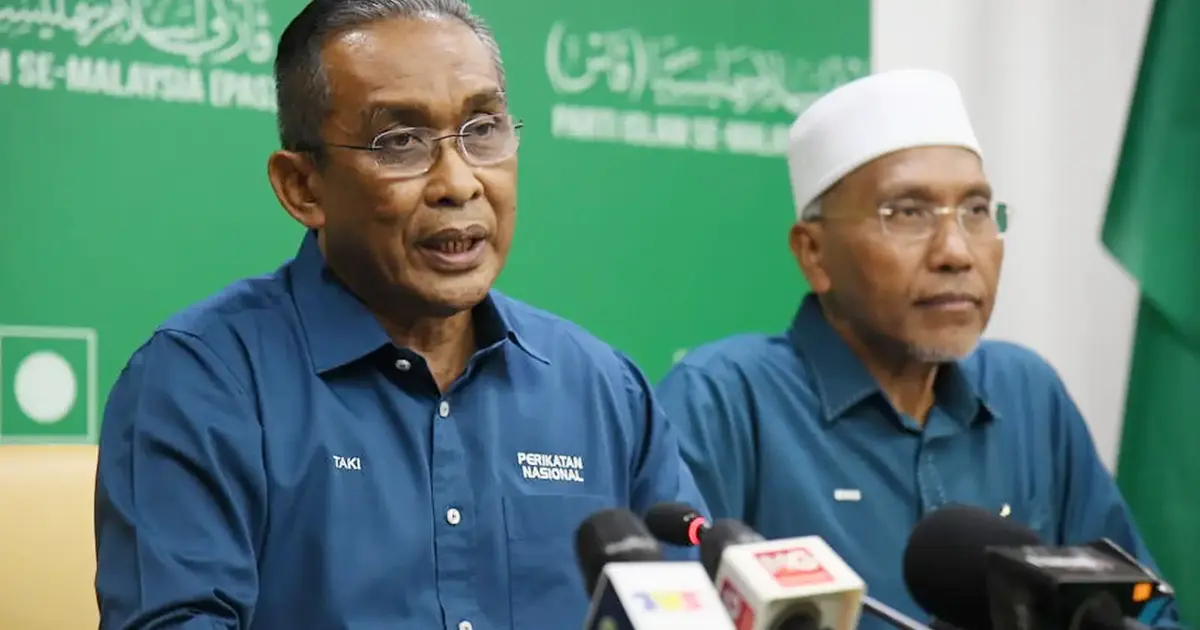
Perikatan Nasional's top administrative official has issued a decisive directive establishing unprecedented control over the coalition's internal proceedings, declaring that no meetings or organised events can take place without explicit authorisation from the chairman. This pronouncement, made by the coalition's secretary-general, arrives in the wake of reports suggesting Bersatu president Muhyiddin Yassin had sought to summon a PN Supreme Council gathering for today, raising questions about decision-making protocols and the distribution of power within the three-year-old political alliance.
The move represents a significant centralisation of authority within PN's institutional framework, potentially reshaping how the coalition operates at its highest levels. By vesting unilateral approval rights in the chairman's office, the leadership has effectively created a checkpoint through which all formal gatherings must pass before proceeding. This structural adjustment signals heightened attention to procedural compliance and suggests underlying tensions regarding who holds ultimate decision-making power within the alliance's executive structure.
Takiyuddin Hassan, serving as the coalition's secretary-general, communicated this new requirement through official channels, underscoring its binding nature for all member parties and affiliated organisations. The timing of this announcement carries particular significance, arriving amid indications that the Bersatu leadership may have acted independently in scheduling a major institutional meeting without prior coordination through established command structures. Such a scenario would represent a breach of protocol that the new directive explicitly aims to prevent going forward.
The Bersatu party, which holds substantial political weight within PN as one of its founding components, has historically maintained considerable autonomy in internal matters. Muhyiddin Yassin's tenure as Bersatu president has been marked by periodic friction with other coalition stakeholders, particularly regarding strategic direction and the division of electoral seats in crucial contests. The current directive suggests a deliberate effort by PN's central apparatus to circumscribe such independent action and ensure all significant activities align with chairman-approved timelines and agendas.
For Malaysian political observers, this development illuminates the fragile equilibrium within PN, which comprises Bersatu, PAS, and Gerakan. Each component party brought distinct organisational cultures and political constituencies to the alliance when it formally coalesced in 2020. Maintaining cohesion across these disparate entities has proven consistently challenging, particularly during periods of heightened electoral competition or policy disagreement. The new governance measure appears designed to prevent individual parties from unilaterally activating coalition mechanisms in ways that might bypass consensus-building processes.
The implications for Southeast Asia's broader political landscape warrant consideration. PN represents one of Malaysia's two major political coalitions, and its internal stability directly affects the country's electoral competitiveness and governmental continuity. Excessive centralisation of decision-making authority risks alienating coalition members who retain independent political bases and voter constituencies. Conversely, insufficient coordination mechanisms can lead to strategic paralysis when swift collective action becomes necessary. The secretary-general's announcement reflects attempts to navigate this difficult terrain through formal procedural controls.
Historically, Malaysian coalition politics have demonstrated vulnerability to internal disputes that occasionally spill into public view, damaging overall credibility with voters. The PN leadership's move to impose tighter procedural discipline suggests awareness of these vulnerabilities and a determination to prevent unauthorised institutional actions that might create embarrassing public contradictions or signal disunity to the electorate. By requiring chairman approval for all major gatherings, the coalition aims to present a unified institutional face while managing inevitable internal disagreements behind closed doors.
The specific circumstances triggering this directive—Muhyiddin's apparent attempt to convene a Supreme Council session—remains noteworthy. As Bersatu president, Muhyiddin commands significant party machinery and grassroots support, yet the attempted action prompted swift clarification of rules preventing such independent manoeuvres. This dynamic suggests underlying tensions between Bersatu's interests and those of PN's central leadership, perhaps reflecting disagreements over electoral strategy, resource allocation, or the distribution of ministerial portfolios and government positions.
Going forward, PN's component parties must now route all formal gatherings through the chairman's office, creating additional administrative layers that could slow decision-making but theoretically enhance coordination. The effectiveness of this system will depend substantially on how the chairman's office interprets and applies approval authority. If wielded flexibly, such a checkpoint might genuinely facilitate better communication. If applied rigidly or perceived as discriminatory toward particular parties, it could exacerbate existing tensions and potentially destabilise the alliance when cohesion becomes most critical.
The directive also carries implications for PN's competitor coalitions, particularly the opposition Pakatan Harapan. Any perception of PN's internal governance becoming increasingly authoritarian could provide PH with rhetorical ammunition regarding democratic accountability and inclusive decision-making. Malaysian voters increasingly scrutinise how political organisations manage internal affairs, viewing such practices as indicative of broader governance philosophies. The secretary-general's announcement thus occupies space extending beyond mere procedural housekeeping into territory affecting public perceptions of coalition maturity and political legitimacy.