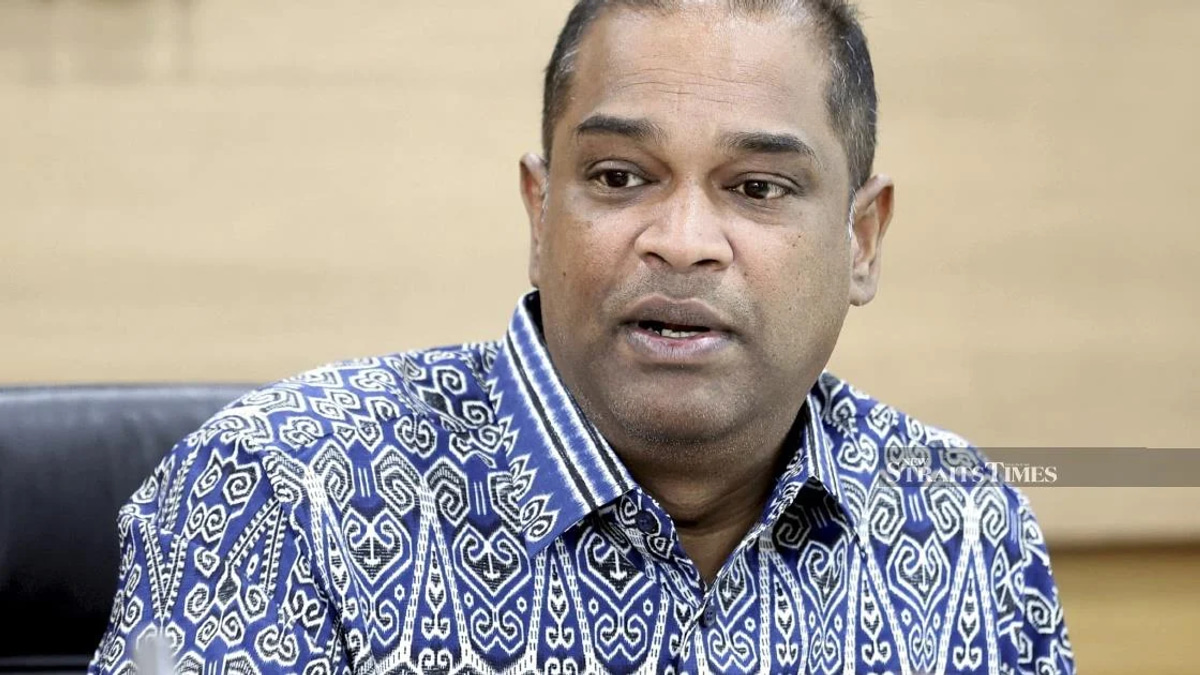
The Perikatan Nasional coalition faces a critical juncture as its leadership prepares to examine Bersatu's standing within the alliance structure. Datuk Seri Dr Ahmad Samsuri Mokhtar, who holds the position of vice-president in PAS, revealed that the PN leadership council has scheduled a significant meeting to deliberate on the trajectory and role of Bersatu within the broader opposition coalition. This announcement signals mounting tensions within an alliance that has positioned itself as a counterweight to the ruling Pakatan Harapan government.
The move reflects broader instability within the PN framework, which has served as the primary opposition grouping since the 2023 general election. Bersatu's position has become increasingly contentious as questions mount regarding its long-term commitment to the coalition and its strategic alignment with other member parties. The decision to formally discuss Bersatu's involvement suggests that leadership concerns have escalated beyond private consultations into the realm of official council proceedings.
For Malaysian political observers, the timing of this meeting carries particular significance. Bersatu, which merged with the broader PN coalition after the 2022 political realignment, has maintained a complex relationship with coalition partners. The party's leadership, drawn primarily from former UMNO figures and political defectors, has sometimes pursued trajectories diverging from PAS and other PN components. These divergences have created friction regarding coalition discipline and unified messaging on critical policy matters.
The implications of this internal discussion extend beyond mere administrative housekeeping. A strengthened or weakened Bersatu within PN would reshape the opposition's bargaining power in parliament and its capacity to challenge government legislation. Southeast Asian coalition politics frequently hinges on the stability of multi-party alliances, and Malaysia's opposition landscape demonstrates how personality-driven factions can destabilize broader political structures. Bersatu's position directly affects how effectively PN can coordinate parliamentary maneuvers and maintain consistent political pressure on the government.
PAS, as the dominant partner within PN, holds substantial influence over these discussions. The Islamic party's leadership role means its perspective on Bersatu's future carries disproportionate weight. Ahmad Samsuri's public confirmation of the meeting suggests that PAS has moved beyond preferring quiet resolution and now views the matter as requiring formal council attention. This escalation indicates that underlying disagreements have become impossible to manage through conventional behind-the-scenes negotiations.
Regional political stability often depends on opposition coalitions maintaining sufficient coherence to function as meaningful checks on executive power. Malaysia's three-tier government system, encompassing federal, state, and local dimensions, means that coalition fractures at the national level reverberate across multiple governance levels. Should Bersatu's position within PN become untenable, the consequences would extend to state governments where PN holds sway and influence local political dynamics.
The broader context includes recent political realignments at both federal and state levels that have tested coalition bonds. Defections, state-level power-sharing arrangements, and periodic negotiations between rival coalitions have kept Malaysian politics in flux. Bersatu's role in these shifting dynamics has proven delicate, requiring the party to maintain coalition commitments while exploring potential alternative arrangements that might enhance its political leverage.
International observers tracking Southeast Asian governance have noted how coalition stability often determines a nation's political predictability. Malaysia's experience demonstrates how multi-party coalitions can either provide robust democratic competition or devolve into personality-driven factionalism. The PN leadership council's decision to formally address Bersatu's position reflects a recognition that allowing ambiguity to persist would further undermine coalition coherence.
For Malaysian business and investor communities, political stability remains a critical consideration in policy planning. Coalition dysfunction risks creating policy uncertainty that affects economic decision-making. The PN leadership's willingness to confront internal difficulties directly suggests an attempt to stabilize the opposition bloc and provide clearer signals regarding its governance intentions should it return to power.
The discussion also carries implications for PAS's political strategy. As Malaysia's largest opposition party by parliamentary representation, PAS must balance inclusive coalition-building with protection of its core interests and policy priorities. Managing Bersatu's participation without alienating other coalition members represents a delicate balancing act that requires skilled political navigation.
Regional observers will watch whether this meeting produces concrete outcomes or functions primarily as a pressure-relief mechanism for accumulated tensions. Coalition governance in Southeast Asia frequently involves periodic confrontations followed by renewed commitments to unity, often without substantive structural change. Malaysia's PN faces the challenge of either reforming its internal mechanisms to prevent recurrent crises or accepting that periodic ruptures represent the cost of maintaining a multi-party alliance.
The coming weeks will reveal whether the leadership council's discussion yields meaningful resolutions regarding Bersatu's role or whether it represents another temporary settlement of deeper coalition fissures. Malaysian politics watchers will scrutinize not only the formal outcomes but also the underlying negotiations and commitments that emerge from behind closed doors.