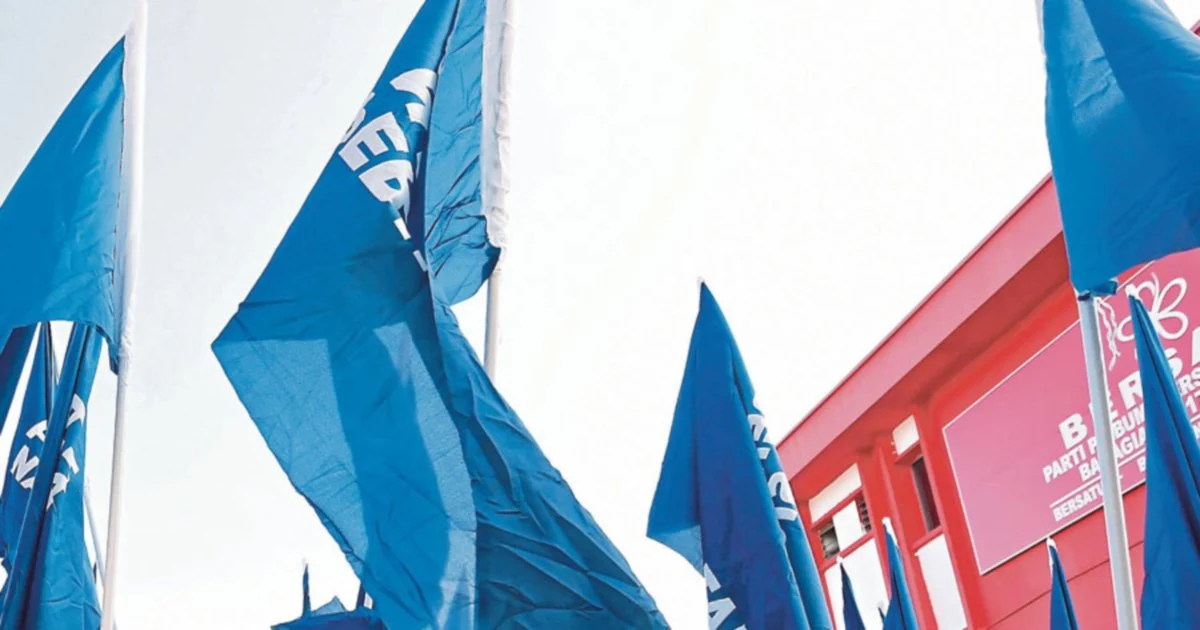
A brewing administrative dispute within Perikatan Nasional threatens to become a major headache for Bersatu ahead of upcoming electoral contests, with the coalition chairman wielding gatekeeping authority over which party candidates may contest under the PN banner. Political analysts caution that unless Bersatu secures explicit approval from Datuk Seri Dr Ahmad Samsuri Mokhtar for its roster of contenders, the party risks fielding candidates who technically lack the right to use the coalition logo, potentially invalidating candidacies or exposing the party to legal challenge.
The issue centres on procedural control of the PN symbol, one of the coalition's most valuable shared assets. In Malaysian politics, the ability to contest under a popular or established coalition logo significantly boosts electoral prospects, providing candidates with name recognition and voter familiarity accumulated over time. Without it, Bersatu would face the prospect of running candidates as independent representatives or under its own party symbol, a material disadvantage in closely contested races where coalition branding proves decisive.
This situation exposes the underlying fragility of Perikatan Nasional as a governing alliance. Though formed in the aftermath of the 2022 political upheaval that removed Pakatan Harapan from federal power, the coalition has always suffered from structural tensions. Bersatu, despite its crucial role in catalysing the transition to the current government, has found itself in a subordinate position relative to stronger coalition partners, particularly in negotiations over seat allocation and resource distribution. The logo control dispute represents a crystallisation of these broader power imbalances.
Datuk Seri Dr Ahmad Samsuri Mokhtar's position as coalition chairman grants him formal authority to vet candidate nominations, a seemingly administrative function that carries substantial political weight. In practice, this means PN candidates must obtain his blessing before contesting, a requirement that can be weaponised in internal coalition disputes. For Bersatu, already navigating complicated relationships with PAS, UMNO, and smaller PN members, the prospect of having its electoral ambitions subject to another party's chairman's discretionary approval creates vulnerability.
The implications extend beyond Bersatu's immediate electoral fortunes. If the logo row escalates without resolution, it could trigger constitutional or legal challenges regarding the validity of candidate nominations and election results themselves. Electoral commissions across Malaysia may be forced to intervene to clarify whether candidates standing under contested logos possess legitimate authorisation. Such uncertainty would destabilise campaigns and potentially generate litigation after polling concludes, precisely the kind of post-election chaos that weakens government legitimacy and public confidence in democratic processes.
For Malaysian voters watching these developments, the situation underscores a critical reality about coalition politics in the country. Electoral alliances like Perikatan Nasional are notoriously fragile arrangements, dependent on the goodwill of multiple parties whose long-term interests frequently diverge. The existence of unresolved procedural questions about logo usage at such a late stage suggests that coalition leadership has failed to establish clear, binding protocols for governing internal disputes. This institutional weakness could become increasingly consequential as elections approach and stakes rise.
Bersatu faces a strategic choice between accepting whatever conditions Ahmad Samsuri Mokhtar imposes to secure logo access, or risking electoral isolation by refusing to capitulate to what party leaders might perceive as overreach by the coalition chairman. Neither option proves particularly appealing. Capitulation damages party autonomy and sets dangerous precedent for future disputes, whilst defiance could result in electoral catastrophe if candidates are barred from using the PN symbol. This bind illustrates why smaller coalition partners frequently feel squeezed within Malaysian political alliances.
The broader Perikatan Nasional apparatus must weigh the costs of allowing this dispute to fester. Every day spent negotiating logo control is a day not spent on unified campaign messaging or policy coordination. Coalition unity matters enormously to voter perception, and public awareness of internal friction undermines the very electoral brand the PN is attempting to protect through logo control protocols. If Ahmad Samsuri Mokhtar's exercise of gatekeeping authority is perceived as heavy-handed or arbitrary, the entire coalition could suffer reputational damage.
From a Malaysian governance perspective, this situation raises uncomfortable questions about how coalitions should be structured to prevent such bottlenecks. The current arrangement, where one figure holds unilateral authority over candidate approval for a shared electoral symbol, creates concentrated power that lacks adequate checks or transparency mechanisms. Best practice would involve coalition-wide procedures for candidate vetting, with clear criteria and dispute resolution mechanisms that prevent any single chairman from wielding veto authority over another partner's nominees.
Regional observers note that similar coalition governance challenges plague political alliances across Southeast Asia. From Indonesia's complex coalition arrangements to Thailand's post-coup coalition governments, the problem of managing multiple parties sharing electoral symbols while maintaining institutional order remains perpetually difficult. Malaysia's experience navigating this particular PN dispute could offer instructive lessons, whether positive or cautionary, for neighbouring democracies grappling with coalition politics.
As these negotiations proceed, the clock ticks relentlessly toward election season. Without swift resolution establishing clear authority, transparent procedures, and binding arbitration mechanisms for logo disputes, Bersatu and Perikatan Nasional risk allowing administrative chaos to determine electoral outcomes. For Malaysian democracy, the real concern extends beyond any single party's candidacy list to the broader question of whether Malaysia's political institutions can effectively govern themselves during moments of stress. The PN logo row, seemingly technical and procedural, ultimately tests the coalition's institutional maturity and commitment to rules-based governance.
%22%2F%3E%3C%2Fpattern%3E%3C%2Fdefs%3E%3Crect%20width%3D%22100%25%22%20height%3D%22100%25%22%20fill%3D%22url(%23ph5cnuzg)%22%2F%3E%3Crect%20width%3D%22100%25%22%20height%3D%22100%25%22%20fill%3D%22url(%23ph5cnuzp)%22%2F%3E%3Ctext%20x%3D%2250%25%22%20y%3D%2250%25%22%20text-anchor%3D%22middle%22%20dominant-baseline%3D%22central%22%20fill%3D%22rgba(255%2C255%2C255%2C0.95)%22%20font-family%3D%22Georgia%2C%20'Times%20New%20Roman'%2C%20serif%22%20font-weight%3D%22700%22%20font-size%3D%22170%22%20letter-spacing%3D%22-0.02em%22%3EMalaysia%3C%2Ftext%3E%3C%2Fsvg%3E)