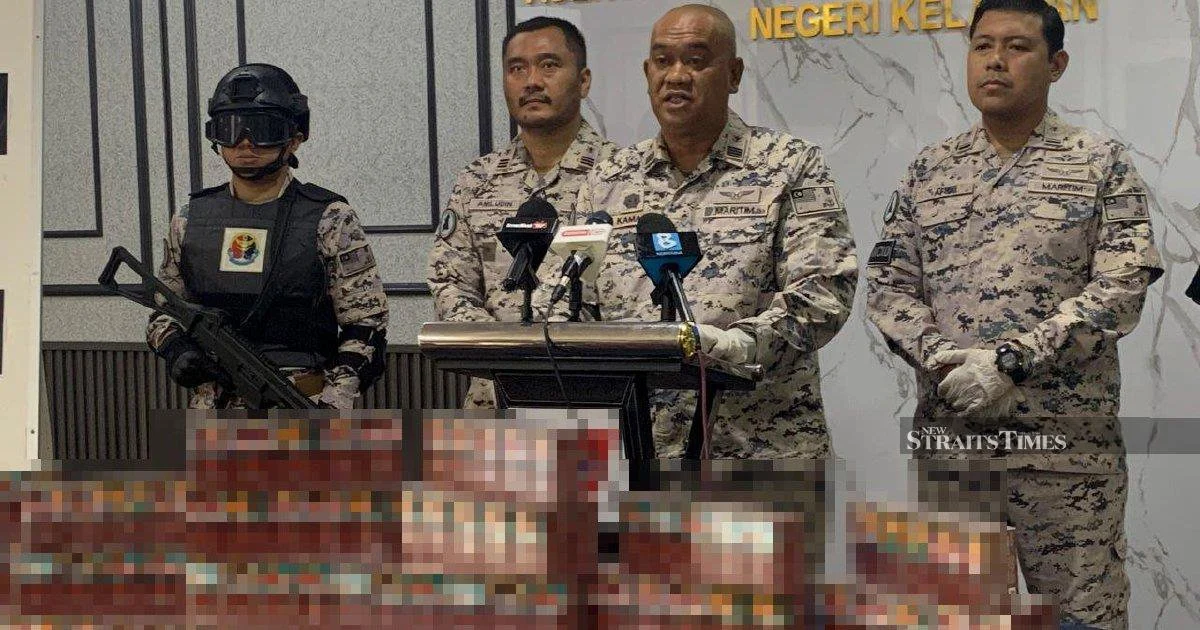
The Malaysian Maritime Enforcement Agency (MMEA) has dismantled a smuggling operation in Kelantan, impounding 24 boxes of illegal cigarettes valued at roughly RM212,000 during a routine patrol in the Pasir Puteh district. The seizure at Kampung Penambang underscores the persistent challenge of contraband tobacco trafficking along Malaysia's waterways, a trade that has long threatened government revenue and fuelled organised criminal networks across the region.
Operations targeting cigarette smuggling remain a central pillar of MMEA enforcement activities, particularly across East Coast states where waterborne routes provide smugglers with relatively discreet pathways into Malaysian territory. The seizure of large consignments like this latest haul represents one element of a broader cat-and-mouse dynamic between law enforcement agencies and traffickers who exploit gaps in maritime surveillance and porous coastal entry points.
The Kelantan coastline and its river systems have historically served as transit zones for contraband goods destined for Malaysian and regional markets. The ease with which illicit items can be moved by boat—circumventing established border checkpoints and land-based inspection infrastructure—makes maritime interdiction operations increasingly critical. MMEA patrols in areas like Pasir Puteh aim to disrupt these networks before contraband reaches distribution chains.
Cigarette smuggling generates substantial profits for criminal syndicates because legitimate tobacco products in Malaysia attract significant excise duties, creating large price differentials between domestic and neighbouring markets. Contraband cigarettes undersell legitimate brands considerably, capturing market share whilst depriving the government of tax revenue. In recent years, illicit tobacco trade has been estimated to represent billions of ringgit in lost national revenue annually, a figure that compounds existing fiscal pressures.
The seizure also carries broader implications for public health policy in Malaysia. Smuggled cigarettes typically circumvent quality controls and packaging regulations mandated domestically, potentially exposing consumers to substandard products whilst undermining tobacco control messaging printed on legal packaging. Furthermore, the economic incentive structure created by taxation and regulation inadvertently sustains a shadow economy that enriches organised crime groups operating across maritime Southeast Asia.
MMEA's enforcement capacity in this arena reflects Malaysia's commitment to strengthening maritime security and border integrity, though observers note that sporadic seizures, whilst symbolically important, represent only a fraction of total smuggling flows. Intelligence suggests that organised syndicates operate multiple supply chains simultaneously, meaning that the disruption of one network merely displaces trafficking to alternative routes or methods. Sustained interdiction requires coordinated intelligence sharing, technological investment in surveillance systems, and enhanced inter-agency cooperation across federal and regional borders.
The timing of the Kampung Penambang operation falls within a broader pattern of enforcement activity throughout Kelantan's coastal districts. Authorities have intensified patrols in response to intelligence indicating heightened smuggling activity, particularly during seasonal periods when maritime conditions favour covert movement of goods. The seizure demonstrates that MMEA continues to operate across the state's complex waterway network, though resource constraints limit the frequency and geographical coverage of operations.
From a regulatory perspective, the confiscation adds pressure on policymakers to recalibrate tobacco taxation strategies. The wide margin between legal and illegal cigarette prices creates the fundamental economic driver for smuggling; narrowing this gap through tax adjustments might reduce incentives for contraband trafficking, though such measures invariably attract controversy from health advocates and generate complex trade-offs around government revenues and consumer affordability.
Investigations into the origin and intended destination of the seized consignment remain ongoing, though preliminary assessment suggests the cigarettes were destined for domestic retail distribution rather than regional onward shipment. This pattern underscores how smuggling networks target Malaysian consumers directly, competing aggressively with legitimate retailers and undermining the regulated market structure that governments attempt to maintain through taxation and licensing frameworks.
The MMEA seizure also reflects broader regional challenges facing customs and maritime authorities across Southeast Asia, where relatively limited patrol resources must cover vast coastal territories. Kelantan's position on the central east coast means it lies at a geographic intersection where multiple smuggling routes converge, making sustained enforcement both strategically vital and operationally demanding. Intelligence coordination with Thai authorities and Indonesian maritime agencies adds another layer of complexity to regional enforcement efforts.
Looking ahead, the incident illustrates why maritime enforcement agencies remain centrepieces of Malaysia's anti-smuggling apparatus despite emerging challenges from evolving criminal tactics. As syndicates adapt their methods—employing smaller, faster vessels or shifting to different commodities—the nature of enforcement operations must similarly evolve. The Kelantan operation represents one engagement in an ongoing struggle to maintain supply chain integrity and protect legitimate commercial interests in the region.