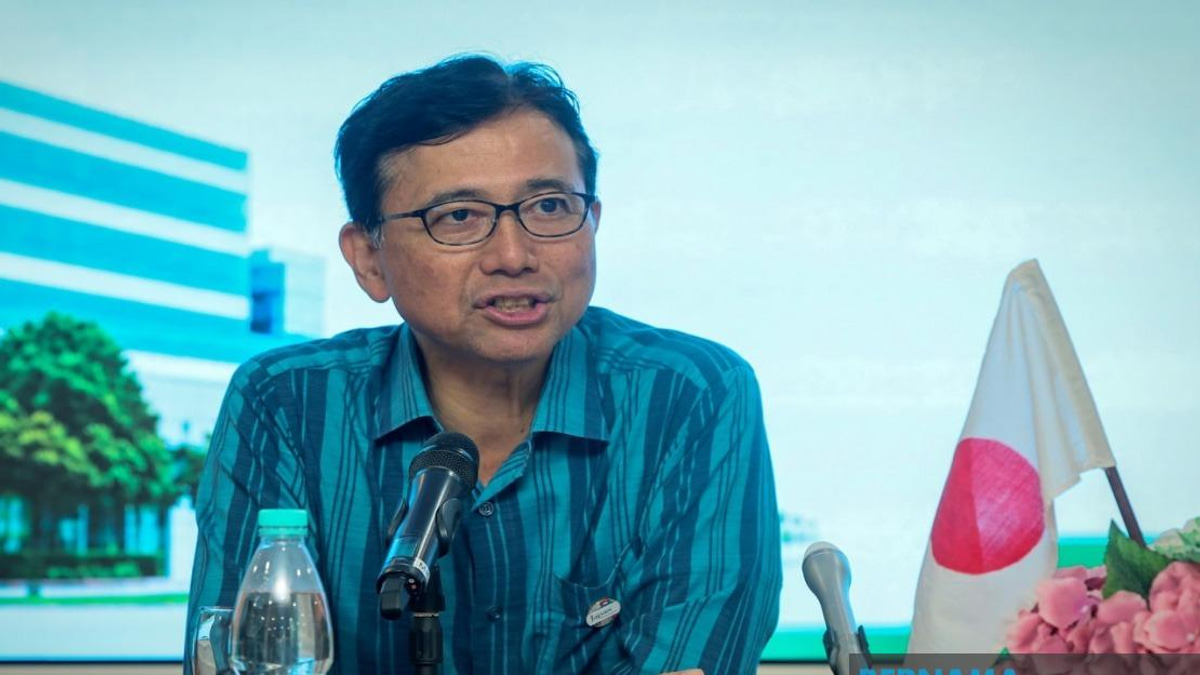
The Armed Forces Veterans Affairs Corporation (PERHEBAT) has joined forces with the National Entrepreneurship Institute (INSKEN) to roll out an ambitious new scheme designed to elevate military veterans into successful business owners. The ATM Veteran Entrepreneur Empowerment Program (PUVET ATM) Master Class, unveiled in Petaling Jaya, represents a significant shift in how the government supports this community's economic advancement. The pilot initiative explicitly targets 180 veteran-led small businesses and microenterprises, with the stated ambition of nurturing them into millionaire-status operations within the coming years.
Datuk Amir Md Noor, PERHEBAT's director-general, articulated the programme's core philosophy during the launch: transforming veterans into wealth creators rather than merely providing temporary employment relief. This aspiration goes beyond conventional skills training, reflecting a broader policy commitment to ensure military retirees achieve sustainable, high-return business ventures. The collaboration with INSKEN signals a deliberate choice to leverage specialised entrepreneurial expertise rather than rely solely on in-house capacity, underscoring the seriousness with which the authorities are treating veteran economic empowerment.
The PUVET ATM Master Class distinguishes itself through its rigorous three-month implementation structure. Rather than one-off seminars or theoretical workshops, participants undergo continuous individual coaching with certified trainers who monitor sales performance and provide strategic guidance throughout the programme. This hands-on methodology addresses a critical weakness Amir identified in PERHEBAT's earlier approach: the gap between classroom learning and real-world business execution. By embedding field-based monitoring and performance tracking, the new scheme promises more tangible, measurable outcomes for enrolled veterans.
The emphasis on Bumiputera equity development adds another significant dimension to the initiative. Beyond helping individual veterans achieve financial success, PERHEBAT explicitly designs the programme to strengthen Bumiputera participation in the broader market economy. This aligns with long-standing government policy to ensure indigenous Malaysian business ownership remains robust and competitive, particularly in small and medium enterprise sectors where veteran entrepreneurs often concentrate their operations.
The track record of predecessor initiatives provides a solid foundation for optimism. Since launching the ATM PUVET scheme in 2023, PERHEBAT has successfully extended funding to 313 veteran entrepreneurs across Malaysia through the Rural Entrepreneurship Strengthening Support Grant (SPKLB). The RM1.6 million in grant injections distributed to date demonstrates substantial government commitment to resourcing these programmes. This funding support, coordinated across PERHEBAT, the Ministry of Rural and Regional Development (KKDW), and MARA, reveals a whole-of-government approach to tackling veteran economic integration.
The broader PERHEBAT Transformation Plan 2026-2035 provides encouraging context for the Master Class launch. Through May of this year, the organisation had successfully placed veterans into 1,224 job opportunities, with 631 securing positions in high-performing sectors offering monthly salaries between RM2,500 and RM5,000. While employment placement remains important, the shift toward entrepreneur empowerment signals recognition that sustainable prosperity for veterans requires ownership pathways, not merely wage employment. The Master Class represents the next frontier of this strategic evolution.
For Malaysia's veteran community, this programme addresses a longstanding challenge: translating military discipline and training into commercially viable enterprises. Many veterans possess leadership capabilities, work ethic, and resilience developed through service, yet lack exposure to contemporary business practices, market dynamics, and strategic planning disciplines. The INSKEN partnership brings structured frameworks for translating these inherent strengths into profitable operations, potentially unlocking significant economic value within this demographic.
The regional implications extend beyond Malaysia's borders. Southeast Asian nations grapple with similar challenges of veteran economic integration and social stability. Malaysia's systematic approach to creating entrepreneurial pathways rather than relying on pension systems or make-work employment schemes offers a potential model for regional peers. Success with the PUVET ATM Master Class could inform replication efforts across ASEAN, particularly in countries with substantial veteran populations facing post-service economic uncertainty.
From a business ecosystem perspective, channelling veteran entrepreneurs into structured development programmes also creates downstream benefits. As these enterprises mature and scale, they generate employment for non-veteran communities, contribute tax revenue, and develop supply chain relationships with larger corporate entities. The multiplier effects of 180 successfully launched or expanded veteran businesses extend well beyond the immediate participant cohort, potentially enriching entire local economies where these entrepreneurs operate.
The millionaire aspiration articulated by PERHEBAT leadership merits careful examination. While inspirational, achieving millionaire status requires not just training and funding but also market access, supply chain integration, and customer networks that established businesses control. The Master Class's success will ultimately depend on whether INSKEN can facilitate such connections, helping veteran entrepreneurs graduate from classroom confidence to marketplace credibility. Without addressing these structural barriers, even the most intensive coaching risks producing competent business managers rather than genuinely transformative wealth creation.
Looking ahead, the PUVET ATM Master Class represents a maturing approach to veteran affairs in Malaysia. Rather than treating military retirees as a welfare burden, the government increasingly positions them as potential economic contributors and wealth creators. This reframing carries psychological and practical significance: it restores dignity, channels productive energy, and leverages existing capabilities toward sustainable outcomes. Success metrics will matter tremendously for programme credibility, requiring transparent tracking of business survival rates, revenue growth, and profitability among cohorts as they move beyond the initial three-month intensive phase.