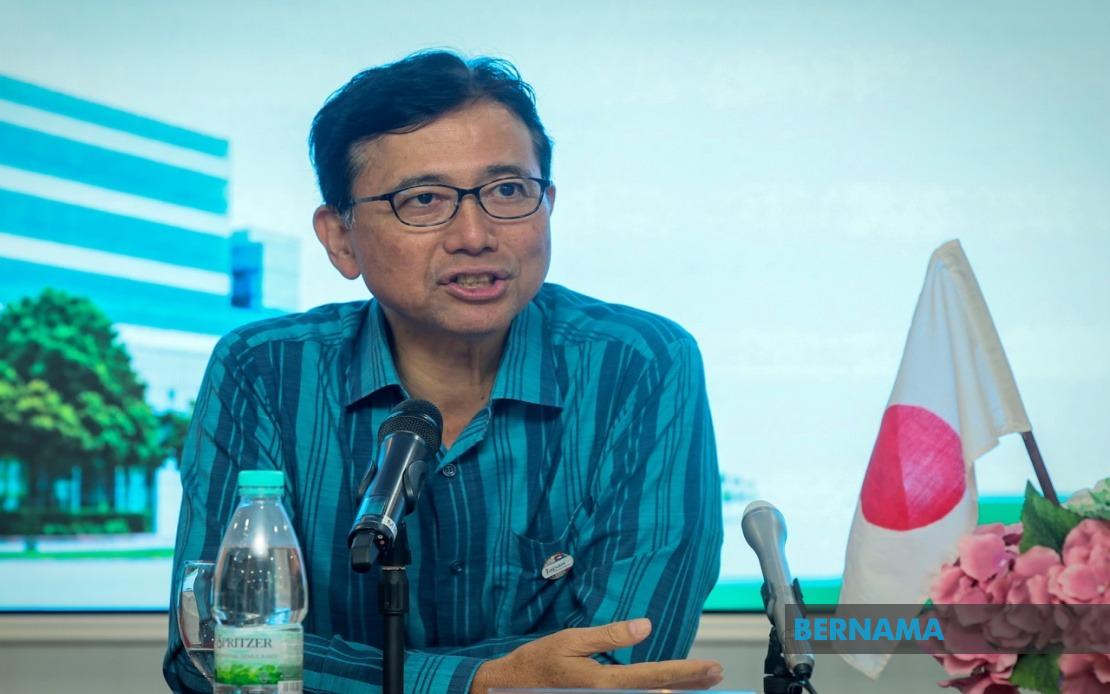
Japan's recalibrated approach to regional engagement, articulated through its updated Free and Open Indo-Pacific framework, provides a strategic counterpart to Malaysia's push to establish itself as Southeast Asia's leading technology and digital innovation centre. Japanese Ambassador to Malaysia Noriyuki Shikata outlined this convergence in remarks highlighting how Prime Minister Sanae Takaichi's May announcement of the refreshed FOIP directly complements domestic Malaysian objectives around economic modernisation and tech-sector development.
Originally introduced by former Prime Minister Shinzo Abe in 2016 as a geopolitical vision emphasising regional peace and economic stability, Japan's Indo-Pacific strategy has evolved considerably. The updated framework now prioritises concrete capacity-building initiatives and collaborative advancement in transformative sectors including artificial intelligence, secure data management infrastructure, submarine cable networks and satellite communications systems. This shift towards pragmatic, actionable measures signals Japan's recognition that regional prosperity depends on co-investment in next-generation technologies rather than abstract strategic principles.
The revamped vision represents what Shikata termed a substantive progression beyond the original concept, moving away from broad aspirational language towards tangible economic security measures and industrial resilience-building. Crucially, this reorientation towards collaboration with Global South economies like Malaysia directly mirrors principles enshrined in ASEAN's own Outlook on the Indo-Pacific, suggesting genuine alignment between Japanese strategic thinking and regional priorities rather than external imposition of values.
Backing this framework is a significant US$10 billion financial commitment channelled through the POWERR Asia initiative, which specifically targets ASEAN member states' energy security needs. The programme addresses critical infrastructure concerns including fuel procurement mechanisms, strategic energy reserves and diversification of supply chains for essential materials. For Malaysia and its peers, this represents tangible financial support for foundational challenges that frequently impede broader technological advancement.
From an investor perspective, the framework creates conditions that Japanese business interests find increasingly attractive. The combination of strengthened institutional frameworks, commitment to data security standards and regional stability measures provides foreign enterprises with more predictable operating environments. This encourages Japanese corporations already active in Malaysia to reconceptualise their investment strategies, moving beyond conventional assembly-line manufacturing towards intellectually demanding sectors such as advanced semiconductor packaging, artificial intelligence infrastructure development and enterprise cloud computing solutions.
Malaysia's established position within global semiconductor supply chains positions it favourably within this recalibrated partnership architecture. Japanese technology firms have identified Malaysian operations as suitable sites for expanding capabilities in advanced chip assembly, testing and packaging—segments commanding significantly higher margins and technical sophistication than traditional assembly work. The ambassador specifically highlighted Japanese industry eagerness to deepen Malaysian involvement in these higher-value manufacturing tiers, recognising local capabilities and infrastructure readiness.
The bilateral relationship between Japan and Malaysia has formalised this technological cooperation through the Comprehensive Strategic Partnership established in December 2023. This framework deliberately transcends the historical Look East Policy framework that characterised earlier bilateral relations. Instead, it emphasises innovation-driven collaboration, knowledge-sharing mechanisms and joint development of emerging technologies—positioning the partnership as fundamentally about future-oriented advancement rather than replicating past industrial models.
Recent high-level Malaysian delegations to Japan have underscored this directional shift. Prime Minister Datuk Seri Anwar Ibrahim's meetings with major Japanese industrial entities including Mitsubishi Corporation, ENEOS, DENSO, IBM and Marubeni indicated serious intent to establish concrete technology partnerships. These engagement sessions clarified Malaysia's industrial development priorities and identified specific collaboration opportunities aligned with both nations' strategic interests, effectively translating diplomatic frameworks into actionable business propositions.
Immediate practical collaborations are anticipated to focus on joint artificial intelligence and quantum computing development initiatives, leveraging Japanese technological sophistication alongside Malaysia's emerging innovation ecosystem. Beyond pure technological development, bilateral initiatives are expected to emphasise critical infrastructure protection and supply chain security—acknowledging that technological advantage means little without resilient, protected operational systems capable of withstanding geopolitical disruptions.
For Malaysian policymakers and business leaders, this partnership represents acknowledgement from a major technological power that the country merits investment in high-technology sectors rather than continued reliance on lower-value manufacturing activities. Japanese companies' willingness to establish regional centres for semiconductor advancement, data security operations and AI research reflects genuine confidence in Malaysian capabilities and market positioning.
The alignment between Japanese strategic thinking and Malaysian regional objectives carries implications extending beyond bilateral relations. It suggests that advanced economies recognise ASEAN members as appropriate partners for sophisticated technological collaboration rather than merely manufacturing outposts, potentially encouraging similar approaches from other technology-advanced nations. This could accelerate Malaysia's transition towards innovation-driven economic models.
The FOIP framework's emphasis on secure data flows and regional digital infrastructure directly addresses concerns that have constrained Malaysia's digital transformation ambitions—namely questions about data sovereignty, cybersecurity standards and technology resilience. Japanese support for developing these foundational capabilities removes significant obstacles to Malaysia's digital hub aspirations, providing both technical expertise and financial resources for infrastructure development.
Ultimately, Japan's repositioned Indo-Pacific strategy and Malaysia's digital transformation ambitions represent complementary rather than competing priorities. The Japanese ambassador's characterisation of this partnership as entering a new transformative chapter reflects substantial commitment extending well beyond traditional economic relationships, positioning both nations to navigate emerging global technological and geopolitical complexities through deepened cooperation.


%22%2F%3E%3C%2Fpattern%3E%3C%2Fdefs%3E%3Crect%20width%3D%22100%25%22%20height%3D%22100%25%22%20fill%3D%22url(%23ph2dfp0g)%22%2F%3E%3Crect%20width%3D%22100%25%22%20height%3D%22100%25%22%20fill%3D%22url(%23ph2dfp0p)%22%2F%3E%3Ctext%20x%3D%2250%25%22%20y%3D%2250%25%22%20text-anchor%3D%22middle%22%20dominant-baseline%3D%22central%22%20fill%3D%22rgba(255%2C255%2C255%2C0.95)%22%20font-family%3D%22Georgia%2C%20'Times%20New%20Roman'%2C%20serif%22%20font-weight%3D%22700%22%20font-size%3D%22272%22%20letter-spacing%3D%22-0.02em%22%3EPerak%3C%2Ftext%3E%3C%2Fsvg%3E)