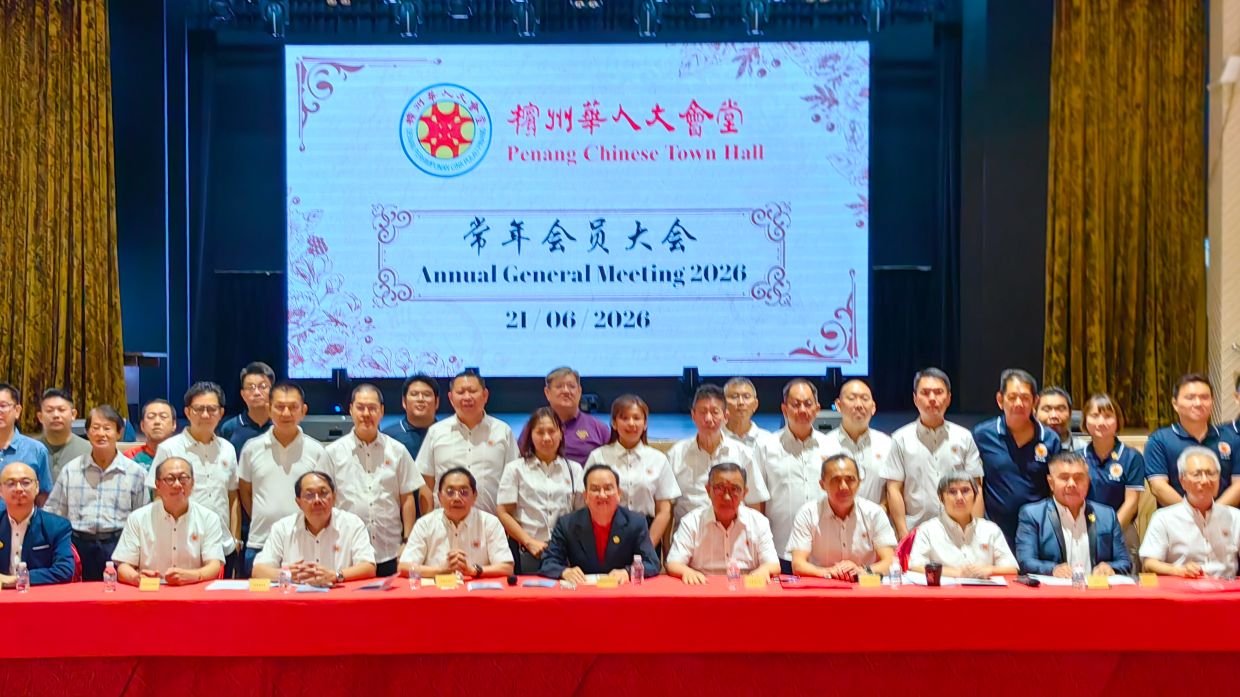
Penang Chinese Town Hall (PCTH) concluded its 2025 financial year in solid standing, bringing in RM12.61mil against spending of RM12.55mil for a narrow surplus of RM59,191, according to figures presented at the organisation's recent annual general meeting. The modest surplus reflects a carefully balanced operational budget, though it underscores the ongoing financial pressures facing community organisations navigating volatile economic conditions and shifting philanthropic patterns across Malaysia.
Contributions from donors formed the lifeblood of PCTH's finances, delivering RM11.24mil or nearly 89 per cent of total revenue. This heavy reliance on philanthropic support highlights the critical role that community generosity continues to play in sustaining major civic institutions, particularly those serving established ethnic communities in urban centres. Supplementary income streams proved relatively modest, with rental and maintenance fees contributing RM439,671, auditorium rentals generating RM361,245, and anniversary-related receipts accounting for RM222,498. Together these ancillary revenues demonstrate the organisation's efforts to diversify income sources beyond donations alone.
Expenditure patterns reflected the organisation's fundamental mission as a community benefactor and cultural custodian. Donations distributed to causes and organisations consumed RM11.12mil or roughly 88.6 per cent of total spending, though notably this represented a significant decrease from RM12.35mil disbursed during 2024. Personnel costs climbed to RM502,625 from RM452,761 previously, reflecting wage adjustments and increased staffing requirements as the organisation expanded its operational scope and facilities.
At the gathering on June 21, which drew approximately 200 members, Tan Sri Prof Tan Khoon Hai deployed his chairmanship platform to reinvigorate civic participation among Malaysian voters. With Johor and Negeri Sembilan scheduled to conduct state elections during 2025, Tan advocated for a rational assessment of competing parties and their policy platforms rather than reflexive voting patterns. His exhortation to evaluate candidates on their demonstrated capacity to foster national unity, generate economic dynamism and preserve social harmony reflects growing concerns among community leaders about the quality of electoral engagement across Malaysia's democratic institutions.
Tan articulated an increasingly prominent view that elections function as mechanisms for long-term national trajectory rather than merely vehicle for localised improvements. This framing encourages constituents to contemplate broader governance questions and policy coherence across multiple administrative levels, a perspective that resonates with civil society organisations seeking to elevate political discourse beyond parochial concerns. For Malaysian voters, particularly those in communities with strong institutional histories, this messaging carries particular weight given PCTH's standing and the chairman's prominence in regional business and civic circles.
Physical infrastructure development featured prominently in Tan's remarks, with the chairman unveiling the extensively renovated Ping Zhang Hall at PCTH's premises. The upgraded facility now incorporates contemporary design elements and professional-grade technical infrastructure including sophisticated sound, lighting and LED systems. These enhancements position the venue as a competitive option for corporate functions, celebratory gatherings, charity events and regional conferences seeking modern facilities within Penang's established cultural precincts. The investment reflects broader trends among community organisations to upgrade premises as revenue models increasingly depend on commercial rental utilisation.
More ambitious still, PCTH announced plans to co-organise the inaugural China-Asean Artificial Intelligence Cooperation Forum scheduled for November 2026 in Penang, partnering with technology and business entities from China and across Southeast Asia. This initiative positions PCTH at the intersection of regional technological advancement and traditional community leadership, a positioning that extends the organisation's influence beyond cultural stewardship into contemporary industrial policy discourse. The forum represents calculated recognition that Penang's economic future depends substantially on its capacity to maintain competitiveness in high-technology sectors and attract regional expertise.
Tan's characterisation of Penang as the "Silicon Valley of the East" reflects the state's historical trajectory as Malaysia's premier electrical and electronics manufacturing hub, a distinction earned through decades of foreign direct investment, skilled workforce development and strategic government support. However, this designation increasingly requires affirmation through concrete initiatives demonstrating ongoing innovation capacity and regional connectivity. The proposed AI forum directly addresses this imperative by creating a platform for knowledge exchange, business relationship development and policy dialogue among regional technology leaders.
The chairman's invitation for PCTH members possessing relevant expertise to participate in forum planning and execution reflects strategic thinking about community organisation relevance in contemporary economies. Rather than remaining purely cultural institutions, community groups increasingly leverage their networks, premises and convening capacity to engage with emerging industries and policy initiatives. For PCTH, this represents an intentional broadening of institutional purpose that aligns traditional community service with forward-looking economic engagement.
Penang's position within China-Asean technological cooperation frameworks carries particular significance for Malaysia's broader regional integration strategy. As Beijing expands its technology partnerships across Southeast Asia and Malaysia navigates its economic positioning amid great power competition, initiatives like PCTH's forum provide venues for substantive dialogue beyond official government channels. For Malaysian business leaders and policymakers monitoring regional AI development, such platforms offer access to emerging trends and partnership possibilities that may shape industrial trajectories across the coming decade.
The organisation's financial resilience, facility modernisation and expansion into technology forums collectively suggest PCTH's determination to evolve alongside Malaysia's development needs. The modest 2025 surplus, though narrow, demonstrates sustainable operations despite donation-dependent financing. As community organisations across Malaysia confront questions about relevance and revenue sustainability, PCTH's multifaceted approach—balancing traditional community support, commercial facility operations and engagement with contemporary policy challenges—offers one model for institutional adaptation and continued influence within rapidly transforming regional contexts.

%22%2F%3E%3C%2Fpattern%3E%3C%2Fdefs%3E%3Crect%20width%3D%22100%25%22%20height%3D%22100%25%22%20fill%3D%22url(%23ph32hyvg)%22%2F%3E%3Crect%20width%3D%22100%25%22%20height%3D%22100%25%22%20fill%3D%22url(%23ph32hyvp)%22%2F%3E%3Ctext%20x%3D%2250%25%22%20y%3D%2250%25%22%20text-anchor%3D%22middle%22%20dominant-baseline%3D%22central%22%20fill%3D%22rgba(255%2C255%2C255%2C0.95)%22%20font-family%3D%22Georgia%2C%20'Times%20New%20Roman'%2C%20serif%22%20font-weight%3D%22700%22%20font-size%3D%22151%22%20letter-spacing%3D%22-0.02em%22%3EPerikatan%3C%2Ftext%3E%3C%2Fsvg%3E)