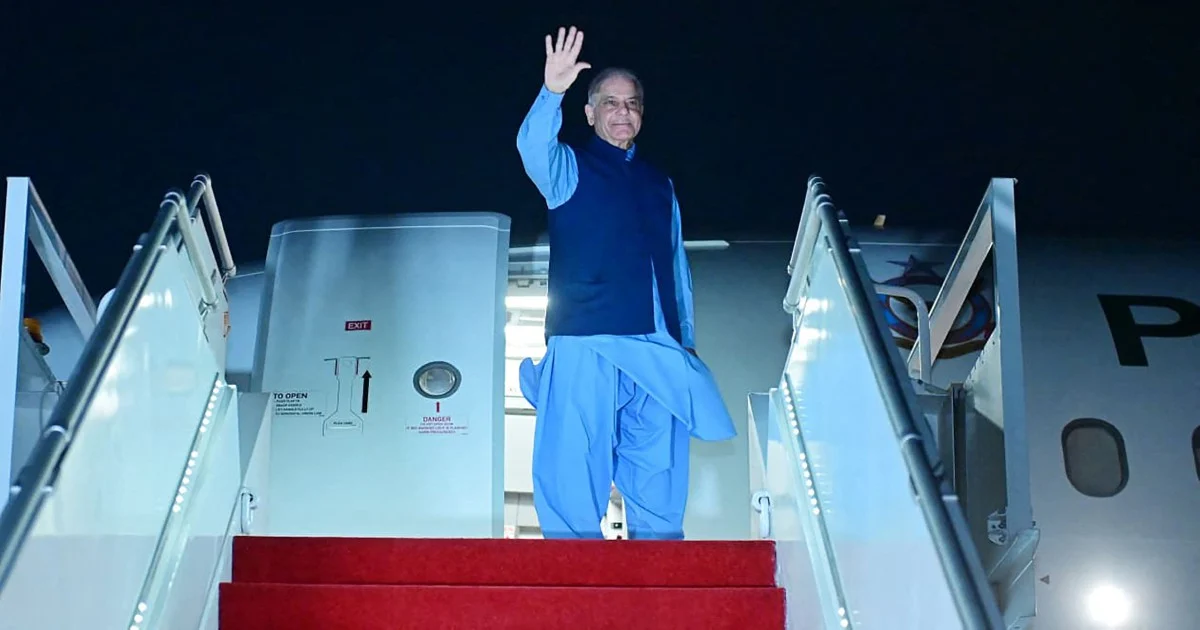
Pakistan's Prime Minister Shehbaz Sharif touched down in Switzerland on Sunday morning for a series of technical-level discussions designed to address the escalating military tensions between the United States and Iran. The arrival marks a significant diplomatic move, with Islamabad positioning itself as a potential mediator in one of the world's most volatile geopolitical disputes.
The technical talks represent a carefully calibrated diplomatic effort, distinct from formal negotiations, aimed at establishing working groups and identifying common ground on specific issues that could eventually pave the way for broader agreements. Pakistan's participation in these discussions signals the country's willingness to leverage its historical relationships with both Washington and Tehran—relationships forged through decades of complex regional engagement and competing strategic interests.
Islamabad's diplomatic positioning comes at a critical juncture in Middle Eastern affairs. The region has witnessed repeated cycles of escalation, proxy conflicts, and military confrontations that threaten regional stability and have broader implications for global energy markets and international commerce. Pakistan, as a major Muslim-majority nation with significant geopolitical influence, carries considerable weight in such multilateral discussions, particularly given its ability to communicate across different ideological and political divides.
Sharif's presence at these talks reflects Pakistan's broader regional strategy under his current administration. The government has emphasised economic stability and improved international relations as cornerstones of national development. By participating in confidence-building measures between Washington and Tehran, Islamabad seeks to position itself as a responsible stakeholder in regional peace efforts while maintaining its established relationships with both powers.
The timing of these technical discussions coincides with heightened tensions in the eastern Mediterranean and Gulf regions, where military incidents and rhetoric have raised concerns among regional observers and international stakeholders. For nations like Pakistan, the continuance of conflict in the Middle East carries tangible consequences—from refugee flows to trade disruptions to broader security implications affecting South Asia and beyond.
Technical-level negotiations offer distinct advantages over full diplomatic conferences. They allow negotiators to explore practical solutions without the public pressure and ceremonial constraints of high-level summits. These working-level discussions can examine infrastructure for verification, mechanisms for communication, and concrete measures that might reduce the likelihood of accidental escalation or military miscalculation.
Pakistan's historical role in diplomatic mediation, though sometimes overshadowed by security challenges at home, provides relevant experience. The country has previously served as a conduit for dialogue between parties with deep ideological and political differences, leveraging its unique position within the Islamic world while maintaining security partnerships with Western nations.
For Malaysian and Southeast Asian observers, the outcome of these talks carries strategic significance. Any escalation in US-Iran tensions would inevitably ripple through global energy markets, disrupt shipping lanes, and create instability affecting international commerce. The region depends heavily on stable Gulf trade routes and predictable energy supplies, making Middle Eastern de-escalation relevant to broader Asian prosperity.
The involvement of multiple nations in technical discussions also underscores a broader principle in contemporary diplomacy: that regional actors often possess insights and influence that exclusively bilateral negotiations might miss. Pakistan's participation provides perspectives grounded in Islamic world complexities, South Asian geopolitics, and the practical security concerns of nations neighbouring potential conflict zones.
Sharp's visit to Switzerland, a traditionally neutral venue for international negotiations, represents the structured approach both Washington and Tehran are apparently willing to pursue. Switzerland has historically hosted sensitive negotiations and provided secure spaces for Track Two diplomacy—the unofficial dialogues that often precede formal agreements.
The success of these technical-level talks may depend significantly on the willingness of both parties to compartmentalise discussions, focusing on specific issue areas where agreement might be achievable rather than attempting comprehensive resolution of all contentious matters simultaneously. This methodical approach allows negotiators to build momentum through incremental progress.
For Pakistan itself, effective diplomacy in Switzerland could enhance its international standing and reinforce its capacity as a voice for stability and regional cooperation. This positioning becomes particularly valuable as Pakistan navigates its own economic challenges and seeks to establish itself as a reliable partner for both Eastern and Western powers.
The broader implications of these talks extend beyond immediate US-Iran relations. A successful de-escalation framework could establish precedents for managing future regional tensions, potentially benefiting stability throughout Asia and demonstrating that technical-level diplomacy, supported by credible regional mediators like Pakistan, remains viable even in deeply polarised circumstances.

%22%2F%3E%3C%2Fpattern%3E%3C%2Fdefs%3E%3Crect%20width%3D%22100%25%22%20height%3D%22100%25%22%20fill%3D%22url(%23ph3rzqsg)%22%2F%3E%3Crect%20width%3D%22100%25%22%20height%3D%22100%25%22%20fill%3D%22url(%23ph3rzqsp)%22%2F%3E%3Ctext%20x%3D%2250%25%22%20y%3D%2250%25%22%20text-anchor%3D%22middle%22%20dominant-baseline%3D%22central%22%20fill%3D%22rgba(255%2C255%2C255%2C0.95)%22%20font-family%3D%22Georgia%2C%20'Times%20New%20Roman'%2C%20serif%22%20font-weight%3D%22700%22%20font-size%3D%22170%22%20letter-spacing%3D%22-0.02em%22%3ETambirat%3C%2Ftext%3E%3C%2Fsvg%3E)