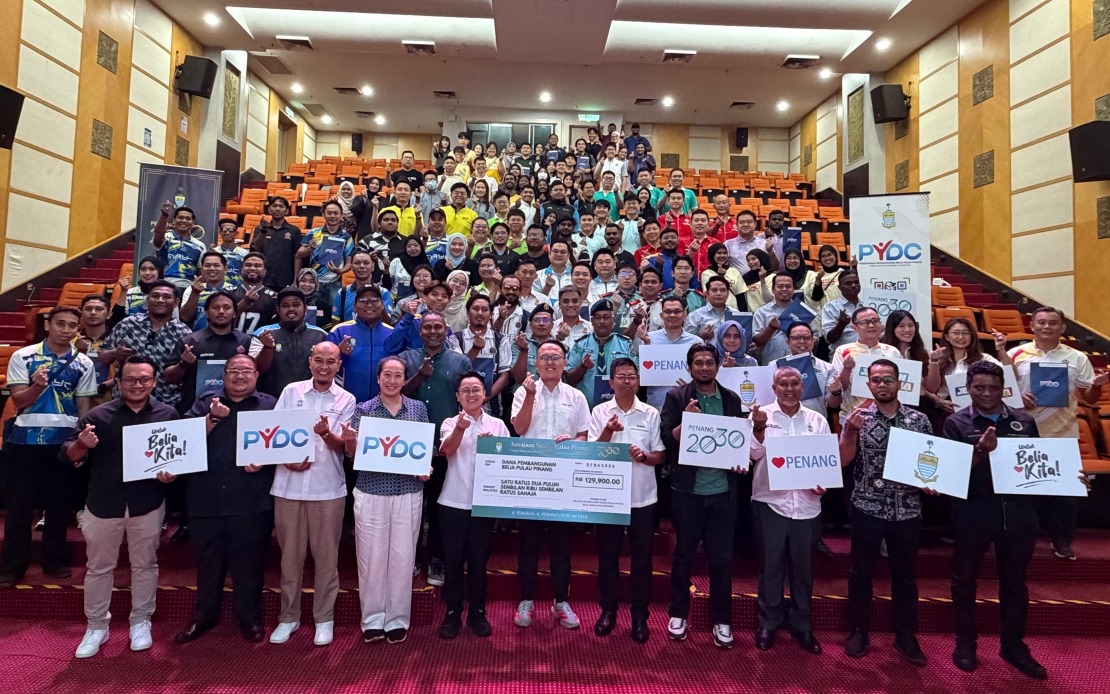
The Penang state government has earmarked RM129,900 from its Youth Development Fund this financial year to underwrite 68 youth-focused initiatives coordinated by 48 registered associations across the state. The allocation represents part of a broader RM200,000 budget commitment approved during a recent State Executive Council Meeting dedicated to youth affairs, reflecting the government's stated commitment to nurturing the next generation of Malaysian leaders and entrepreneurs.
Daniel Gooi Zi Sen, chairman of the Penang Youth, Sports and Health Committee, unveiled the funding decision in a statement released on June 21. The portfolio holder framed the investment not merely as a disbursement of public funds but as a deliberate confidence-building exercise, granting youth organisations the autonomy to develop, test and refine their own creative solutions to community challenges. This approach signals a deliberate philosophical shift away from top-down programming toward grassroots initiative and youth-led problem solving.
The 68 programmes targeted for support span a diverse range of competency areas, with organisers identifying skills development, employability enhancement, volunteer engagement and leadership cultivation as the primary beneficiary domains. For Malaysian young people navigating an increasingly competitive job market and technological landscape, such initiatives address real capability gaps. The breadth of this portfolio suggests the state government recognises that youth development extends far beyond formal education, encompassing character formation, civic participation and practical capability building.
Gooi's emphasis on programme integrity and transparent stewardship reveals underlying concerns about accountability in how public money flows through civil society. He explicitly reminded recipient organisations that successful fund utilisation demands rigorous financial management, honest reporting and ethical conduct throughout implementation. This language reflects a mature understanding that governmental trust in community organisations must be paired with enforceable expectations around governance standards. Penang's approach here offers a model for other Malaysian states wrestling with how to disburse development funds while maintaining public confidence.
Crucially, Gooi reframed how success should be measured in youth programming. Rather than counting activities executed or participation numbers recorded, he advocated for assessing the lasting influence on participants and broader community wellbeing. This represents a sophisticated evaluation framework that acknowledges the limitation of output-focused metrics. Many government-funded programmes globally suffer from what evaluators call the "activity trap," where resources concentrate on delivering visible activities rather than fostering genuine transformation. Penang's emphasis on sustained impact suggests the committee intends to break this cycle.
The timing of this allocation within Malaysia's broader developmental context is noteworthy. As the nation grapples with youth unemployment, skills mismatches and questions about the relevance of training to market demands, state-level initiatives like Penang's become increasingly important. Unlike federal programmes that must serve nationwide populations, state-level youth funds can be calibrated to local labour markets, regional business ecosystems and specific demographic needs. Penang's manufacturing and service sectors have particular skill requirements that locally-designed programmes can address more nimbly than centralised initiatives.
For the 48 associations benefiting from this round of funding, the approval represents meaningful operational capacity. Beyond allowing them to hire coordinators or rent venues, the funding validates their work in the eyes of government and potentially opens doors to other partnership opportunities. Many Malaysian youth organisations operate on shoestring budgets, relying on volunteer energy. Governmental backing, even in modest amounts, can elevate their legitimacy and expand their reach into communities that might otherwise overlook grassroots organisations.
The governance angle here also deserves attention. Gooi's insistence on transparency and efficient management reflects growing recognition within Malaysian governance circles that public money allocated to civil society must be subject to clear accountability mechanisms. This stands in contrast to earlier eras when such allocations sometimes operated in murky spaces between government and community. The explicit articulation of accountability expectations, communicated publicly, establishes a baseline for good governance that can be monitored and assessed.
For youth themselves, the practical significance lies in opportunity access. Whether through skill-building workshops, internship placements, leadership camps or volunteer mobilisation programmes, these 68 initiatives create entry points for young Malaysians to develop capabilities beyond their formal schooling. In states like Penang with significant rural populations alongside urban centres, such distributed programming ensures that youth in less accessible areas can access development opportunities.
The allocation also reflects Penang's positioning as a progressive governance jurisdiction within Malaysia's federal structure. States like Penang and Selangor have increasingly positioned themselves as laboratories for policy innovation, testing approaches that other states subsequently adopt. Youth development programming that emphasises grassroots delivery, integrity-based governance and impact-focused evaluation could become a template for other Malaysian states wrestling with similar policy challenges.
Looking ahead, the success of this initiative will likely depend on execution quality among recipient organisations and sustained oversight from the Penang committee. The funding represents an investment in trust, but trust without accountability can erode quickly. The committee's follow-up mechanisms for assessing impact claims, verifying programme delivery and documenting outcomes will determine whether this initiative becomes a model for replication or a cautionary tale about well-intentioned funding that failed to drive measurable change.
For Malaysian youth policy observers, Penang's approach merits close monitoring. The emphasis on youth-led solutions, the articulation of governance standards, and the focus on sustained community impact reflect a maturing approach to youth development in Malaysia. As the nation seeks to equip young people for economic participation and civic engagement, initiatives like Penang's Youth Development Fund demonstrate that meaningful progress need not await federal mandates. State governments can move decisively to create opportunity structures that unlock youth potential.

%22%2F%3E%3C%2Fpattern%3E%3C%2Fdefs%3E%3Crect%20width%3D%22100%25%22%20height%3D%22100%25%22%20fill%3D%22url(%23ph32hyvg)%22%2F%3E%3Crect%20width%3D%22100%25%22%20height%3D%22100%25%22%20fill%3D%22url(%23ph32hyvp)%22%2F%3E%3Ctext%20x%3D%2250%25%22%20y%3D%2250%25%22%20text-anchor%3D%22middle%22%20dominant-baseline%3D%22central%22%20fill%3D%22rgba(255%2C255%2C255%2C0.95)%22%20font-family%3D%22Georgia%2C%20'Times%20New%20Roman'%2C%20serif%22%20font-weight%3D%22700%22%20font-size%3D%22151%22%20letter-spacing%3D%22-0.02em%22%3EPerikatan%3C%2Ftext%3E%3C%2Fsvg%3E)