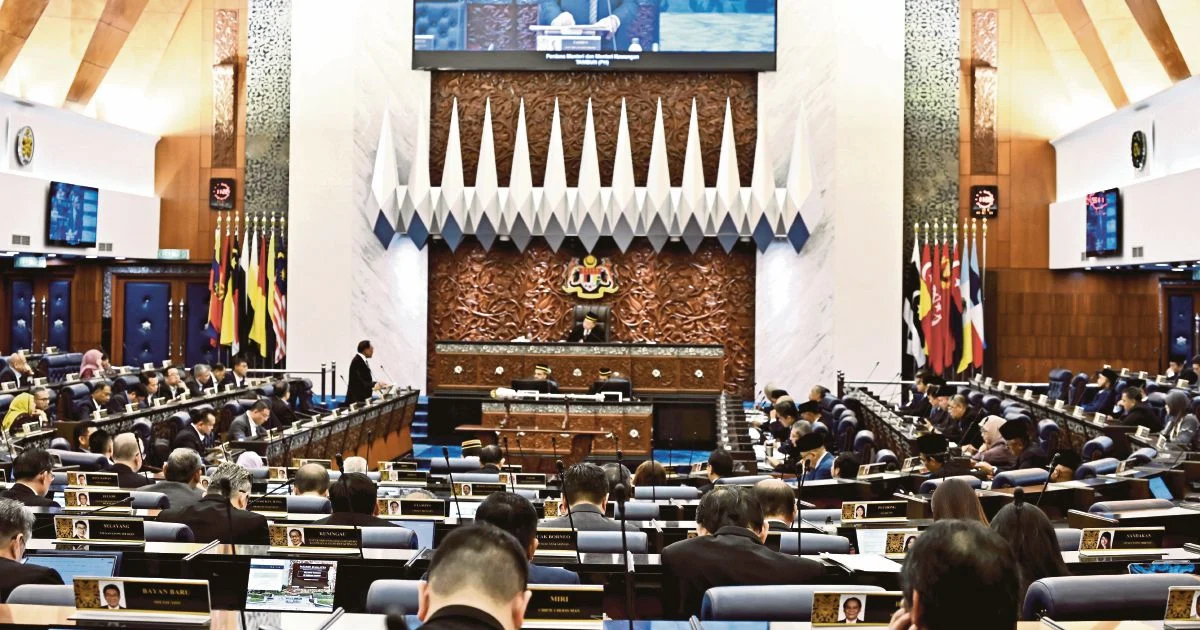
The Dewan Rakyat witnessed an unusually contentious opening day today when heated exchanges between government and opposition lawmakers threatened to derail parliamentary proceedings scarcely an hour after the sitting began. The dispute centred on the recognition and status of the opposition leader, an issue that quickly escalated into broader accusations regarding the conduct of coalition partners and allegations of intimidation within the ruling government.
Takiyuddin Hassan, a prominent opposition figure, found himself at the centre of the firestorm when a government Member of Parliament raised concerns about the treatment of certain parties within Malaysia's political landscape. The back-and-forth between the benches grew increasingly sharp as legislators traded barbs over what was characterized as bullying behaviour directed at Bersatu, a party that currently forms part of the government coalition but maintains a complex relationship with its larger partner PAS.
The disagreement highlights the fragile nature of Malaysia's current political configuration, where multiple parties with differing interests and historical grievances must find ways to govern collectively. Bersatu, which broke away from UMNO in 2016 and subsequently played a pivotal role in the 2018 electoral watershed, has occupied an uneasy position within successive government formations. The party's presence in the ruling coalition since 2020 has not prevented ongoing tensions with other partners, particularly over issues of party autonomy and representation.
PAS, the Islamist opposition party that became a government partner following the 2023 elections, has emerged as one of the coalition's most influential members. The dynamics between PAS and Bersatu appear to extend beyond simple policy disagreements, touching on deeper questions about party hierarchy within the government, parliamentary representation, and the allocation of ministerial portfolios. These tensions occasionally surface in parliamentary debates, though rarely with the intensity witnessed during today's exchange.
The clash between Takiyuddin and the government representative underscores how Malaysia's plural coalition government struggles to present a unified front when internal contradictions become public. For Malaysian observers accustomed to more orderly parliamentary proceedings, such heated exchanges signal underlying strains within the administration that extend beyond routine political rivalry. The dispute suggests that disagreements over party treatment and perceived inequitable handling of coalition partners remain unresolved despite months of working within the same government structure.
The opposition leader's status itself became a contentious matter, indicating disagreement even over procedural and ceremonial recognition within Parliament. Such disputes, while sometimes appearing technical, carry significant symbolic weight in Malaysian politics where formal recognition and institutional standing carry implications for a party's political influence and leverage in negotiations. How opposition leaders are acknowledged and treated within parliamentary chambers reflects broader power dynamics and can influence the outcome of legislative debates and votes.
For Bersatu particularly, allegations of bullying or unfair treatment by larger coalition partners represent a serious concern given its relatively smaller parliamentary representation compared to UMNO and PAS. The party's continued relevance within the coalition depends partly on maintaining sufficient autonomy and ensuring its concerns receive consideration from the government leadership. Public parliamentary confrontations over such matters, while disruptive in the short term, may serve as pressure valves allowing tensions to be aired rather than festering quietly within government backrooms.
The incident also reflects the complex realities of Malaysian coalition politics, where parties of vastly different sizes and ideological orientations must find common ground on governance while maintaining distinct party identities and interests. UMNO's traditional dominance, PAS's growing influence through religious constituencies, and Bersatu's positioning as a centrist kingmaker create a delicate balance that requires careful management and respect for each partner's red lines and political space.
For the broader Malaysian electorate and regional observers, such parliamentary disruptions raise questions about the stability and effectiveness of the current government formation. While heated parliamentary exchanges are not uncommon in democracies worldwide, the frequency and intensity of Malaysian legislative disputes sometimes reflect governance challenges rather than healthy democratic debate. The incident today suggests that despite being in government together for several years, coalition partners have not fully resolved fundamental issues about party treatment and representation.
Moving forward, such public confrontations may prompt government leaders to invest more effort in coalition management and inter-party dialogue mechanisms. Many successful coalition governments employ formal structures for resolving inter-party disputes before they escalate to parliamentary theatrics. Malaysia's situation, complicated by the presence of five or more parliamentary parties within the ruling coalition, requires sophisticated coordination mechanisms that apparently remain imperfect.
The heated exchange also demonstrates that opposition figures like Takiyuddin retain the ability to provoke debate and maintain political relevance despite being outside government. The opposition's willingness to challenge government MPs over treatment of coalition partners suggests they view such issues as legitimate parliamentary business that deserves public scrutiny and debate.
Ultimately, today's parliamentary fireworks underscore an ongoing truth about Malaysian politics: even governing coalitions harbour internal contradictions and competing interests that can surface unexpectedly. While such tensions need not threaten government stability, they do highlight the continued salience of questions about fair treatment, party autonomy, and balanced representation within the ruling alliance.
%22%2F%3E%3C%2Fpattern%3E%3C%2Fdefs%3E%3Crect%20width%3D%22100%25%22%20height%3D%22100%25%22%20fill%3D%22url(%23ph3s8o3g)%22%2F%3E%3Crect%20width%3D%22100%25%22%20height%3D%22100%25%22%20fill%3D%22url(%23ph3s8o3p)%22%2F%3E%3Ctext%20x%3D%2250%25%22%20y%3D%2250%25%22%20text-anchor%3D%22middle%22%20dominant-baseline%3D%22central%22%20fill%3D%22rgba(255%2C255%2C255%2C0.95)%22%20font-family%3D%22Georgia%2C%20'Times%20New%20Roman'%2C%20serif%22%20font-weight%3D%22700%22%20font-size%3D%22170%22%20letter-spacing%3D%22-0.02em%22%3EMalaysia%3C%2Ftext%3E%3C%2Fsvg%3E)
%22%2F%3E%3C%2Fpattern%3E%3C%2Fdefs%3E%3Crect%20width%3D%22100%25%22%20height%3D%22100%25%22%20fill%3D%22url(%23ph1bx0ag)%22%2F%3E%3Crect%20width%3D%22100%25%22%20height%3D%22100%25%22%20fill%3D%22url(%23ph1bx0ap)%22%2F%3E%3Ctext%20x%3D%2250%25%22%20y%3D%2250%25%22%20text-anchor%3D%22middle%22%20dominant-baseline%3D%22central%22%20fill%3D%22rgba(255%2C255%2C255%2C0.95)%22%20font-family%3D%22Georgia%2C%20'Times%20New%20Roman'%2C%20serif%22%20font-weight%3D%22700%22%20font-size%3D%22170%22%20letter-spacing%3D%22-0.02em%22%3EMalaysia%3C%2Ftext%3E%3C%2Fsvg%3E)