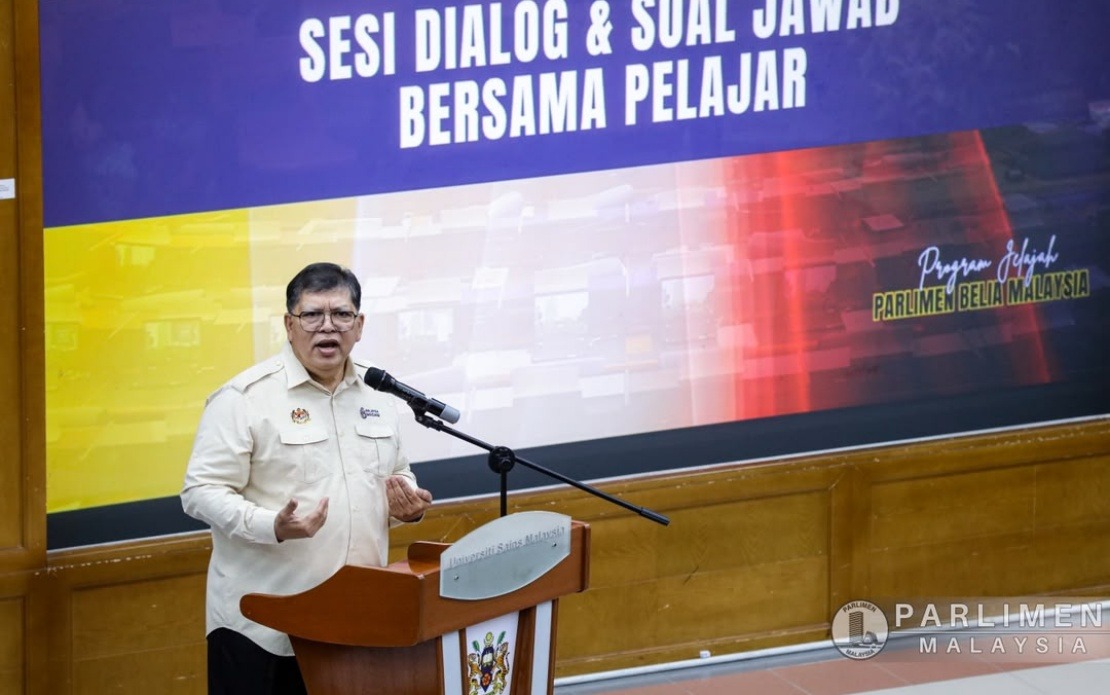
The Dewan Rakyat must transform itself into an institution worthy of public respect and trust, serving as the gold standard for how democracy functions in Malaysia, according to Speaker Tan Sri Johari Abdul. With the Malaysian Youth Parliament set to commence its historic first sitting on September 11, the timing of this message carries particular weight—young Malaysians will scrutinize parliamentary conduct and internalize lessons about democratic practice from what they witness in the nation's legislative chamber.
Johari emphasizes that Parliament transcends its conventional role as a mere debating forum for elected representatives. Instead, it functions as the apex legislative body whose proceedings establish the benchmark by which future generations evaluate democratic institutions. The younger generation, particularly those participating in the youth-focused initiative, require exemplars of mature political discourse rather than divisive rhetoric or procedural chaos. This responsibility falls squarely on the shoulders of sitting Members of Parliament, who must recognize their position as de facto educators of Malaysia's next generation of leaders.
The contemporary media landscape amplifies this responsibility exponentially. Every parliamentary utterance, gesture, and vote now reaches millions through social media platforms and live television broadcasts. What once occurred within the parliament building's walls now plays out before the entire nation, making parliamentary decorum not merely a matter of institutional protocol but a national educational resource. Johari's implicit message is that Members of Parliament cannot compartmentalize their conduct—standards observed in the Dewan Rakyat directly influence how young citizens will conduct themselves when they assume leadership roles.
The Malaysian Youth Parliament itself represents an ambitious institutional experiment. Modelled on the existing parliamentary structure, the initiative allocates 222 seats mirroring parliamentary constituencies across the country, creating a scaled replica of Malaysia's legislative geography. Crucially, the parties formed within this youth framework are explicitly non-partisan and disconnected from actual electoral politics. Over ten such youth-oriented parties have already registered, allowing young Malaysians to experience political engagement without the baggage of competitive partisan conflict that characterizes mainstream political rivalry.
Registration efforts have gained significant momentum, with Parliament Malaysia conducting extensive nationwide outreach targeting 300,000 Malaysians aged between 18 and 30. The recruitment campaign emphasizes accessibility and inclusive participation, recognizing that this cohort represents the demographic bearing the weight of Malaysia's future challenges. The timeline for the initiative remains tightly scheduled: nomination day falls on July 8, with official candidates announced on July 11, followed by a 27-day campaign period running from July 12 through August 7. Online voting through the dedicated e-PBMy system will occur across a 24-hour window from 10 am on August 8 until 10 am on August 9.
The structural framework of the Youth Parliament indicates serious institutional commitment. Members will serve two-year terms and participate in three sittings annually, with each sitting lasting two days. This frequency ensures sustained engagement rather than episodic participation, allowing young parliamentarians to develop authentic legislative experience. The September 11 opening ceremony will formally inaugurate this new parliamentary cohort and establish the foundations for subsequent legislative work, marking a watershed moment in Malaysian youth political development.
The initiative's institutional trajectory reveals evolving government thinking about youth engagement. Originally launched in 2015 under the Ministry of Youth and Sports, the Malaysian Youth Parliament operated for eight years within that administrative framework. The October 2023 decision to transfer full management to Parliament Malaysia itself signals enhanced institutional status and broader commitment. This shift from youth ministry oversight to direct parliamentary supervision suggests recognition that youth political engagement constitutes a core democratic function rather than peripheral youth services programming.
For Malaysian observers and regional analysts, this initiative carries significance beyond its immediate scope. As Southeast Asian democracies grapple with youth disengagement from political institutions and the rise of digital activism outside traditional channels, Malaysia's structured approach to creating legitimate parliamentary pathways for young people deserves attention. The Malaysian Youth Parliament neither patronizes youth through tokenistic consultation nor abandons them to social media-driven protest culture. Instead, it constructs genuine legislative experience within an orderly institutional framework, potentially offering a model for other regional democracies.
Johari's emphasis on parliamentary dignity and fact-based debate addresses real institutional challenges. Contemporary parliaments across the region struggle with polarization, personal attacks, and theatrical grandstanding that undermine legislative legitimacy. By positioning the Youth Parliament as dependent on older generation MPs demonstrating superior standards, Johari creates accountability pressure and reframes parliamentary reform as a leadership obligation rather than external criticism. Malaysian Members of Parliament now understand they are not merely governing through legislation but simultaneously teaching governance to future legislators.
The implications extend into Malaysia's broader democratic health. Youth perception of parliamentary institutions directly influences long-term citizen engagement with democratic processes. If young Malaysians observe dignified, solution-focused debate and principled disagreement during their Youth Parliament experience, they internalize democratic practice as inherently valuable and worth defending. Conversely, exposure to parliamentary conduct characterized by personal animosity and fact-challenged rhetoric creates cynicism about democratic processes themselves. This mechanism operates largely outside formal civics education, embedding democratic values through experiential observation rather than curriculum content.
Practical participation mechanisms reinforce accessibility. The 222-seat allocation ensures geographic representation across all parliamentary constituencies, preventing concentration in urban centers and connecting rural youth to the initiative. The online voting process removes logistical barriers to participation, recognizing that digital natives expect technological integration in political processes. These design choices suggest institutional learning from the challenges facing many youth engagement initiatives that fail through poor accessibility or structural barriers.
The regulatory clarity surrounding Youth Parliament parties deserves emphasis. By explicitly defining these parties as non-partisan frameworks unconnected to Malaysia's electoral system, the initiative sidesteps potential concerns about instrumentalizing youth for partisan advantage. Young participants engage in competitive politics and coalition-building within a controlled environment, developing political skills without becoming entangled in actual electoral machinery. This distinction proves crucial for institutional credibility—parents and educators need confidence that youth participation serves developmental objectives rather than serving as recruitment pipelines for existing political organizations.
As registration opens and campaign season approaches, the success of Malaysia's Youth Parliament initiative will ultimately depend on the conduct demonstrated in the Dewan Rakyat itself. Tan Sri Johari's message to Members of Parliament carries an implicit warning alongside its exhortation: the nation's young people are watching, learning, and internalizing lessons about how democracy functions. That responsibility should concentrate minds in the parliamentary chamber and remind every legislator that their conduct carries consequences far beyond the immediate legislative outcome.