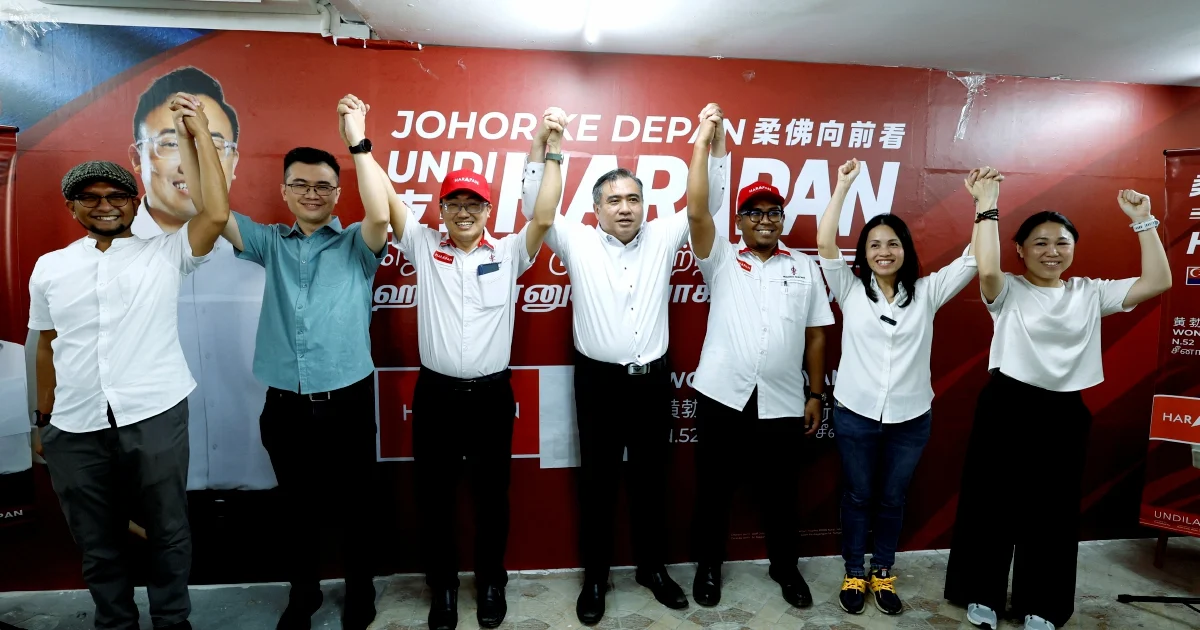
The Pakatan Harapan coalition remains focused on securing victory in the Johor state election before turning its attention to selecting a Menteri Besar, according to statements from party leadership. The decision on who will assume the position of Johor's chief executive will be delayed until after the coalition has won the necessary number of seats to form the next state government. This approach underscores the coalition's determination to avoid distracting squabbles over ministerial posts that could undermine its electoral campaign.
The selection process, should Pakatan Harapan emerge victorious, will fall to the coalition's supreme decision-making body rather than any individual party or faction. This arrangement reflects a structured approach to leadership transitions that prioritizes coalition unity during the critical election phase. By deferring the announcement, the coalition aims to maintain internal cohesion and prevent competing claims from different member parties from becoming campaign flashpoints.
Johor remains one of Malaysia's most politically significant states, with its electoral outcome likely to influence broader national political dynamics. The state has historically alternated between different political coalitions, making the upcoming election a consequential contest. For Pakatan Harapan, securing Johor would represent a substantial achievement, particularly given the state's large voter base and its importance as a southern economic powerhouse.
This cautious approach to naming the chief minister reflects lessons learned from previous political transitions in Malaysia, where premature announcements of ministerial positions have sometimes triggered internal disputes or provided ammunition to opposition parties. By keeping the focus squarely on election success, the coalition leadership hopes to maintain voter attention on policy platforms and governance credentials rather than internal power negotiations.
The timing of such announcements carries strategic weight in Malaysian politics, where perceptions of party unity directly influence voter confidence. Pakatan Harapan's decision to withhold naming a Menteri Besar candidate sends a signal to voters that the coalition is disciplined and serious about governance, willing to defer personal ambitions until the people have delivered their verdict at the ballot box. This messaging approach contrasts with campaigns that become consumed by leadership speculation.
For Malaysian voters in Johor, this strategy means the state election will genuinely be about choosing the government they want, rather than voting on a predetermined leadership arrangement. The coalition's approach implicitly acknowledges that naming a chief minister before an election sometimes creates vulnerabilities, as opposition parties can then focus their attacks on that individual rather than on broader coalition policies and performance records.
Within Pakatan Harapan's member parties—which include PKR, DAP, Amanah, and their allies—there are undoubtedly different perspectives on what the state leadership should look like. By deferring this decision to the coalition's top council after an election victory, the party leadership avoids appearing to favor one party over another before votes are cast. This neutrality approach helps prevent the emergence of competing narratives about the coalition's internal power structure during the crucial campaign period.
The reference to the coalition's "top leadership council" suggests a consultative process that would involve representatives from all member parties, each bringing their own political interests and strategic calculations to the table. Such deliberation, while potentially complex, would ensure that the eventual choice commands broad support across the coalition and reflects the relative electoral contributions of each party.
Regionally, how Pakatan Harapan manages this transition could offer insights into coalition governance more broadly across Southeast Asia. Political alliances in the region often struggle with similar questions about power-sharing and leadership selection, and the Malaysian model has been observed closely by political analysts and practitioners in neighboring countries. The coalition's emphasis on election victory before leadership decisions reflects pragmatism increasingly common in plural political systems.
For the opposition and other political actors monitoring the situation, the deferred announcement creates uncertainty but also removes a potential flashpoint for criticism during the campaign. It also places pressure on Pakatan Harapan to deliver convincing election results, since any failure to secure a strong mandate would complicate the leadership selection process and potentially spark recriminations among coalition partners about strategy and execution.
The broader implication of this approach extends to how Malaysian politics is evolving toward more structured coalition governance. Rather than strong individuals dictating coalition arrangements, the emphasis on collective decision-making through established councils suggests a maturation of coalition politics in the country. For Johor voters, this could translate into governments formed through consultation rather than imposition, though actual outcomes will ultimately depend on the winning coalition's commitment to these principles in practice.