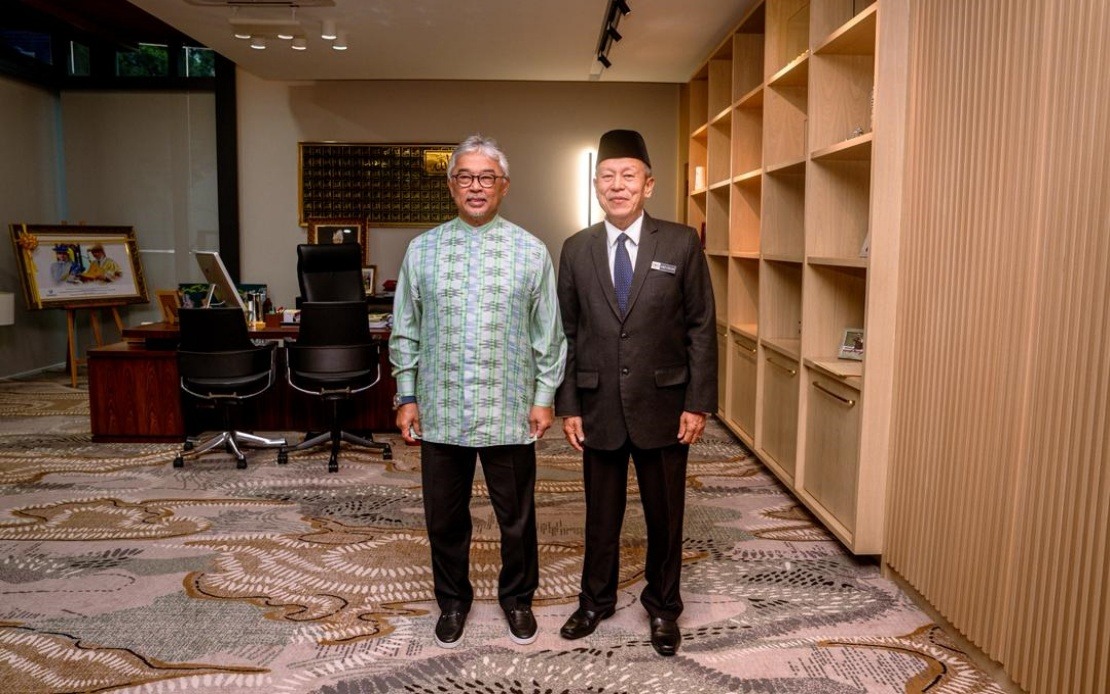
The Sultan of Pahang, Al-Sultan Abdullah Ri'ayatuddin Al-Mustafa Billah Shah, recently received Datuk Seri Abd Halim Aman, the chief commissioner of the Malaysian Anti-Corruption Commission, at Shahzan House in Ampang for a substantive discussion on the country's anti-graft efforts. The hour-long audience represents the kind of high-level engagement that underscores the importance placed on the MACC's institutional role within Malaysia's governance framework.
During the meeting, the MACC leadership provided the Sultan with comprehensive insights into the commission's operational developments and strategic priorities. The briefing centred on how the agency continues to evolve its enforcement mechanisms and investigative capabilities in response to emerging corruption risks across both the public and private sectors. Such royal engagements signal the monarchy's direct interest in the trajectory of Malaysia's anti-corruption campaign, a matter of considerable national consequence given the persistent public concern over graft and malfeasance.
The audience touched upon several interconnected themes that reflect broader governance challenges facing Malaysia. Integrity enhancement initiatives formed a significant portion of the discussion, with the MACC outlining concrete measures designed to strengthen ethical standards within government institutions and statutory bodies. These efforts extend beyond simple compliance frameworks to encompass cultural change within the bureaucracy—a longer-term ambition that requires sustained political backing and institutional commitment.
Another focal point was the MACC's approach to public confidence restoration. The commission has faced periodic scrutiny regarding its independence and effectiveness, particularly following high-profile cases and political transitions. By directly briefing the Sultan on its governance prevention initiatives and enforcement strategies, the MACC seeks to reinforce its credibility as an institution insulated from partisan manipulation. This messaging is critical in a context where Malaysians remain sceptical about whether anti-corruption agencies can operate free from political influence.
The discussion also addressed corruption prevention more broadly, moving beyond reactive investigation toward proactive institutional reform. The MACC has increasingly emphasised capacity-building within government agencies, whistle-blower protection frameworks, and digital tools for detecting suspicious financial flows. For Malaysian readers, this reflects a recognition that combating corruption requires ecosystem-wide cooperation rather than enforcement-driven interventions alone.
Abd Halim's subsequent expression of gratitude toward the Sultan carried particular significance. By publicly acknowledging the royal family's support for the MACC's mandate, the chief commissioner sought to reinforce the perception that the commission operates with institutional legitimacy extending beyond the executive branch. In the Malaysian context, where the monarchy serves as a constitutional guardian and symbol of national unity, such endorsements matter substantially for the MACC's standing, particularly when public trust in institutions remains mixed.
The chief commissioner also highlighted the importance of transparent and accountable governance in the Sultan's presence, messaging that carries weight when delivered directly to a member of the royal household. This framing positions integrity not as a regulatory burden but as foundational to Malaysia's development aspirations and international standing. At a time when foreign investors scrutinise governance quality and Southeast Asian nations compete for capital inflows, maintaining credible anti-corruption enforcement has economic implications beyond institutional reform.
For the broader Southeast Asian region, this engagement reflects how Malaysia's senior leadership—across royal, executive, and institutional domains—continues to grapple with corruption as a persistent structural challenge. The audience demonstrates that despite political changes and periodic institutional turbulence, the commitment to formal engagement on anti-graft matters persists. The MACC's ability to access royal audiences indicates that anti-corruption remains a legitimacy-conferring policy domain for Malaysian governments.
The timing and venue of the meeting also merit consideration. Shahzan House in Ampang, a state property in the Federal Territories, served as an appropriate setting for high-level governmental business. The formality of the arrangement underscores that this was not a casual conversation but rather an official briefing designed to keep the Sultan informed of consequential developments within a critical institution.
Moving forward, the MACC faces the challenge of converting institutional endorsement into tangible enforcement outcomes that address public frustration with corruption. While royal support and executive backing provide political cover, citizen confidence ultimately depends on visible prosecution of high-profile offenders and demonstrable reduction in corrupt practices. The briefing thus represents both acknowledgment of past efforts and a signal that the MACC's mission retains strategic importance within Malaysia's governance architecture.
The audience also reflects the Malaysian monarchy's broader constitutional role in providing institutional oversight beyond day-to-day political fluctuations. By regularly engaging with agency heads, the Sultan helps ensure that institutions like the MACC maintain independence from temporary political pressures. This separation of concerns, while not always perfectly preserved, remains an aspiration within Malaysia's constitutional framework.
For stakeholders monitoring Malaysia's anti-corruption trajectory—from business communities to civil society organisations—such high-level engagements offer modest reassurance regarding institutional continuity. Yet the true measure of the MACC's effectiveness will emerge through its investigative outputs, prosecution support, and success in preventing future corruption rather than through ceremonial royal audiences alone. The meeting, therefore, constitutes one element within a much larger institutional undertaking.