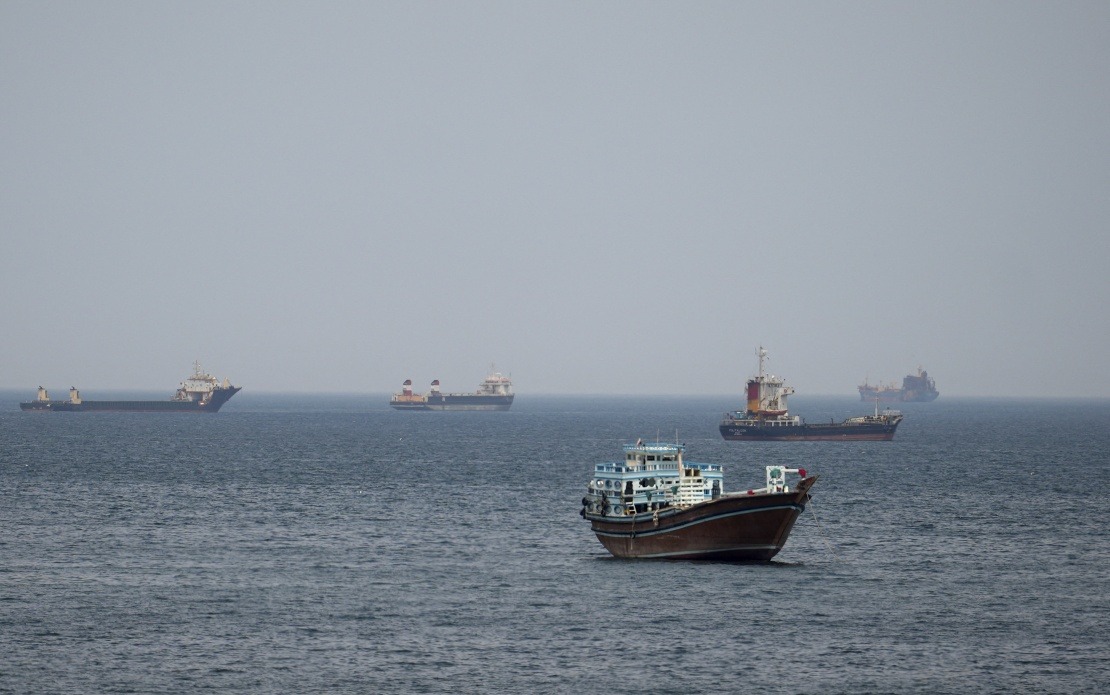
An interim accord between the United States and Iran took effect on Thursday, ending a conflict that had roiled global energy markets and raised fears of wider Middle Eastern instability. Under the agreement, oil tankers have resumed navigation through the Strait of Hormuz, the critical chokepoint that carries roughly one-fifth of the world's petroleum supply. The deal marks a significant retreat from the maximalist position President Donald Trump adopted when he initiated hostilities nearly four months ago, though it leaves numerous contentious issues unresolved and dependent on further negotiation.
The immediate market reaction underscored the relief among global traders and energy-dependent economies. Crude prices have retreated to their lowest levels since February 28, when the conflict began, as analysts anticipate that normal export volumes through the strait could be restored within months. For Malaysia and other Southeast Asian nations heavily reliant on stable oil supplies, the reopening of this vital shipping route represents crucial relief. The price decline, while welcome for consumers, also signals that markets had already priced in significant disruption risk during the standoff, suggesting that international commerce had been operating under considerable uncertainty throughout the past four months.
However, the ceasefire remains fragile and incomplete. Israel, which was not a signatory to the US-Iran agreement, continues military operations against Hezbollah in Lebanon, where more than a million civilians have been displaced by fighting. Israeli forces launched fresh airstrikes on Thursday morning, directly contradicting Trump's stated expectation of a "complete ceasefire on all fronts." This gap between the diplomatic agreement and ground-level reality in Lebanon exposes the limits of American leverage over its regional allies and raises fundamental questions about whether the broader conflict can truly be contained.
Trump's negotiating position has shifted dramatically from his initial demands. When he commenced military action, the president explicitly sought Iran's unconditional surrender and demanded the destruction of its nuclear weapons programme, elimination of its ability to strike neighbouring states, cessation of support for regional militant groups, and facilitation of internal regime change. The final agreement achieves none of these objectives. Instead, it provides Iran with a 60-day window for nuclear negotiations, establishes a $300 billion reconstruction fund with additional financial incentives, and implicitly validates Iran's survival and continued regional influence by recognising its territorial integrity and role in regional affairs.
Iran's Supreme Leader Ayatollah Moitaba Khamenei has adopted a notably defiant posture regarding the coming nuclear negotiations. In a written statement, Khamenei declared that Trump signed the deal "out of desperation" and explicitly warned that Tehran will reject any excessively demanding proposals on its nuclear programme. This rhetorical positioning suggests that Iran enters the 60-day negotiation period from a position of strength, having withstood American military pressure without surrendering core objectives. For analysts examining the strategic balance, this represents a significant reorientation of regional power dynamics compared to the initial American ultimatum.
The Strait of Hormuz remains a focal point of contention even within the ceasefire framework. Iran has indicated that it will retain control over maritime traffic during the interim period, issuing permits and directing vessel movements, though it has committed to waiving any transit fees during these 60 days. This arrangement preserves Iran's strategic position while temporarily relieving global shipping concerns. Yet it also demonstrates that even in a supposed peace agreement, Iran has secured acknowledgment of its claims to regional authority. For Malaysian shipping and trading interests, the stipulation that normal transit fees will eventually resume suggests that any permanent settlement will need to address precisely how this vital waterway will be governed and taxed.
US Vice President JD Vance, designated to lead the American negotiating delegation during the 60-day period, has signalled that Washington intends to pursue limitations on Iran's long-range missile capabilities as part of a comprehensive nuclear accord. This objective extends beyond the purely nuclear domain into broader regional security considerations. The missile issue touches on concerns shared by multiple regional actors, including Gulf Arab states and potentially Israeli interests, creating a complex negotiating environment where different parties harbour distinct priorities. Whether Vance can forge consensus around missile restrictions while simultaneously managing allied pressure, particularly from Israel, remains deeply uncertain.
The Israeli dimension poses perhaps the gravest threat to the agreement's viability. Trump has become overtly critical of Israel's operations in Lebanon, describing them as counterproductive to American peace efforts and suggesting that Israel is jeopardising its most powerful international ally. At a White House appearance, Trump pointedly remarked that if he were in Israel's cabinet, he would hesitate to attack the only remaining superpower capable of supporting the country. This public disagreement represents one of the most significant ruptures between American and Israeli leadership in decades. Yet despite Trump's critical rhetoric, Israel has released maps depicting an expanded occupation zone in Lebanon and shown no inclination to withdraw, exposing the limits of American pressure even over its closest regional ally.
For Southeast Asian observers, the agreement's framework contains lessons about the fragility of ceasefires when key parties remain outside negotiating structures. Israel's exclusion from the talks, combined with its demonstrated unwillingness to be bound by agreements it did not directly shape, demonstrates how regional conflicts can resist neat diplomatic resolutions. The gap between a formal ceasefire and cessation of actual hostilities could persist indefinitely, with periodic escalations threatening to unravel the broader accord. The $300 billion Iranian reconstruction fund and associated financial incentives may prove insufficient to anchor compliance if underlying grievances and strategic objectives remain unaddressed.
The nuclear negotiations scheduled for the coming 60 days will determine whether this interim arrangement evolves into a durable settlement or represents merely a temporary pause in conflict. Trump explicitly framed his original military campaign as addressing Iran's nuclear weapons programme, making nuclear restrictions central to any claimed vindication of his strategy. Yet Iran's demonstrated resilience and negotiating strength suggest that securing meaningful nuclear concessions will prove far more difficult than the initial ultimatum assumed. Iranian negotiators have already signalled that they will reject anything perceived as excessive American demands, indicating that finding common ground on verification, enrichment levels, and timeline will require substantial American flexibility.
For Malaysian policymakers and business leaders, the immediate priority remains ensuring that the Strait of Hormuz remains open and that oil markets stabilise. The reopening of tanker traffic through this critical waterway provides tangible relief to Southeast Asian economies dependent on stable energy supplies. However, the unresolved tensions in Lebanon, disagreements over nuclear restrictions, and evident friction between American and Israeli leadership all suggest that the security environment remains volatile. The coming weeks will reveal whether this interim accord represents the foundation for sustained regional deescalation or merely a brief respite before renewed confrontation. Until the 60-day negotiation period concludes with either comprehensive agreements or mutual recriminations, global markets and regional actors will likely maintain cautious optimism tempered by awareness that the underlying issues driving the original conflict remain only partially addressed.
%22%2F%3E%3C%2Fpattern%3E%3C%2Fdefs%3E%3Crect%20width%3D%22100%25%22%20height%3D%22100%25%22%20fill%3D%22url(%23phyc2bg)%22%2F%3E%3Crect%20width%3D%22100%25%22%20height%3D%22100%25%22%20fill%3D%22url(%23phyc2bp)%22%2F%3E%3Ctext%20x%3D%2250%25%22%20y%3D%2250%25%22%20text-anchor%3D%22middle%22%20dominant-baseline%3D%22central%22%20fill%3D%22rgba(255%2C255%2C255%2C0.95)%22%20font-family%3D%22Georgia%2C%20'Times%20New%20Roman'%2C%20serif%22%20font-weight%3D%22700%22%20font-size%3D%22170%22%20letter-spacing%3D%22-0.02em%22%3EMalaysia%3C%2Ftext%3E%3C%2Fsvg%3E)