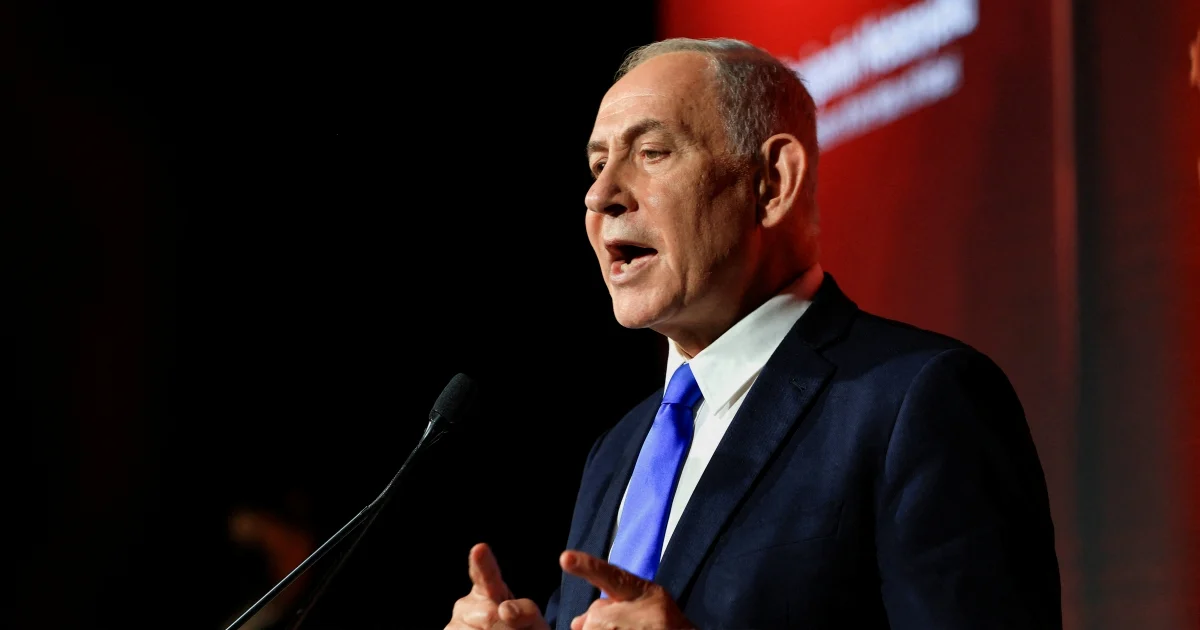
Israeli Prime Minister Benjamin Netanyahu reinforced his government's commitment to an extended military presence in southern Lebanon on Sunday, declaring that forces would remain deployed in the region for whatever duration proves necessary. His remarks signal a hardening of Israel's position regarding the timeline for any potential withdrawal, amid ongoing regional tensions and Lebanon's internal security challenges. The statement also came paired with Netanyahu's reaffirmation of Israel's core security doctrine regarding Iran's nuclear ambitions, underscoring how these two strategic concerns are intertwined in Israeli strategic thinking.
The announcement carries significant implications for the broader Middle Eastern geopolitical landscape and regional stability. Since Israel intensified military operations in Lebanon, questions have swirled about the long-term nature of Israeli involvement and whether a temporary incursion might evolve into a more permanent occupation. Netanyahu's phrasing—emphasizing indefinite deployment rather than a defined timeline—suggests Israeli planners are preparing domestic and international audiences for a protracted commitment. This contrasts sharply with initial public messaging that framed operations as targeted interventions against specific militant threats emanating from Lebanese territory.
For Malaysian and Southeast Asian observers, Netanyahu's statement underscores how Middle Eastern conflicts operate on vastly different temporal scales than the region's own security challenges. What constitutes an "extended" deployment in Southeast Asian contexts—measured in months—translates to potentially years or decades in the Levantine theatre. The declaration also demonstrates how powerful nations justify indefinite military presence through security rhetoric, a pattern with historical precedents extending back decades. Understanding these dynamics proves valuable for policymakers across the region who navigate great power competition and military interventionism.
The Israeli government's emphasis on preventing Iranian nuclear advancement represents another layer of complexity in regional calculations. Israel has long maintained that it cannot permit any neighbouring or regional adversary to develop nuclear weapons capacity, viewing such development as an existential threat. This doctrine shapes Israeli military strategy comprehensively, from air strikes on suspected nuclear facilities to broad regional interventions justified partly through this lens. The linkage Netanyahu drew between Lebanon operations and Iran policy suggests Israeli planners view the two issues as operationally and strategically interconnected rather than separate concerns.
Lebanon's fractured political system and the weakness of state institutions have historically made the country vulnerable to external intervention and the establishment of proxy forces. The southern region has proven particularly contested, with multiple armed groups operating with varying degrees of autonomy and outside support. Netanyahu's commitment to maintaining Israeli forces there reflects both the security threats emanating from Lebanese territory and the challenges of establishing stable governance alternatives. Any Israeli withdrawal would need to address what mechanisms or institutions could fill the security vacuum, an extraordinarily complex problem given Lebanon's domestic political paralysis.
Regional allies and adversaries are likely calibrating their responses to Netanyahu's statement carefully. Countries with stakes in Lebanese stability—including Saudi Arabia, Egypt, and various Gulf states—must assess whether Israeli presence represents a stabilizing force or a provocation that could invite further destabilization. Hezbollah and its Iranian backers face difficult strategic choices regarding escalation risks versus accepting reduced operational space in Lebanon. Syria, which shares borders with Lebanon and hosts Iranian forces, must weigh the implications of indefinite Israeli military presence in a neighbouring country.
International legal frameworks and international opinion remain tensions points in this scenario. The United Nations, which has long been involved in Lebanese peacekeeping through UNIFIL forces, may find itself in complex negotiations regarding Israeli military operations and their compatibility with international law. The United States, Israel's principal security guarantor and diplomatic champion, must balance support for Israeli security concerns against concerns about regional stability and international legal norms. European nations, increasingly involved in Middle Eastern diplomacy, face questions about their leverage and appropriate responses to extended military occupations.
For Southeast Asian nations with interests in Middle Eastern stability, this situation poses several challenges. Regional trade routes passing through the Suez Canal and other Middle Eastern waterways remain vulnerable to disruption from prolonged conflicts. Additionally, the refugee and humanitarian consequences of extended conflict operations inevitably create international pressures and needs. Malaysian diplomatic missions in the region must navigate increasingly complex security environments while maintaining constructive relationships with all parties.
The indefinite nature of Netanyahu's commitment also raises questions about resource allocation and military sustainability. Extended deployments require substantial logistical support, continuous personnel rotations, and sustained political will at home. Israeli society, despite strong security-conscious cultural norms, could experience fatigue if military operations drag on indefinitely without demonstrable progress toward stated objectives. Domestic political pressures occasionally force reassessments of long-term strategic commitments, even among nations with strong national security consensus.
Looking forward, Netanyahu's statement appears designed to project resolve and deter adversaries while preparing both Israeli and international opinion for prolonged commitment. Whether this represents negotiating strategy—establishing a maximalist position before potential compromise—or genuine long-term policy remains uncertain. The coming months will likely reveal whether other international actors can influence Israel's timeline or whether the "as long as necessary" formulation truly represents open-ended commitment. For regional observers and policymakers, tracking these developments remains essential for understanding Middle Eastern trajectory and global security implications.