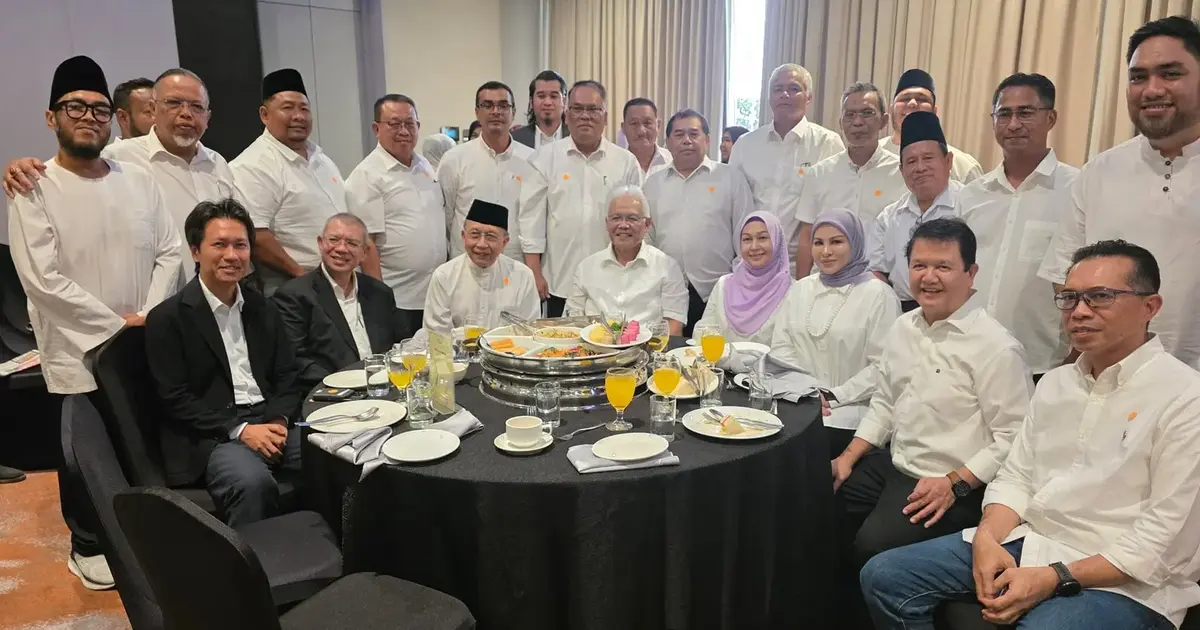
Wawasan has unveiled a restructured leadership team marking a strategic pivot in its organisational hierarchy. The appointments represent a deliberate effort to consolidate experienced political talent within the party's upper echelon, signalling renewed momentum at a transitional moment in Malaysia's political landscape.
Hamzah's elevation to the presidency places him at the helm of day-to-day party operations and strategic direction. His appointment reflects confidence in his ability to navigate the complex demands of party management and national politics, positioning Wawasan to amplify its voice within Malaysian political discourse.
Rais Yatim's appointment as chairman brings decades of accumulated political experience to the organisation's governance structure. The veteran politician has served Malaysia in multiple ministerial capacities across different administrations, accumulating institutional knowledge that spans governance, legislative affairs, and inter-governmental relations. His chairmanship signals Wawasan's intention to anchor itself with seasoned leadership capable of engaging substantively with the highest levels of government.
Saifuddin Abdullah's appointment as secretary-general introduces parliamentary representation into the party's administrative core. As the elected representative for Indera Mahkota, Abdullah bridges the gap between party machinery and legislative responsibilities, ensuring that grassroots parliamentary concerns directly inform organisational decision-making. This structural integration strengthens the party's ability to translate political strategy into concrete parliamentary outcomes.
The three-tier leadership structure—with Hamzah overseeing strategic direction, Rais providing institutional gravitas, and Saifuddin managing administrative functions—reflects contemporary understanding of effective political party governance. By separating presidential operations from chairmanship authority, Wawasan creates a system of institutional checks whilst distributing workload across complementary competencies.
For Malaysian observers, this reshuffle carries implications beyond mere personnel changes. It demonstrates how political parties continue adapting their internal structures to remain competitive within Malaysia's fluid coalition environment. The appointment of figures with established records signals that Wawasan intends to position itself as a serious political actor capable of meaningful participation in government formation and legislative processes.
The significance of this leadership consolidation extends to Southeast Asia's broader political context. Malaysian political parties frequently serve as models for regional counterparts, and Wawasan's emphasis on structured governance and experienced leadership reflects wider trends across the region toward professionalising party operations and reducing personality-driven politics.
Rais Yatim's extensive portfolio across defence, foreign affairs, and internal security matters brings technical expertise that enhances Wawasan's credibility on security and governance issues—areas of persistent concern for Malaysian voters. His background positions the party to engage substantively on defence procurement, counter-terrorism strategy, and regional security cooperation, topics increasingly relevant to Malaysia's geopolitical positioning.
Saifuddin Abdullah's parliamentary seat anchors the secretariat in legislative reality, ensuring that party decisions account for ground-level political challenges and opportunities. His constituency work provides direct insight into voter priorities, enabling Wawasan to align messaging and policy positions with authentic community concerns rather than relying solely on centralised strategic analysis.
The appointment architecture also reflects mature party governance principles, distinguishing between the ceremonial and the operational. By conferring the presidency on Hamzah while assigning chairmanship to Rais, Wawasan avoids concentrating excessive authority in a single individual—a structural safeguard increasingly valued in Malaysian political organisation following several high-profile leadership controversies across different parties.
Looking forward, this leadership configuration positions Wawasan to function effectively whether in government or opposition. The combination of parliamentary representation through Saifuddin, administrative experience through Rais, and operational leadership through Hamzah creates resilience against the volatility characteristic of Malaysian coalition politics, where parties frequently transition between governing and non-governing roles.
The appointment announcements also merit attention as indicators of inter-party relationships and political realignment possibilities. Leadership appointments often signal party positioning within broader coalitions, and Wawasan's choices here communicate its commitment to institutional stability and technocratic governance—appeals likely resonating with voters fatigued by political instability and seeking competent administration.
Malaysian observers watching this reshuffle will assess whether the new leadership team can translate structural improvements into electoral performance. The true measure of success lies not in appointment announcements but in whether Wawasan can leverage this experienced troika to articulate compelling policy alternatives and build sufficient grassroots support to influence future government formation negotiations.