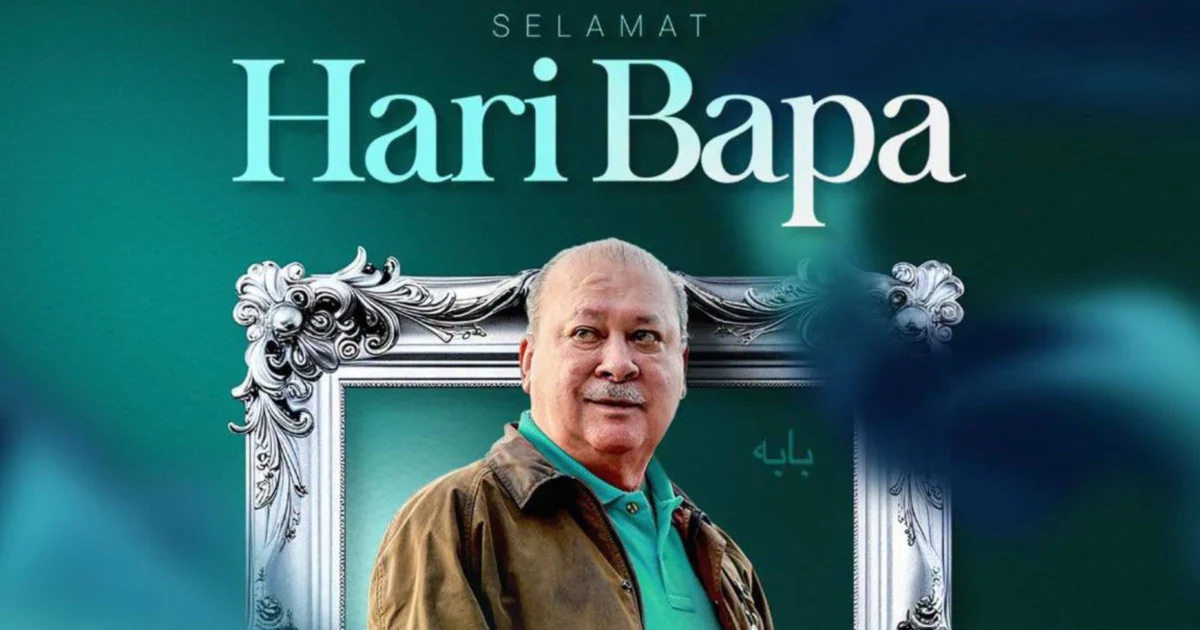
His Majesty Sultan Ibrahim, King of Malaysia, alongside Her Majesty Raja Zarith Sofiah, Queen of Malaysia, has conveyed warm wishes to all fathers observing Father's Day in the country. The royal message represents a traditional acknowledgment of the occasion by Malaysia's constitutional monarchy, reaffirming the Crown's connection with citizens on significant family-centred celebrations.
Father's Day, typically observed in Malaysia on the third Sunday of June, holds particular cultural resonance in the nation's multiethnic and multireligious society. The celebration transcends religious and ethnic boundaries, uniting Malaysians in honouring paternal figures across diverse communities. The royal couple's public recognition of the occasion underscores the monarchy's role in reflecting and reinforcing shared national values centred on family cohesion and intergenerational respect.
The timing of such royal greetings carries symbolic weight in Malaysia's constitutional framework. As the Yang di-Pertuan Agong and Raja Permaisuri Agong, the King and Queen serve as custodians of national unity and cultural heritage. Their participation in commemorating Father's Day signals institutional support for the strengthening of family bonds, a principle deeply embedded in Malaysian social fabric and governance philosophy.
Malaysia's approach to Father's Day reflects broader regional practices observed across Southeast Asia, where parental respect represents a cornerstone of social organisation. Unlike Western contexts where the occasion emerged from commercial and entertainment industries, Southeast Asian observances maintain stronger connections to traditional values of filial piety and paternal leadership within households. The royal acknowledgment positions the celebration within this cultural continuum rather than portraying it as mere commercial exercise.
The gesture carries implications for public discourse surrounding masculinity and fatherhood in Malaysia. In recent years, societies across the region have engaged in evolving conversations about modern parenting roles and gender dynamics within families. Royal endorsement of Father's Day implicitly affirms the value attributed to active paternal engagement and the emotional dimensions of fatherhood, moving beyond conventional notions of fathers as purely economic providers.
From an institutional perspective, such greetings demonstrate the monarchy's sustained engagement with civil society celebrations throughout the calendar year. Beyond constitutional duties, the Royal Household maintains visibility through participation in national observances, cultural festivities, and commemorative occasions. These touchpoints between the Crown and ordinary Malaysians, though sometimes understated, contribute to the perceived relevance and accessibility of the monarchy within contemporary society.
The Father's Day message arrives amid ongoing discussions about family structures and societal roles in Malaysia. As the nation navigates demographic changes, urbanisation, and evolving workforce participation patterns, the reinforcement of family-oriented values by constitutional leadership provides institutional anchoring for these discussions. The royal couple's words serve as reference points for public reflection on fatherhood's changing contours in modern Malaysia.
Regional observers often note that monarchies in Southeast Asia perform distinct functions compared to their European counterparts. Malaysian institutions, including the institution of the Yang di-Pertuan Agong, maintain particular symbolic significance in a federation comprising diverse states with their own rulers. The Federal Monarch's recognition of Father's Day represents not merely a ceremonial gesture but an exercise in inclusive national leadership that acknowledges celebrations observed by citizens regardless of their state of residence or ethnic background.
The Father's Day greetings also reflect Malaysia's multicultural communication strategies. Official messages from the Palace typically employ formal registers appropriate for broad audiences, carefully calibrating language to resonate across linguistic and cultural communities. Such communications represent diplomatic exercises in national unity, where the words chosen carry implications for how different communities perceive their standing within the national narrative.
Looking forward, the persistence of Father's Day observances and their royal endorsement suggests continuity in Malaysian attitudes toward family celebrations and intergenerational bonds. As pressures from modernisation and economic pressures reshape family structures, symbolic reinforcement from constitutional leadership institutions gains particular significance. The monarchy's participation in commemorating parenthood establishes a cultural reference point that transcends generational divides.
For Malaysian fathers themselves, the royal recognition carries varied meanings. Some may view it as affirmation of their social role's importance, while others see it as encouraging deeper engagement with family responsibilities. Younger generations increasingly engage with such observances through digital platforms, potentially reshaping how royal messages reach and resonate with their audiences compared to traditional communication channels.
The Father's Day greetings ultimately illustrate how contemporary constitutional monarchies maintain relevance through selective participation in the cultural calendar. Rather than responding to every occasion, the careful timing and substance of royal messages amplify their impact, positioning the Crown as invested in citizens' personal lives and societal wellbeing. Such gestures, though brief and ceremonial in form, reinforce institutional continuity and national identity during moments of reflection about family values and personal relationships.