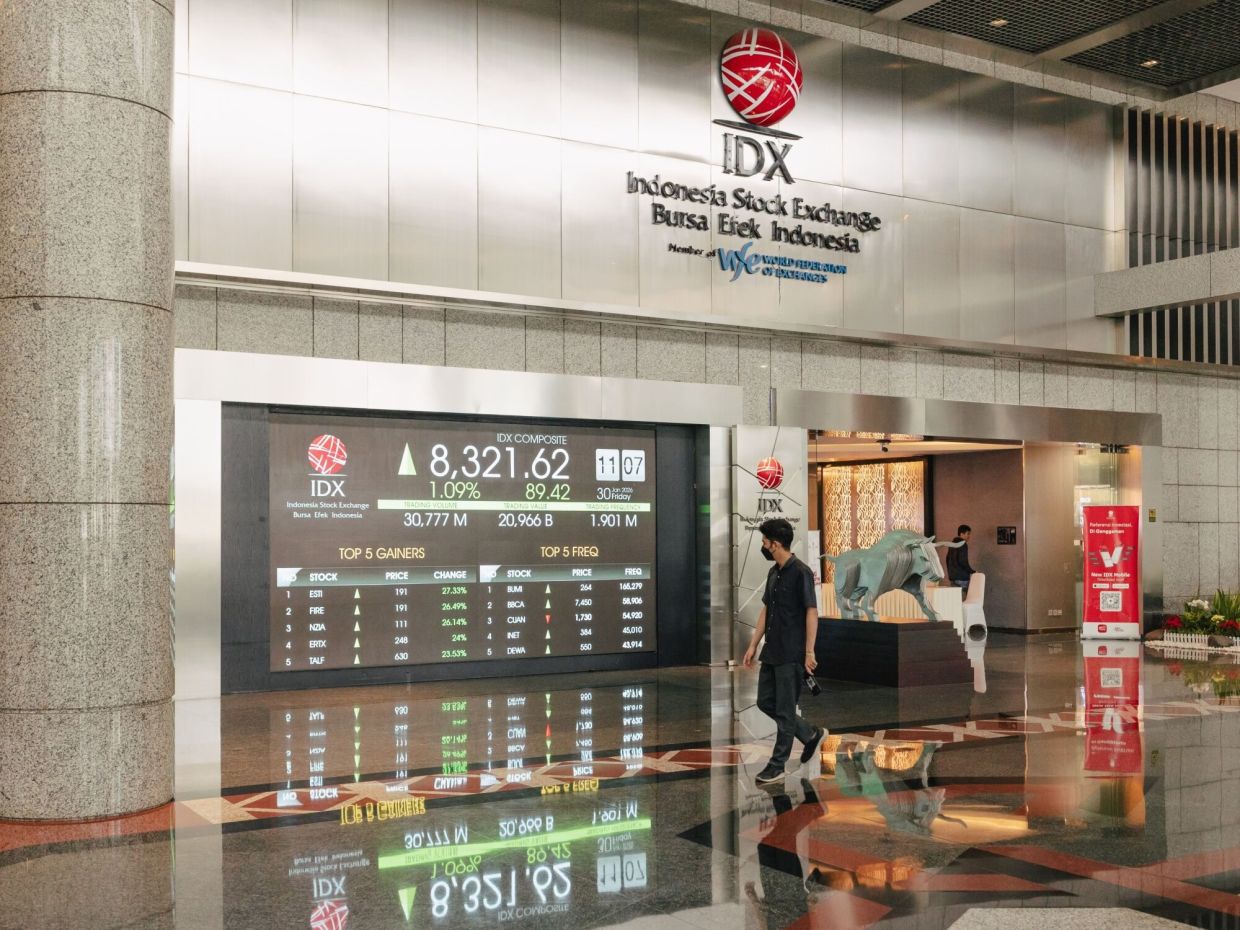
Indonesia's investment landscape faces a critical juncture as MSCI, the influential American index provider that steers trillions in global capital, has renewed its scrutiny of the Southeast Asian nation's market practices. The company released a market accessibility review on Thursday that downgraded Indonesia's information flow criterion to negative, citing persistent opacity in ownership disclosures and suspicious trading coordination. This latest pronouncement arrives at a particularly delicate moment, with MSCI set to announce its verdict next week on whether to strip Indonesia of its emerging market classification and relegate it to the less prestigious frontier market category—a shift that could precipitate equity outflows as severe as $13 billion as passive index funds are forced to rebalance their holdings.
The economic implications of such a downgrade would reverberate across Indonesia's financial ecosystem. When major index providers downgrade a nation, the mechanics of global investing dictate automatic selling pressure. Billions of dollars held in exchange-traded funds and mutual funds tracking MSCI indexes would need to be liquidated or redirected, creating a sudden, overwhelming wave of supply with limited buyers to absorb it. For a market already experiencing significant stress, this forced selling could exacerbate volatility and undermine price discovery. The prospect has rendered Indonesia's bourse the worst-performing major stock market globally this year, a distinction that few nations welcome and fewer can afford.
MSCI's concerns centre on the mechanisms that enable fair valuation and transparent price formation. The index provider identified two critical deficiencies: first, the inability of international investors to obtain clear information about who actually controls listed companies, and second, evidence suggesting coordinated or manipulative trading behaviour that distorts normal market function. These issues strike at the heart of why professional asset managers from Frankfurt to Hong Kong have traditionally valued emerging market exposure—the belief that markets operated with sufficient transparency and regulatory oversight to make investments predictable and fairly priced. When such confidence erodes, capital flees.
Yet the severity of MSCI's position may be somewhat overstated, according to market observers with direct knowledge of Southeast Asian capital flows. Mohit Mirpuri, a portfolio manager at SGMC Capital based in Singapore, offered a more nuanced interpretation of the accessibility review, noting that while the information flow metric deteriorated, Indonesia's performance on several other critical benchmarks remained competitive with regional peers including South Korea, China and India. He argued that investors should resist drawing conclusions from headlines alone, suggesting that a comprehensive assessment reveals less fundamental systemic decay than the negative classification implies. His base case remains that Indonesian authorities will successfully implement sufficient reforms to preserve the nation's emerging market status.
Indonesia's governing institutions have not remained idle in the face of these pressures. Following MSCI's January warning, authorities moved swiftly to implement a series of remedial measures intended to address transparency shortcomings. Most notably, regulators doubled the minimum free float requirement for listed companies to 15 percent, a move designed to ensure that sufficient shares remain available to public investors rather than being concentrated in the hands of insiders or connected parties. The sense of urgency surrounding these reforms was underscored when both the chief executive of the Indonesia Stock Exchange and the financial services regulator stepped down on the same day in January, signalling a change in leadership and direction. These were not cosmetic adjustments but substantive governance changes.
The calendar of events compounds the pressure. In April, MSCI extended its review period, signalling that the initial reforms had not fully resolved its concerns. By May, the index provider had removed six companies from its indexes, the vast majority of which maintained close ties to prominent Indonesian tycoons. The removal of these constituents triggered another sharp decline in the Jakarta stock index, creating a feedback loop wherein regulatory concerns translate directly into capital losses for investors. This pattern—where transparency and governance crises drive both index exclusions and equity weakness—has become distressingly familiar to market participants.
Beyond the technical transparency issues lies a broader macroeconomic context that has amplified investor unease about Indonesia's investment climate. The nation's currency, the rupiah, has weakened to record lows against the US dollar, a reflection of capital flight and diminished confidence in the country's economic management. President Prabowo Subianto's administration has pursued populist policies that, while potentially popular domestically, have raised concerns among international investors about fiscal sustainability and policy credibility. The central bank has responded by aggressively raising interest rates, attempting to support the currency and stem outflows, but such measures cannot address underlying governance or transparency concerns that capital worries about.
International credit rating agencies have begun to reflect these anxieties in their assessments. Both Moody's and Fitch revised their debt rating outlooks for Indonesia to negative in the first half of this year, a significant downgrade that raises borrowing costs and signals reduced confidence in the nation's policymaking apparatus. For a $1.4 trillion economy that once basked in the reputation of being a reliable emerging market investment destination, this reversal marks a stark change in global perception. The rating actions are particularly damaging because they send signals not just to equity investors but also to bond investors and foreign lenders who fund Indonesian government and corporate operations.
Currency market dysfunction compounds the problem. MSCI specifically noted that Indonesia lacks an efficient offshore currency market and faces constraints in its onshore currency trading mechanisms. For international investors, the ability to hedge currency risk is as important as the ability to buy or sell securities. When currency markets function poorly, the cost of protection rises dramatically, or protection becomes impossible to obtain at any price. This reality constrains the appetite of global institutions to commit capital to Indonesian investments, regardless of the underlying fundamentals of individual companies.
The equity market performance metrics tell a sobering story. The benchmark Jakarta stocks index has collapsed 29 percent since the start of 2026, erasing nearly a third of investors' values in just a handful of months. Foreign portfolio investors, whose capital flows are particularly sensitive to perceptions of political risk and governance quality, have dumped approximately $3.65 billion worth of Indonesian equities throughout the year. These outflows represent not passive rebalancing or routine position adjustments but a fundamental retreat from the Indonesian market narrative. When foreign investors move that much capital out the door, it signals that the reward they expect from holding Indonesian risk has fallen below the compensation they demand.
The decision MSCI will announce next week carries implications that extend well beyond Indonesia's borders. Other emerging market nations in Southeast Asia watch such proceedings intently, understanding that the standards MSCI applies to Indonesia may later be applied to them. Thailand, the Philippines, and Vietnam must consider whether their own transparency frameworks and governance standards would withstand similar scrutiny. Additionally, the fate of Indonesia's emerging market status will shape how regional capital flows behave more broadly, as fund managers revise their exposure to the broader emerging Asia region based on shifting perceptions of governance quality. For Malaysia specifically, Indonesia's struggles serve as both a cautionary tale about the dangers of governance drift and a potential opportunity should Malaysian markets appear more transparent and professionally managed by comparison.
The immediate question facing market participants is whether Indonesia's reform measures will prove sufficient to satisfy MSCI's accessibility criteria, or whether the index provider will determine that deeper, more extensive restructuring is required. The answer will fundamentally determine whether $13 billion flows out of Indonesian equities in a forced liquidation or whether confidence can be restored and the nation retains its emerging market classification. For Indonesia's government and financial regulators, the next week represents a critical test of whether their reform agenda can arrest the decline in investor confidence or whether the structural governance issues the market perceives run too deep to remedy quickly.