The Kuala Lumpur City Hall (DBKL) has committed RM200 million to a comprehensive modernisation programme targeting 287 hawker sites spread throughout the federal territory, with the initiative expected to directly improve conditions for over 11,000 small business operators. Announced on June 19, the Lestari Niaga @ Kuala Lumpur 2026 initiative represents a significant capital injection aimed at transforming Malaysia's hawker sector, which remains a vital economic pillar supporting hundreds of thousands of workers and feeding millions of daily consumers across the country.
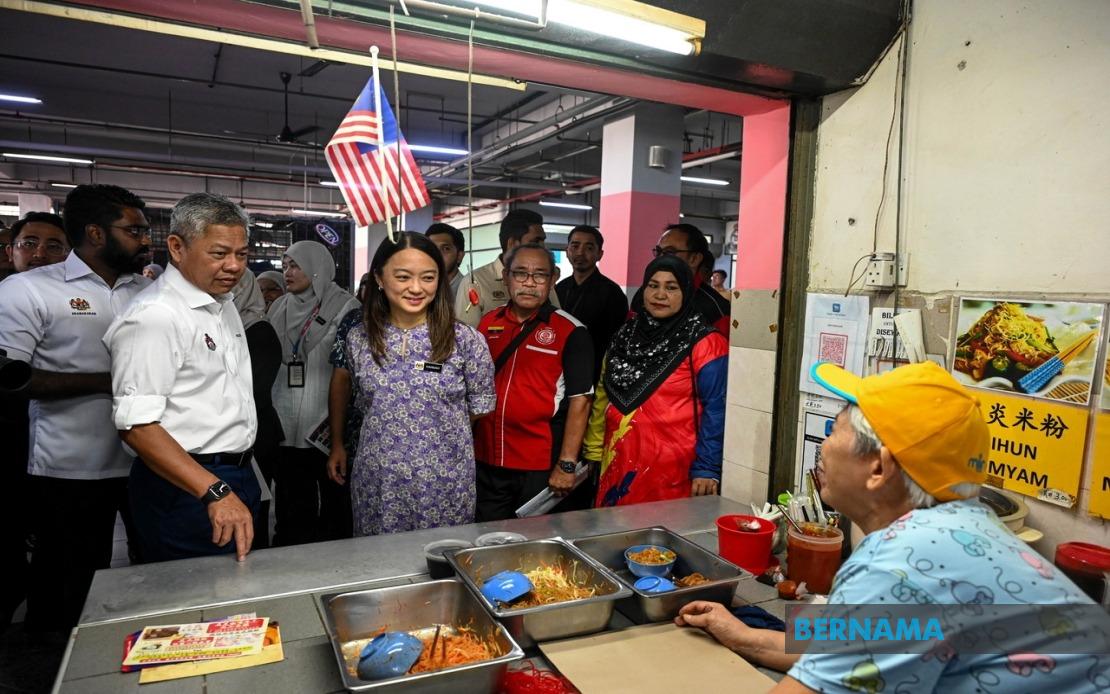
Hannah Yeoh, Minister in the Prime Minister's Department (Federal Territories), outlined the broader philosophy guiding the upgrades, emphasising that modernisation efforts must accommodate multiple stakeholder interests rather than prioritising one group over others. She stressed that DBKL's approach incorporates feedback from residents concerned about traffic congestion, traders seeking better working conditions, and property owners managing commercial developments. This balancing act has become increasingly complex as urban densification pressures mount across Kuala Lumpur's hotspots, where hawker operations often occupy prime real estate adjacent to residential and commercial zones.
The high-profile UTC Sentul hawker upgrade serves as a pilot case study for the broader programme's execution strategy. The RM1.6 million project, which commenced on June 15, will replace makeshift structures with 20 modern modular kiosks designed to meet contemporary health, safety, and sanitation standards. DBKL has projected completion within three months, positioning the site for operational resumption before October. This condensed timeline reflects lessons learned from previous redevelopment exercises and represents an attempt to minimise trader downtime during construction phases.
A distinctive feature of the UTC Sentul initiative—and those slated for subsequent phases—involves direct financial support to affected vendors. DBKL will distribute RM1,500 monthly to each of the 20 active traders operating during construction, a departure from conventional temporary relocation arrangements. Kuala Lumpur Mayor Datuk Seri Fadlun Mak Ujud justified this approach by arguing that temporary trading sites frequently impose hidden costs, occupy inconvenient locations, and ultimately depress customer footfall. Direct assistance thus emerges as a more pragmatic mechanism for maintaining trader viability during transition periods.
The rollout strategy divides the 287 sites into distinct phases, with the initial push targeting 224 locations encompassing diverse hawker configurations. The trader composition reflects Kuala Lumpur's complex informal economy structure: approximately 4,000 operate as street hawkers with minimal fixed infrastructure, roughly 5,000 work within municipal assets such as official stalls and markets, while around 1,000 fall into the reapplication category—typically traders seeking formal operating permits or reinstatement following licensing issues. This segmentation allows DBKL to tailor interventions according to specific operational contexts and infrastructure requirements.
Expansion to secondary locations including Jalan Dato Senu, Pudu Ulu, and Bandar Tun Razak indicates DBKL's intention to replicate the UTC Sentul model systematically across the territory. These neighborhoods have historically hosted significant concentrations of informal food vendors and small merchants, areas where infrastructure aging and regulatory compliance challenges have accumulated over decades. The simultaneous deployment of financial assistance schemes alongside physical upgrades suggests a coordinated effort to address both visible infrastructure deficits and the economic pressures facing street-level traders.
From a broader Southeast Asian perspective, Malaysia's approach to hawker modernisation carries instructive implications. Unlike some regional peers that have pursued aggressive formal-sector retail transitions or relocation programs that marginalise traditional vendors, DBKL's inclusive consultation model acknowledges hawker operations as legitimate urban economic actors deserving modernisation investment rather than elimination. This recognition reflects hawkers' entrenched role in Malaysian cultural identity and food heritage, particularly in urban contexts where hawker cuisine transcends class boundaries and serves as essential affordable sustenance for working populations.
The RM200 million allocation, while substantial, reflects the administrative complexity and infrastructure investment required to meaningfully upgrade hawker ecosystems. Modern modular kiosks incorporate improved ventilation, waste management systems, electrical safety upgrades, and ergonomic design elements addressing long-standing health and occupational concerns. These investments carry multiplier effects beyond individual trader circumstances, potentially enhancing urban public health outcomes, reducing environmental degradation from informal waste disposal, and creating safer working conditions for vulnerable workers often lacking formal employment protections.
However, the initiative's success hinges critically on execution quality and trader receptivity to new operational arrangements. Previous urban renewal exercises in Kuala Lumpur have encountered friction when official plans insufficiently accommodate traders' established customer bases, operational preferences, or social networks clustered around specific locations. The emphasis on stakeholder consultation and financial support suggests DBKL has internalised these lessons, yet persistent risks remain: modernised sites may command higher rental expectations, licensing requirements could prove onerous for informal operators, and relocated vendors might struggle to reconstitute customer loyalty in new settings.
The programme's timeline through 2026 provides sufficient runway for refinement based on early-phase outcomes at UTC Sentul and subsequent initial locations. Performance metrics should logically encompass not merely physical completion rates but trader economic viability, customer satisfaction, compliance adherence, and community integration outcomes. Given Malaysia's aspirations toward higher-income-country status, the hawker sector's transformation into a professionally managed, modernised ecosystem aligns with broader urban development trajectories whilst preserving the informal economy's essential accessibility and cultural authenticity.
For Malaysian entrepreneurs and traders operating in competing sectors, DBKL's commitment signals government willingness to invest in informal economy formalisation and value chain upgrading. This contrasts with ambiguous or punitive regulatory environments in some regions, where street vendors face harassment or systematic exclusion. The RM200 million commitment thus reinforces Malaysia's positioning as relatively conducive toward small-business participation, particularly within the culturally significant food and beverage domain that continues generating substantial employment and consumer satisfaction across income strata.