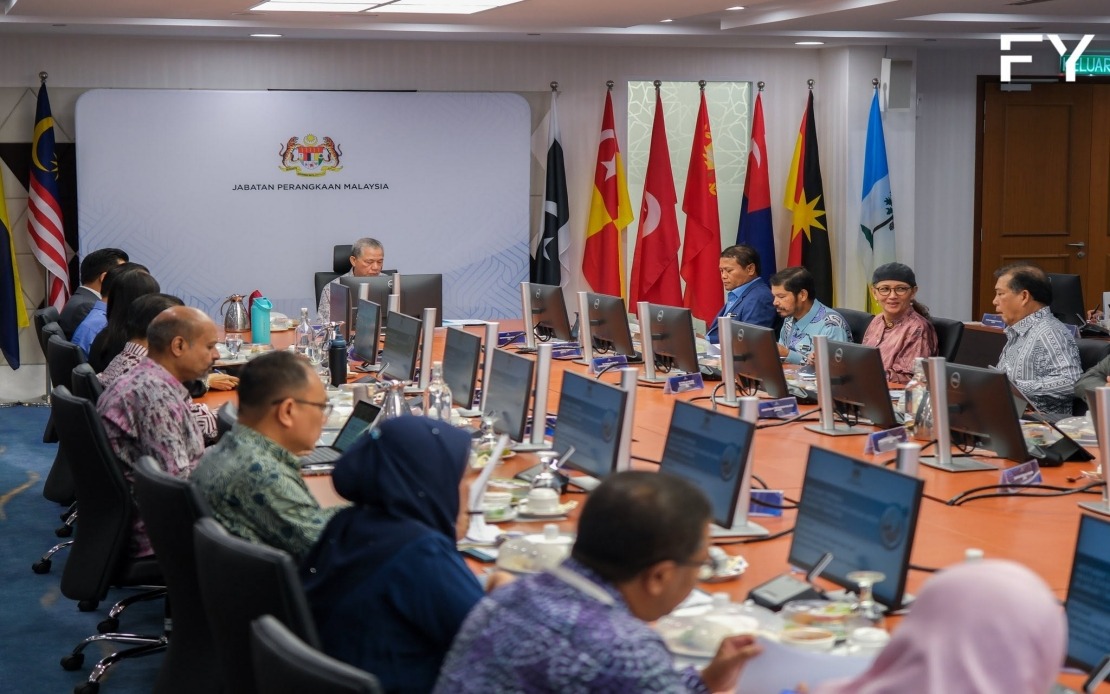
The Malaysian government views data and artificial intelligence as fundamental pillars for sound policymaking as it pursues the 13th Malaysia Plan through 2030. Deputy Prime Minister Datuk Seri Fadillah Yusof made this stance clear following the National Statistics and Data Council's high-level meeting in Kuala Lumpur, signalling that Putrajaya recognises data infrastructure as a strategic national resource rather than merely an administrative tool. This conceptual shift reflects how contemporary governance increasingly depends on evidence-based decision-making to navigate an interconnected world.
Fadillah articulated the scale of challenges Malaysia faces that demand sophisticated data analysis and technological capability. Beyond traditional economic management, the nation must contend with geopolitical instability, the acceleration of digital transformation, climate-related threats and the disruptive potential of emerging technologies themselves. In such a context, governments lacking robust statistical frameworks and analytical prowess risk making policy errors with cascading consequences. Malaysia's approach positions statistical excellence as a competitive advantage rather than a bureaucratic function, a recognition that distinguishes forward-thinking administrations from those relying on intuition or legacy approaches.
The immediate economic backdrop underscores why this strategic emphasis matters. Malaysia achieved 5.4 per cent gross domestic product growth in the first quarter of 2026, a performance that officials attribute partly to policies grounded in reliable data analysis. While quarterly figures naturally fluctuate, the consistent application of evidence-based policymaking suggests that investing in data infrastructure yields tangible returns. For a middle-income nation aspiring to higher-income status, such margins of improved efficiency compound significantly over planning horizons. Southeast Asian peers monitoring Malaysia's model may similarly recognise that statistical investment is not a cost centre but a productivity multiplier.
The institutional structure through which Malaysia pursues this agenda involves coordination across government silos that typically operate independently. The council session included representation from Works, Health, Communications, Digital, Economy portfolios as well as the Chief Statistician's office, reflecting an understanding that data ecosystems require horizontal integration. Malaysian bureaucracy, like most regional administrative systems, historically compartmentalises information within sectoral ministries. Breaking these patterns demands sustained leadership commitment and cultural change, suggesting that Fadillah's public emphasis serves not only strategic communication but also internal coordination messaging.
Fadillah identified several concrete operational priorities that operationalise the broader vision. Standardising statistical methodologies across government ensures comparability and reduces analytical friction when different agencies must collaborate on cross-cutting issues. Strengthening data governance addresses growing public and international concern about how governments handle sensitive information. The integration of administrative data—records that governments already collect for operational purposes—enables secondary analytical use without fresh data collection burdens. These practical measures distinguish substantive data strategy from rhetorical commitment to digitalisation that many governments announce without follow-through.
The planned science, technology and innovation talent database merits particular attention for its developmental implications. Malaysia's capacity to compete in higher-value sectors depends on identifying, nurturing and retaining technical talent at scale. A comprehensive database enables targeted interventions: policymakers can identify geographic clusters where STEM capacity concentrates, recognise emerging skill gaps, and design education and immigration policies accordingly. For a nation competing against Vietnam, Thailand and the Philippines for regional investment in advanced manufacturing and services, such granular human capital intelligence becomes strategically decisive. The database concept also reflects lessons from East Asian success stories where governments systematically managed talent mobility and skills development.
The emphasis on youth development data represents another window into how Malaysia approaches demographic challenges. The nation faces the typical middle-income country problem of a maturing population and shrinking youth labour force participation. Data-driven youth policy can identify barriers to employment, education-to-work transition obstacles, and geographic disparities in opportunity. Instead of applying uniform national programmes, evidence allows targeted interventions that address root causes in specific contexts. This approach particularly benefits rural and less-developed regions where youth outmigration often reflects information asymmetries and limited opportunity visibility rather than absolute resource scarcity.
Climate and water sector data integration speaks to Malaysia's positioning on environmental sustainability, an increasingly important criterion for foreign investment and regional standing. As global capital increasingly incorporates climate risk assessment and water security concerns, Malaysian firms and infrastructure projects that operate with superior environmental data gain competitive advantages in accessing capital and international partnerships. The government's commitment to comprehensive environmental data systems thus serves not only domestic sustainability objectives but also the economic interests of Malaysian businesses operating in global value chains increasingly subject to environmental due diligence.
The energy transition dimension carries particular weight given Malaysia's historical dependence on fossil fuel revenues and the structural economic challenges inherent in transitioning hydrocarbon-dependent economies. Data-driven energy planning allows Malaysia to optimise renewable capacity deployment, manage grid integration challenges, and identify efficiency opportunities across industrial and residential sectors. As Fadillah also holds the Energy Transition and Water Transformation portfolio, his emphasis on data for these sectors appears embedded in his departmental priorities rather than rhetorical flourish.
Integrating data from multiple sources while maintaining security and ethical standards represents a technically sophisticated challenge that extends beyond mere database aggregation. Malaysian experience with the MyData framework and emerging concerns about data privacy require that new statistical systems build trust through transparent governance, clear data use boundaries and demonstrable protective measures. Regional neighbours including Singapore have established leadership in responsible data governance precisely through this combination of analytical ambition and protective rigour. Malaysia's framing of integration as necessarily secure and ethical suggests institutional learning from regional examples.
The private sector and academic dimensions of the statistical system point toward an ecosystem approach rather than purely governmental data monopoly. Malaysian universities and research institutions possess analytical capacity that government agencies can leverage, while private sector data holdings complement official statistics. This collaborative framework potentially yields richer insights than any single institutional actor could generate independently. It also distributes capability across the economy in ways that strengthen overall national analytical capacity beyond formal government structures.
Looking toward 2030, Malaysia's statistical ambitions will face persistent execution challenges including budget discipline, coordination across political cycles, and adapting frameworks as technology evolves. Whether the 13th Plan succeeds in establishing the data infrastructure now being outlined depends substantially on sustained resource allocation and institutional commitment beyond current announcements. The Deputy Prime Minister's public emphasis, however, signals high-level political backing that historically proves necessary—though not sufficient—for achieving significant governance transformation.

%22%2F%3E%3C%2Fpattern%3E%3C%2Fdefs%3E%3Crect%20width%3D%22100%25%22%20height%3D%22100%25%22%20fill%3D%22url(%23ph340i1g)%22%2F%3E%3Crect%20width%3D%22100%25%22%20height%3D%22100%25%22%20fill%3D%22url(%23ph340i1p)%22%2F%3E%3Ctext%20x%3D%2250%25%22%20y%3D%2250%25%22%20text-anchor%3D%22middle%22%20dominant-baseline%3D%22central%22%20fill%3D%22rgba(255%2C255%2C255%2C0.95)%22%20font-family%3D%22Georgia%2C%20'Times%20New%20Roman'%2C%20serif%22%20font-weight%3D%22700%22%20font-size%3D%22170%22%20letter-spacing%3D%22-0.02em%22%3EMalaysia%3C%2Ftext%3E%3C%2Fsvg%3E)