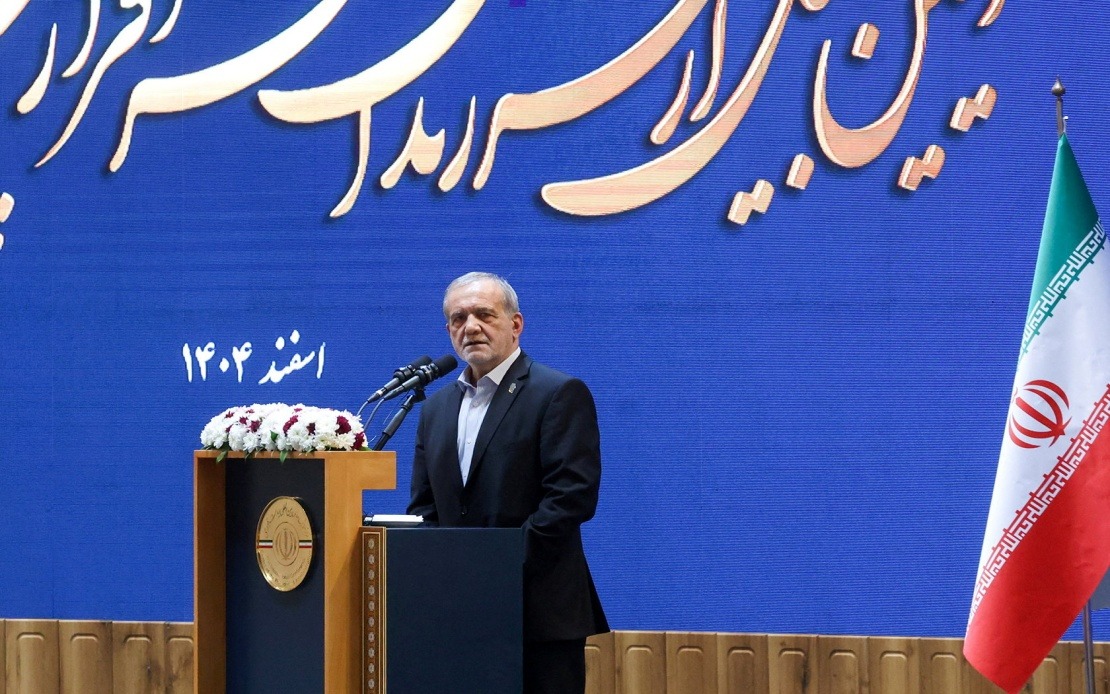
Iranian President Masoud Pezeshkian has signalled that his government could formally commit in writing to refraining from nuclear weapons development, marking a potentially significant shift in rhetoric as high-level diplomatic talks with the United States resume in Switzerland. The statement, released through state media, comes as both nations work to establish the groundwork for a long-term settlement after signing a preliminary memorandum of understanding earlier this week.
The proposal to issue a written declaration represents a notable concession in Iran's negotiating posture, though Pezeshkian did not explicitly confirm whether such a commitment forms part of the ongoing discussions between Iranian and American representatives. The timing of the announcement reflects the intensity of current negotiations, which began on Sunday in the Swiss capital and are designed to produce a comprehensive agreement within a 60-day timeframe. This deadline underscores the urgency both sides feel in reaching a settlement that addresses Iran's nuclear programme, long considered the most contentious element separating the two nations.
For Malaysian readers and observers across Southeast Asia, these developments carry significance that extends beyond bilateral relations between Tehran and Washington. The nuclear question has shaped Middle Eastern geopolitics for decades, influencing global energy markets, regional stability, and international security architectures in which Asian nations increasingly participate. Any breakthrough on Iran's atomic capabilities could reshape the strategic balance in the Middle East and affect economic conditions that ripple through global supply chains dependent on stability in the region.
Pezeshkian emphasised that Iran's leadership, including the late Supreme Leader Ali Khamenei who was killed in US-Israeli strikes at the beginning of the recent conflict, has consistently rejected weapons of mass destruction on religious and ideological grounds. This religious dimension has featured prominently in Iranian public discourse for years, with officials arguing that Islamic principles fundamentally preclude the pursuit of such weapons. By reiterating this position at a critical moment in negotiations, the president appears to be reinforcing the narrative that Iran's nuclear programme serves civilian purposes exclusively.
The Islamic Republic's official position has long maintained that its nuclear activities remain confined to peaceful energy generation and scientific research. However, international scepticism regarding these claims has persisted, with Western powers and regional adversaries expressing concerns about Iran's true intentions. The willingness to commit to a formal written declaration could serve multiple purposes simultaneously: demonstrating good faith to American negotiators, providing domestic political cover by framing concessions as expressions of long-standing principles, and potentially unlocking frozen assets and sanctions relief that Tehran desperately needs.
One immediate financial incentive driving the negotiations involves the release of approximately US$6 billion in Iranian assets that Washington has frozen in Qatar. Pezeshkian highlighted this potential unfreezing as a first step in the normalisation process, suggesting that humanitarian and economic relief form significant components of Iran's negotiating agenda. For a nation struggling under comprehensive sanctions, access to even a portion of its trapped overseas assets represents substantial economic breathing room.
The president conveyed optimism regarding the trajectory of negotiations, characterising the agreements reached thus far as largely favourable to Iranian interests. This public expression of confidence serves multiple audiences: it reassures Iran's domestic constituency that negotiators are protecting national interests, signals to American officials that Iran sees value in continuing talks, and may influence regional observers assessing whether a settlement is achievable. The balance between securing meaningful sanctions relief while maintaining the appearance of protecting Iran's sovereignty remains delicate.
The framework agreement establishing the 60-day negotiation window represents the culmination of earlier diplomatic efforts and indicates that both sides have identified sufficient common ground to warrant intensive talks. The involvement of Swiss officials as neutral intermediaries reflects the continued importance of Swiss diplomacy in facilitating communication between adversaries. For regional powers and international stakeholders, including Malaysia and other ASEAN members with interests in Middle Eastern stability, the progress of these talks warrants close attention.
The broader context includes the ongoing regional conflict that resulted in Khamenei's death and subsequent shifts in Iranian leadership and strategy. New leadership under Pezeshkian, who assumed office following these developments, appears more open to negotiated settlements than his predecessor. This generational shift in Iranian decision-making, combined with mounting economic pressures and the desire to restore international legitimacy, has created conditions potentially more conducive to reaching agreements that seemed impossible under earlier administrations.
From a Southeast Asian perspective, successful resolution of the Iran nuclear question could stabilise energy markets dependent on Middle Eastern oil and gas supplies, reduce military expenditures on regional balance-of-power competitions, and create space for broader international cooperation on economic and development issues. Conversely, failure to achieve a settlement could intensify regional tensions, draw in additional external powers, and perpetuate the sanctions regime that disrupts global economic integration.
The coming weeks will prove critical in determining whether the diplomatic momentum can translate into concrete agreements. Iran's proposed written declaration, if accepted by American negotiators, would represent a tangible commitment that potentially addresses a fundamental Western concern. However, remaining disagreements on verification mechanisms, timeline for sanctions removal, and guarantees against weapons development remain significant obstacles.

%22%2F%3E%3C%2Fpattern%3E%3C%2Fdefs%3E%3Crect%20width%3D%22100%25%22%20height%3D%22100%25%22%20fill%3D%22url(%23ph3rzqsg)%22%2F%3E%3Crect%20width%3D%22100%25%22%20height%3D%22100%25%22%20fill%3D%22url(%23ph3rzqsp)%22%2F%3E%3Ctext%20x%3D%2250%25%22%20y%3D%2250%25%22%20text-anchor%3D%22middle%22%20dominant-baseline%3D%22central%22%20fill%3D%22rgba(255%2C255%2C255%2C0.95)%22%20font-family%3D%22Georgia%2C%20'Times%20New%20Roman'%2C%20serif%22%20font-weight%3D%22700%22%20font-size%3D%22170%22%20letter-spacing%3D%22-0.02em%22%3ETambirat%3C%2Ftext%3E%3C%2Fsvg%3E)