The National Journalists' Day summit HAWANA 2026 is poised to commence tomorrow in Penang, marking a significant gathering of Malaysia's media community. Prime Minister Datuk Seri Anwar Ibrahim will officiate the event at 3 pm at the PICCA@Arena Butterworth Convention Centre, signalling the government's commitment to recognising the journalism profession at a time of evolving media landscapes and heightened scrutiny of press freedom across the region.
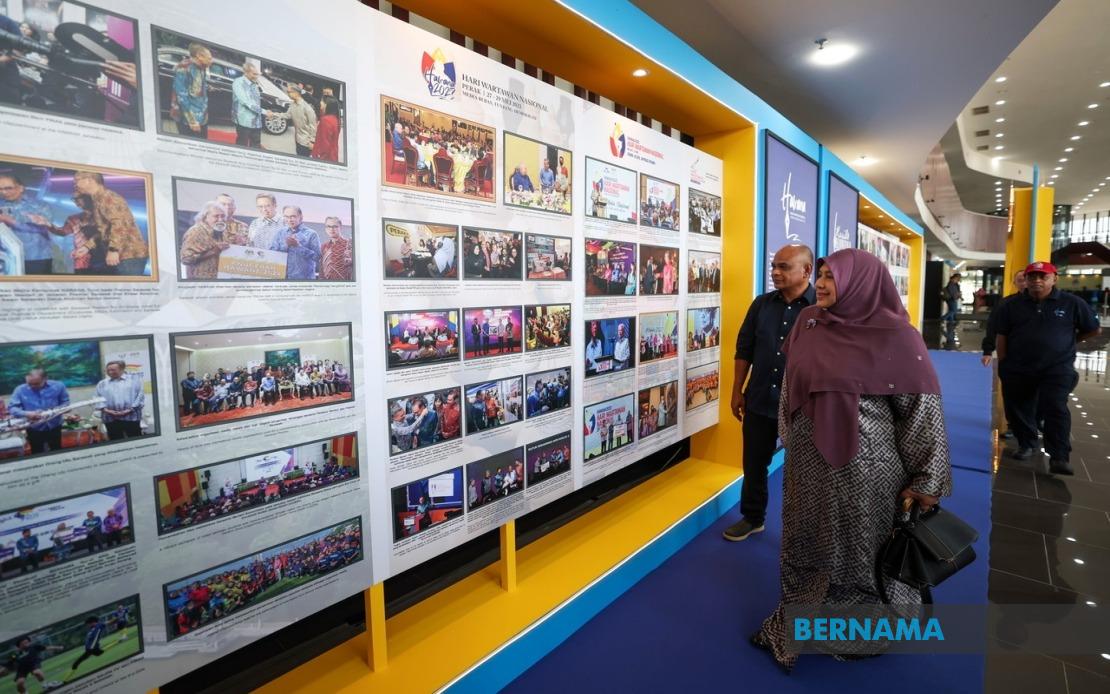
The organising committee has spent the past three days completing final arrangements at the Butterworth venue, with preparations now 80 per cent complete. Datin Paduka Nur-ul Afida Kamaludin, who chairs the HAWANA 2026 Working Committee and heads Bernama as chief executive officer, conducted a final inspection today to verify logistics and conduct rehearsals. Her presence underscores the importance placed on executing a flawless event that reflects the professionalism expected of Malaysia's national news agency.
Selecting Penang as the host location represents a deliberate strategic choice, though it carries distinct implications compared to previous editions held in Kuala Lumpur. The shift northwards reflects efforts to decentralise major national gatherings and boost recognition of Penang's growing importance as a media hub. However, this geographical displacement creates practical challenges that organisers have had to navigate carefully. Distance, venue unfamiliarity, and the need for participants to travel from the capital create friction that may suppress attendance numbers compared with events held in the nation's administrative centre.
The logistical complexities of hosting in Penang have necessitated meticulous planning that goes beyond typical event coordination. Accommodation scarcity, transportation constraints, and the coordination required across multiple service providers demanded sustained effort from the organising team. Yet securing cooperation from local hospitality providers has helped mitigate these pressures. The committee has worked closely with accommodation facilities throughout Penang state to ensure media practitioners attending have adequate lodging and seamless transit arrangements, recognising that attendee comfort directly influences participation and engagement levels.
Nur-ul Afida acknowledged candidly that the venue change will likely influence overall attendance figures. When HAWANA convenes in Kuala Lumpur, the lower barriers to entry enable broader participation from journalists, editors, and broadcast professionals across the country who can attend without excessive disruption to their newsrooms and daily responsibilities. Penang's distance introduces friction—work commitments, time management pressures, and competing professional obligations may deter some from journeying north, particularly those working in smaller outlets or regional bureaus without designated conference budgets. This dynamic highlights the tension between decentralising events for national development purposes and maintaining high-level participation that maximises the gathering's impact.
The summit operates under the thematic banner 'Media Integrity Strengthens Credibility', positioning the discourse around foundations of public trust in journalism. This framing arrives at a critical juncture when Malaysian media faces accusations of political bias, commercial pressures, and digital disruption. The theme invites practitioners to examine how editorial standards, verification rigour, and transparent sourcing contribute to audience confidence—matters of particular salience in Southeast Asia, where misinformation campaigns and state-adjacent media ownership structures complicate the integrity equation.
Organisers anticipate approximately 1,000 media professionals from Malaysia and international delegations will attend, creating a substantial platform for industry dialogue and knowledge exchange. Such gatherings serve instrumental purposes beyond ceremonial celebration: they facilitate networking among journalists, enable discussion of emerging technologies and business models threatening traditional outlets, and provide space for professional bodies to coordinate on regulatory and ethical matters. For foreign observers, these summits offer windows into how Malaysia's media establishment views its own challenges and opportunities.
Multiple auxiliary events organised by the Malaysian Media Council, the Federation of Malaysian Media Clubs (GKMM), and the Malaysian Press Institute (MPI) will run parallel to the main summit. These satellite programmes allow for specialised discussion tracks addressing particular segments—broadcast journalists, newspaper editors, digital publishers, and others—while reinforcing that HAWANA functions as an ecosystem encompassing various stakeholder communities rather than a single monolithic gathering. Such diversification enriches the intellectual output and ensures relevance across heterogeneous segments of the profession.
The event structure reflects HAWANA's role as the country's foremost institutional mechanism for acknowledging media contributions and professionalism. Established under the Ministry of Communications with Bernama as implementing agency, HAWANA operates as official recognition that journalism constitutes a profession warranting state-level acknowledgment and celebration. This positioning carries both symbolic weight and practical implications—it signals that press activity remains valued within Malaysia's governance framework, while simultaneously creating expectations about professional conduct that the state may subsequently leverage in regulatory discussions.
From a regional perspective, HAWANA 2026 arrives amid broader Southeast Asian discussions about media's role in plural democracies and press freedom trajectories. Malaysia's experience navigating between democratic commitments and state oversight concerns parallels challenges across Thailand, Indonesia, and the Philippines. Journalists attending from bordering nations may observe how Malaysian practitioners balance editorial independence with political sensitivities, and vice versa. The international participation dimension thus extends HAWANA's significance beyond domestic recognition into comparative professional learning.
The timing and composition of this gathering also warrants attention regarding the broader political environment. With a Prime Minister who has personally advocated for press freedom while managing complex government relationships with media outlets, the official conferral of legitimacy on HAWANA carries nuance. Whether tomorrow's summit becomes a venue for frank discussion of media challenges—ownership concentration, advertising revenue collapse, digital disruption—or primarily celebratory remains to be seen, though the integrity-focused theme suggests organisers envision substantive engagement.
As final preparations conclude, the HAWANA 2026 summit represents both continuity and evolution in how Malaysia's professional journalism community assembles to reflect on its role and responsibilities. The choice of Penang signals willingness to experiment with decentralisation, while the 1,000-person attendance target demonstrates confidence in sustaining a flagship event that brings the profession together annually. Tomorrow's gathering will reveal whether the integrity-focused theme translates into meaningful dialogue about the concrete pressures and possibilities shaping Malaysian journalism in the 2020s.