The HAWANA 2026 Summit in Butterworth is featuring a landmark photo exhibition that documents nearly a decade of Malaysia's National Journalists' Day and tells the stories of journalists who have received vital financial assistance. The specially curated gallery, set up alongside the summit being held at PICCA Convention Centre @ Arena Butterworth, represents the culmination of efforts by the Malaysian National News Agency (Bernama) to preserve the institutional memory of an event that has become central to the country's media landscape. Prime Minister Datuk Seri Anwar Ibrahim is scheduled to officially open the summit on June 20.
The exhibition is structured around two distinct narratives. The first traces HAWANA's evolution from its inception in 2018 through 2025, presenting a visual timeline of how the celebration has grown and developed over successive years. Photographs capture the progression of venues, themes, and participation across the nation—from Kuala Lumpur's inaugural event to Melaka in 2022, Ipoh in Perak in 2023, and Kuching in Sarawak in 2024—before returning to Kuala Lumpur in 2025. This geographical spread underscores how the observance has expanded beyond Malaysia's peninsular core to embrace the eastern states, reinforcing the notion of a genuinely national celebration of journalism.
The second segment addresses what many regard as HAWANA's most significant contribution: the tangible welfare support provided through Tabung Kasih@HAWANA. This initiative has emerged as a lifeline for media professionals and veterans confronting serious health crises or severe financial hardship. By placing recipient stories at the gallery's centre, the exhibition shifts attention from abstract principles of press freedom to concrete human impact—a strategic choice that resonates powerfully in a society where community and mutual aid retain profound cultural significance. The visual testimonies serve as quiet affirmations of solidarity within the journalism profession.
Datin Paduka Nur-ul Afida Kamaludin, Bernama's chief executive officer and chairman of the HAWANA 2026 Working Committee, emphasized that the exhibition fulfils a dual purpose. Beyond celebrating the media industry itself, it shines light on Bernama's behind-the-scenes work as both the event's secretariat and the administrator of Tabung Kasih@HAWANA. For years, Bernama has functioned as an invisible infrastructure—gathering news and coordinating resources while remaining largely absent from public consciousness. This exhibition positions the agency as a custodian of journalistic welfare and institutional memory, legitimizing roles that extend far beyond news transmission into the realm of professional stewardship.
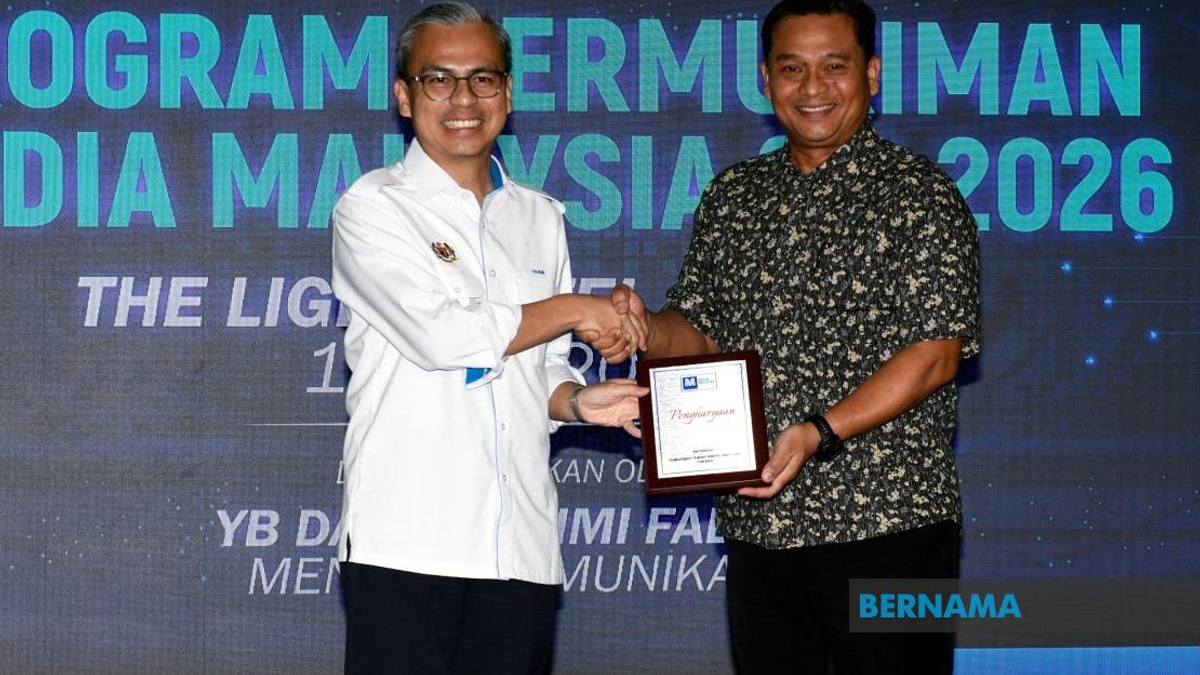
The curatorial approach reflects deliberate thoughtfulness. Mohamad Bakri Darus, editor of Bernama's Photo Desk, explained that every image was rigorously selected and paired with bilingual captions in Malay and English. This linguistic accessibility removes barriers to understanding and signals respect for Malaysia's diverse audience. Each photograph is contextualized rather than left as a mere visual artifact, encouraging visitors to engage with deeper meanings—the camaraderie evident in group moments, the dignity of award recipients, the intergenerational bonds between senior and younger journalists.
Among the documented programmes are the Strategic Partner Meeting, Media Forum, HAWANA-DBP Pantun Festival, carnival activities, exhibitions, and sporting events. This variety reveals HAWANA as more than a ceremonial occasion; it functions as a comprehensive platform where journalism, culture, and community converge. The inclusion of the DBP Pantun Festival particularly grounds the celebration in Malaysian cultural traditions, suggesting that professional journalism and national heritage reinforce one another. The carnival and sports elements further normalize HAWANA as family-oriented and inclusive rather than elite or exclusive.
For Malaysian media practitioners, this exhibition carries layers of significance often overlooked in international discussions of press freedom. While international indices measure freedom through legislative frameworks and government restraint, HAWANA and Tabung Kasih@HAWANA address a different but equally urgent challenge: the economic sustainability and personal welfare of those who perform journalism. In a region where media economics have deteriorated significantly, where retrenching publications have left experienced journalists without safety nets, and where freelancers often lack access to health insurance, this mutual aid mechanism represents pragmatic professionalism.
The timing of this exhibition during the HAWANA 2026 Summit is deliberate. As the event reaches its ninth iteration, reflecting on the past eight years becomes an act of taking stock—assessing what has been achieved, what challenges remain, and what future iterations might address. For participants from smaller regional newsrooms, from provincial newspapers, and from digital media startups, reviewing HAWANA's trajectory offers perspective on how their profession has mobilized to support its own members in the absence of robust state safety nets or corporate welfare provisions.
The exhibition also invites reflection on the role of a national news agency in modern Malaysia. Bernama's decision to weaponize its institutional resources—its photograph archives, its communications networks, its standing—toward the welfare of the broader media community positions it as something beyond a competitor or a government mouthpiece. Instead, it models how a national agency can serve as an anchor institution for professional community, a place where collective memory is preserved and collective challenges are addressed. For Southeast Asian media systems watching from neighbouring countries, this model offers both inspiration and questions about how professional institutions can evolve beyond their original mandates.
Looking forward, the exhibition raises questions about sustainability and reach. How will HAWANA's message resonate among digital natives and younger journalists who may not have participated in previous celebrations? How can Tabung Kasih@HAWANA's reach expand to include freelancers and non-traditional media practitioners? How will the celebration adapt as the media landscape itself undergoes continued disruption? These questions linger beneath the celebratory surface of the exhibition, suggesting that while eight years of history deserve commemoration, the most urgent work of institutionalizing media welfare in Malaysia still lies ahead.