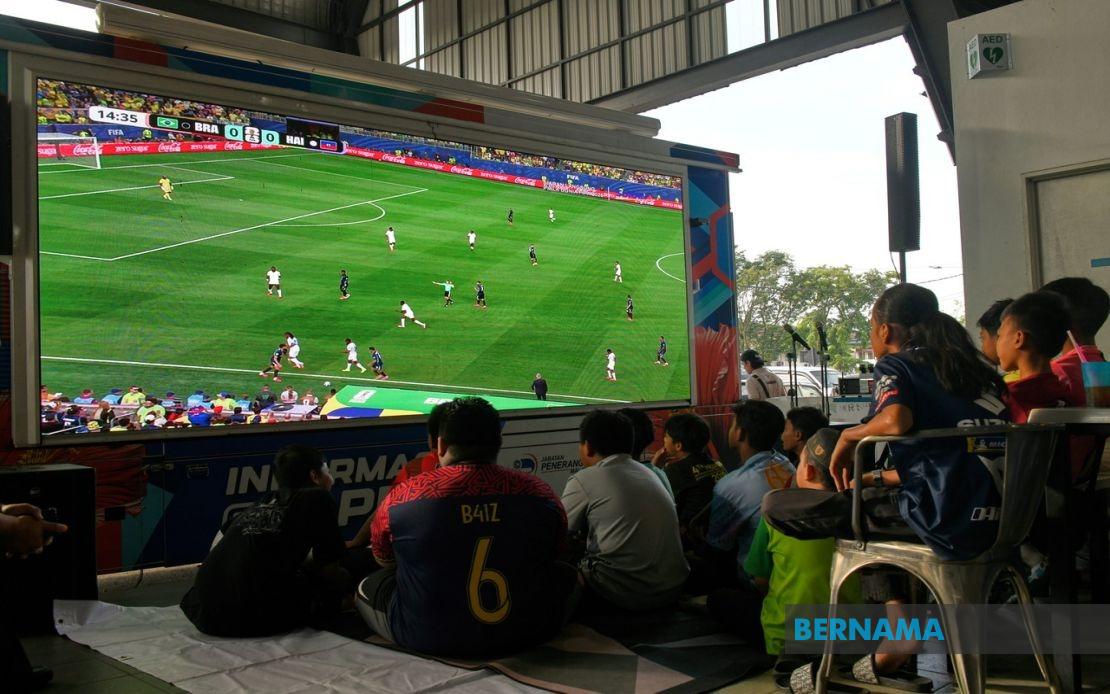
The Malaysian government's commitment to providing free access to 2026 FIFA World Cup matches has struck a chord with business owners and the public, according to Communications Minister Datuk Fahmi Fadzil. Speaking in Butterworth on June 20, he highlighted how the broadcasts through Radio Televisyen Malaysia (RTM) and Unifi TV are substantially reducing financial pressures at a time when operating margins remain tight for many service businesses. The initiative represents a departure from previous tournament cycles, when high licensing fees effectively priced many establishments out of offering live sporting coverage to customers.
Fahmi's remarks came after feedback from the Malaysian Muslim Restaurant Owners Association, which cited the free-to-air arrangement as a major relief for their members. One trader revealed to the minister that this was the first occasion in over twenty years that he could screen World Cup matches without bearing substantial broadcast costs. For food and beverage operators already contending with elevated supplier costs and thin profit margins, the elimination of content licensing fees translates into meaningful operational savings that can be reinvested elsewhere or passed on to customers through competitive pricing.
The government's three-pronged distribution strategy—RTM's traditional terrestrial network, the RTMKlik digital platform, and Unifi TV's subscriber base—ensures broad geographic and demographic reach across the nation. This multi-channel approach reflects an understanding that Malaysian households access content through different mediums depending on location, age, and technological adoption. Rural areas can rely on RTM's established broadcast infrastructure, while urban professionals can stream matches via RTMKlik or Unifi TV on mobile devices and computers. The redundancy built into this system minimises the risk of technical failures affecting viewer experience during high-profile matches.
Beyond the immediate cost savings, Fahmi articulated an economic multiplier effect. By removing barriers to match viewership in commercial spaces, the government expects restaurants, cafes, and small venues to attract larger crowds during tournament fixtures. Customers gathering to watch matches typically spend on food, beverages, and extended dwell time—a revenue stream that benefits small operators significantly during major sporting events. This secondary economic benefit, if realised broadly, could cushion the hospitality sector against some of the headwinds it currently faces, particularly inflationary pressures stemming from global supply chain disruptions and regional geopolitical tensions.
The timing of this initiative carries strategic significance given Malaysia's broader economic context. The nation has been absorbing elevated import costs related to the conflict in West Asia, which has rippled through shipping rates, energy prices, and goods inventories. Small businesses, especially in the food service sector, have felt these pressures acutely because they operate on relatively fixed margins and cannot easily absorb cost increases. By removing one discretionary expenditure—broadcast licensing—the government provides tangible relief that, while modest in isolation, collectively supports business sustainability across thousands of establishments.
Fahmi's visit to the Seberang Jaya Public Market illustrated the government's intention to maintain direct engagement with traders and understand ground-level conditions. He spent time watching the Brazil versus Haiti match alongside market patrons, an informal approach designed to gather unfiltered perspectives on business challenges. This methodology—ministerial presence at grassroots venues—generates qualitative intelligence that bureaucratic surveys often miss. Traders speaking directly to a sympathetic audience may disclose vulnerabilities, supply chain bottlenecks, or specific assistance needs that formal channels might obscure. The minister explicitly pledged to relay these observations to Prime Minister Datuk Seri Anwar Ibrahim and Penang Chief Minister Chow Kon Yeow, suggesting an intention to translate field observations into policy consideration.
The minister also called for expanded ministerial engagement at the grassroots level, encouraging colleagues across the political hierarchy to spend time observing trader and citizen experiences firsthand. This advocacy reflects a recognition that policy-making disconnected from lived reality often produces ineffective solutions. By fostering a culture where ministers routinely visit markets, food courts, and small businesses, the government can maintain sensitivity to emerging pressures and adjust interventions accordingly. For Malaysia's fractious multi-level governance system, this emphasis on face-to-face engagement across federal and state actors can build political consensus around shared problems.
The World Cup initiative also functions as a soft cultural intervention. Major sporting tournaments generate communal viewing moments that transcend commercial transactions. When restaurants become gathering places for families and friends to watch matches together, they strengthen social bonds and reinforce community identity. For a multicultural nation like Malaysia, international sporting spectacles offer neutral terrain where citizens of different ethnic and religious backgrounds can congregate around shared interests. By facilitating this through free broadcasts, the government is indirectly supporting social cohesion infrastructure.
Looking forward, the success of this approach may influence future government thinking about public goods and streaming access more broadly. If the 2026 World Cup broadcasts deliver the anticipated economic stimulus without straining state broadcasting budgets, there could be precedent for extending similar arrangements to other major international sporting or cultural events. This would represent a gradual shift toward regarding certain high-impact entertainment content as quasi-public goods worthy of subsidisation, akin to essential infrastructure or educational services.
The initiative also underscores how strategic policy design can address multiple objectives simultaneously. The government achieves cost relief for citizens and businesses, supports the food and beverage sector, ensures equitable access regardless of household income or location, and generates political goodwill through a popular initiative—all without redirecting substantial budgetary resources from other priorities. RTM, already funded through the public purse, simply extends its mandate to include premium sporting content, while Unifi TV gains potential subscriber engagement. For small government, this represents efficient policy leverage.

%22%2F%3E%3C%2Fpattern%3E%3C%2Fdefs%3E%3Crect%20width%3D%22100%25%22%20height%3D%22100%25%22%20fill%3D%22url(%23ph32kpdg)%22%2F%3E%3Crect%20width%3D%22100%25%22%20height%3D%22100%25%22%20fill%3D%22url(%23ph32kpdp)%22%2F%3E%3Ctext%20x%3D%2250%25%22%20y%3D%2250%25%22%20text-anchor%3D%22middle%22%20dominant-baseline%3D%22central%22%20fill%3D%22rgba(255%2C255%2C255%2C0.95)%22%20font-family%3D%22Georgia%2C%20'Times%20New%20Roman'%2C%20serif%22%20font-weight%3D%22700%22%20font-size%3D%22170%22%20letter-spacing%3D%22-0.02em%22%3EMalaysia%3C%2Ftext%3E%3C%2Fsvg%3E)