%22%2F%3E%3C%2Fpattern%3E%3C%2Fdefs%3E%3Crect%20width%3D%22100%25%22%20height%3D%22100%25%22%20fill%3D%22url(%23ph5u0dg)%22%2F%3E%3Crect%20width%3D%22100%25%22%20height%3D%22100%25%22%20fill%3D%22url(%23ph5u0dp)%22%2F%3E%3Ctext%20x%3D%2250%25%22%20y%3D%2250%25%22%20text-anchor%3D%22middle%22%20dominant-baseline%3D%22central%22%20fill%3D%22rgba(255%2C255%2C255%2C0.95)%22%20font-family%3D%22Georgia%2C%20'Times%20New%20Roman'%2C%20serif%22%20font-weight%3D%22700%22%20font-size%3D%22320%22%20letter-spacing%3D%22-0.02em%22%3EDr%3C%2Ftext%3E%3C%2Fsvg%3E)
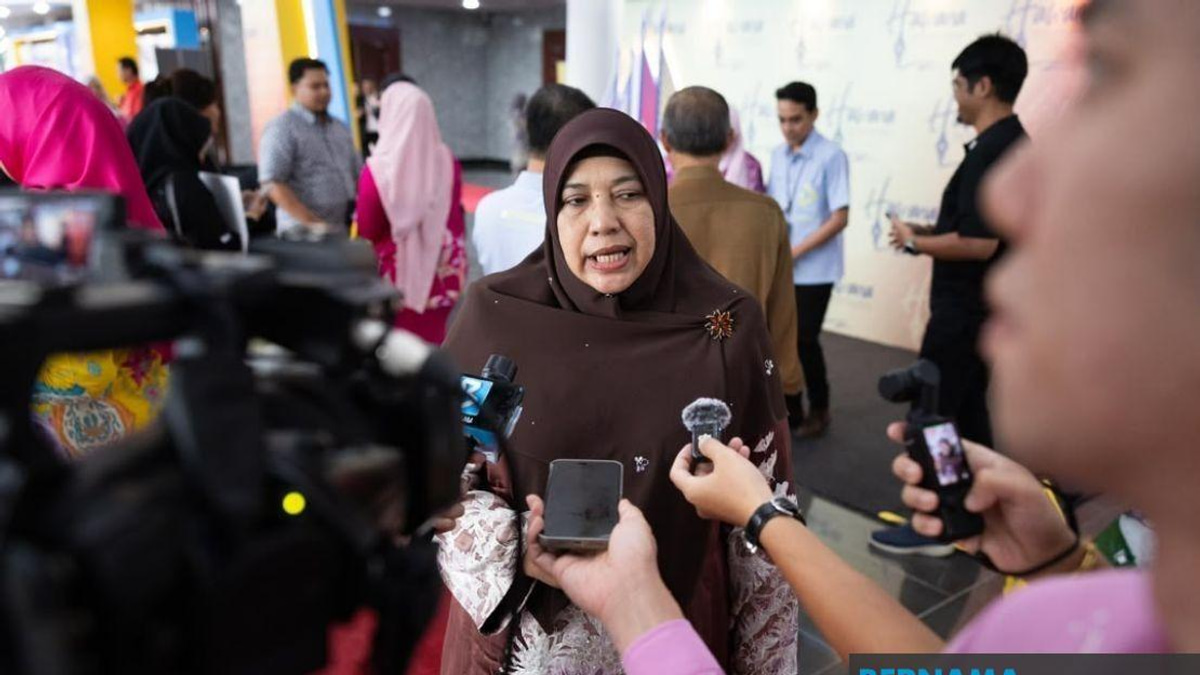
Dr Wan Azizah Wan Ismail, president of Pergerakan Puteri Islam Malaysia (PPIM) and wife of the Prime Minister, hosted a gathering with 395 participants attending the National Level Nature Camp 2026 programme at the National Planetarium in Kuala Lumpur on Wednesday. The afternoon engagement, which commenced at 1.17 pm, provided an opportunity for the PPIM leadership to interact directly with young participants and acknowledge their completion of a comprehensive educational initiative that integrates Islamic values, environmental stewardship, and practical life competencies.
The event drew a notable cross-section of government and civil society figures. In attendance were Datuk Ruziah Shafei, deputy secretary-general of the Ministry of Science, Technology and Innovation with responsibility for science planning and enculturation; PPIM honorary secretary Aizar Mohd Jaman; Mohd Zamri Shah Mastor, director of the National Planetarium; and regional and national leaders from PPIM chapters throughout the country. The coordination between these stakeholders underscores the programme's significance as a collaborative initiative bridging Islamic youth education, scientific literacy, and environmental awareness among Malaysia's younger generation.
The three-day nature camp operated from June 18 to 20 at Laman Puteri within Kompleks Darul Puteri along Jalan Cheras in Kuala Lumpur. Rather than concluding with a conventional ceremony, organisers deliberately selected the National Planetarium as the venue for the formal closing event, allowing participants to benefit from an educational visit focused on science and astronomy. This pedagogical choice reflects a deliberate strategy to extend the learning experience beyond traditional camp settings, grounding students' understanding of environmental and spiritual concepts within the framework of scientific knowledge.
According to Aizar, the camp represents a biennial undertaking that has evolved considerably in its curriculum design and thematic emphasis. The 2026 edition placed particular weight on synthesising environmental education with Quranic teachings and practical life skills development. This integrated approach aims to cultivate a generation of young Muslims who understand their religious obligations within the context of contemporary environmental challenges and possess the practical capabilities to navigate modern society effectively.
The PPIM curriculum framework guiding such programmes encompasses eight distinct domains that collectively shape participant development. These pillars include spiritual formation, technical and interpersonal skills, environmental stewardship and sustainability, camping and outdoor competencies, management and administrative capabilities, health and wellness literacy, and individual personal development. By structuring camps around these interconnected areas rather than isolated topics, PPIM seeks to foster holistic maturity among participants rather than compartmentalised knowledge.
For Malaysian readers, the significance of such youth-focused initiatives extends beyond immediate participant engagement. Islamic youth organisations like PPIM play a crucial role in shaping values and capabilities among the country's Muslim demographic, who comprise approximately 70 per cent of Malaysia's population. Programmes that explicitly integrate environmental consciousness alongside religious education address a gap in traditional Islamic pedagogy, demonstrating how faith communities can contribute meaningfully to Malaysia's climate action and sustainability objectives.
The emphasis on environmental integration within a religious educational context carries particular relevance for Southeast Asia, where rapid urbanisation and industrialisation have accelerated ecological pressures. Young people educated to understand environmental stewardship as an Islamic duty—drawing on Quranic principles of custodianship—represent a potential force multiplier for regional conservation efforts. Malaysia, as a megadiverse nation hosting some of Earth's oldest rainforests, stands to benefit from religious communities mobilising their constituencies around environmental protection as a faith obligation rather than merely a secular policy prescription.
Dr Wan Azizah's participation in the closing ceremony signals institutional recognition at the highest levels of government for the type of character and skills development that PPIM coordinates. Her attendance, combined with representation from the Ministry of Science, Technology and Innovation, suggests alignment between youth-focused civil society initiatives and government priorities around developing human capital, scientific literacy, and values-based citizenship. Such endorsement may encourage other religious and community organisations to examine their own educational programming through similar lenses of integration and holistic development.
The nature camp model, executed biennially, provides continuity and deepening expertise in delivering complex, multi-dimensional educational experiences to Malaysian youth. By combining outdoor immersion, spiritual reflection, scientific learning, and practical skill-building within a single coordinated programme, organisers acknowledge that modern citizenship—particularly for religiously-engaged young people—demands integration across domains traditionally treated as separate. The rotation of venues and the deliberate selection of science-focused locations like the National Planetarium reflect an organisational maturity committed to connecting abstract knowledge with tangible, meaningful experiences that resonate with participants beyond the formal programme timeline.
As Malaysia navigates questions about balancing rapid development with environmental sustainability, cultivating inclusive governance, and nurturing spiritually-grounded yet scientifically-literate citizens, programmes such as the PPIM National Level Nature Camp represent quiet but substantial contributions to these national conversations. The presence of nearly 400 young people completing such comprehensive training—and the institutional recognition their achievement receives—suggests that significant numbers of Malaysia's youth are being prepared to approach their futures with both principled values and practical capabilities essential for addressing the complex challenges ahead.