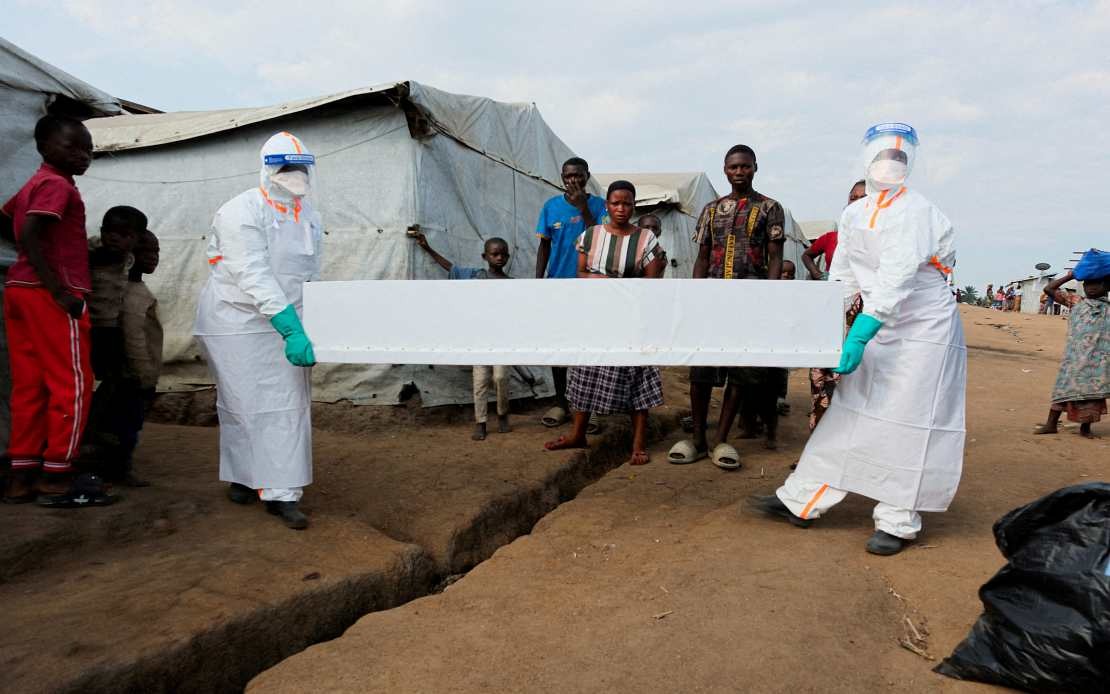
The Democratic Republic of Congo is grappling with an escalating health emergency as confirmed Ebola virus cases surpassed the 1,000 mark by late June, marking a critical threshold in the fight against the haemorrhagic fever. According to the country's Health Ministry, the outbreak that began on May 15 had reached 1,003 confirmed cases with 254 fatalities, translating to a mortality rate of approximately 25.3 per cent — a proportion that underscores the disease's severe impact on affected populations.
The surge represents a rapid acceleration in case numbers over a relatively short timeframe, prompting renewed international concern about disease containment measures. The mortality rate, while lower than some historical Ebola outbreaks, remains dangerously high and reflects both the virulence of the virus and challenges in accessing timely treatment across the affected regions. Health Minister Roger Kamba acknowledged the ongoing crisis by reaffirming that response operations continue across the provinces of Ituri, North Kivu, and South Kivu, where transmission chains have proven difficult to interrupt despite intensive intervention efforts.
While the trajectory is alarming, authorities have reported some encouraging developments on the ground. At least 100 patients have recovered from the infection, indicating that medical interventions and supportive care can successfully combat the virus in certain cases. However, this positive news is tempered by the fact that 365 patients remain either isolated or hospitalised, representing an enormous strain on local health infrastructure already stretched thin by years of conflict and under-investment. The number of active cases suggests that the epidemic has not yet peaked and that health systems may face mounting pressure in coming weeks.
A particularly troubling assessment emerged from the Africa Centres for Disease Control and Prevention, which warned that the current outbreak could potentially exceed the devastating 2014-2016 West African epidemic if transmission rates remain unchecked. That crisis claimed over 11,000 lives across Guinea, Liberia, and Sierra Leone, representing the deadliest Ebola event on record. The Africa CDC's cautionary statement reflects deep concern among regional epidemiologists that without decisive action, the Democratic Republic of Congo outbreak could evolve into a continental health catastrophe with consequences extending far beyond Central Africa.
One critical finding has emerged from ongoing scientific investigation: researchers from Uganda's Department of National Health Laboratory and Diagnostic Services, working collaboratively with the Democratic Republic of Congo's Institute of National Biomedical Research, have determined that the current strain is Ebola Bundibugyo and originated from a new wildlife spillover event. This discovery is significant because it definitively rules out the possibility that cases stem from a dormant or hidden transmission chain from a previous outbreak that might have persisted undetected in the community. Understanding the source of the outbreak is essential for developing targeted prevention strategies that address the specific ecological and behavioural factors driving transmission.
The identification of a new zoonotic spillover underscores the persistent risk that wildlife-human contact poses in Central Africa, where environmental pressures, deforestation, and hunting practices create opportunities for viruses to jump from animal reservoirs into human populations. This finding suggests that prevention efforts must extend beyond managing existing cases to encompassing broader landscape and animal health interventions that reduce spillover risk. For Malaysia and other Southeast Asian nations, the Democratic Republic of Congo outbreak serves as a sobering reminder of how quickly localised animal-to-human transmission events can cascade into regional epidemics if containment fails.
Despite the gravity of the situation, Congolese health authorities have maintained that response efforts are comprehensive and ongoing. The ministry emphasised that active case investigations, epidemiological surveillance activities, and prevention measures continue in all affected areas. Community communication campaigns, diagnostic testing expansion, and case management intensification represent the three-pronged strategy being deployed to arrest transmission. Health Minister Kamba indicated that while challenges persist, particularly regarding the maintenance of contact follow-up rates, the fundamental components of epidemic response remain functional.
The contact follow-up rate decline that Kamba referenced represents a particular vulnerability in containment efforts. Contact tracing is fundamental to Ebola control, as identifying and monitoring individuals exposed to confirmed cases allows authorities to isolate infected persons before they transmit the virus further. Declining follow-up rates suggest either that field teams are becoming overwhelmed by case numbers or that community cooperation has eroded, both scenarios that would significantly impede outbreak control. Addressing this gap has become critical to preventing the epidemic from spiralling further beyond current levels.
For Malaysia and the broader Southeast Asian region, this outbreak carries implications beyond immediate humanitarian concern. The Democratic Republic of Congo's experience demonstrates how quickly Ebola can spread through populations once community transmission is established, and how resource-constrained health systems struggle to manage simultaneous epidemic response while maintaining routine healthcare services. Regional governments have already strengthened health screening protocols at international airports and border crossings in response to other infectious disease threats, and this outbreak may prompt renewed investment in preparedness measures.
The convergence of a novel zoonotic spillover, rapid human transmission, and limited healthcare capacity in conflict-affected regions creates a precarious scenario. International health organisations have mobilised resources and technical expertise to support Congolese authorities, but the fundamental challenge remains one of translating external assistance into local action at the community level where transmission chains are being broken or perpetuated. Success will depend on sustained commitment from both the Democratic Republic of Congo government and international partners to maintain response intensity even as global media attention inevitably shifts elsewhere.