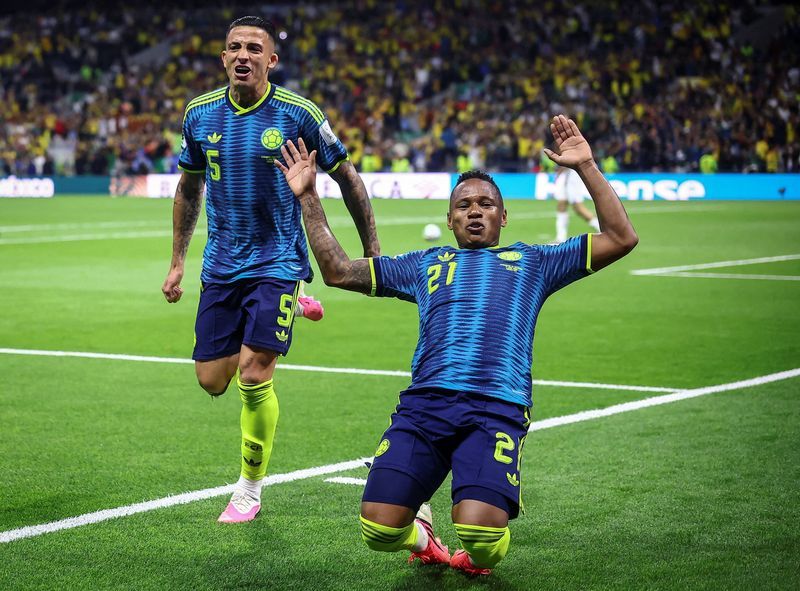
Colombia will attempt to secure consecutive victories in the group stage when they confront DR Congo on Tuesday, looking to consolidate their standing in a competitive Group K and edge closer to the knockout rounds. The South American outfit began their campaign with a 3-1 triumph over Uzbekistan, yet the margin of victory belied a second-half performance that exposed tactical weaknesses coach Nestor Lorenzo will be eager to remedy before facing an opponent already brimming with confidence.
A positive result against DR Congo would effectively guarantee Colombia's progression to the round of 32, simultaneously putting them in a commanding position to claim top spot should Portugal slip up against Uzbekistan. Such an outcome would represent exactly the foundation Lorenzo intended to establish in his opening fixture, though the path to that objective has proven more complicated than the scoreline suggested. The Argentine manager's side struggled to maintain their early dominance, allowing their Central Asian opponents extended periods of attacking play that created genuine scoring opportunities and raised concerns about Colombia's ability to control matches through possession.
The focal point of Colombia's attacking thrust has been Bayern Munich's Luis Diaz, whose pace and incisive running terrorised Uzbekistan throughout the opening encounter. The 27-year-old not only recorded a goal and assist but was rightfully acknowledged as the standout performer, yet the team's heavy reliance on his individual brilliance indicates an imbalance that opposing coaches will be studying closely. Lorenzo will hope that captain James Rodriguez elevates his influence in the coming fixture, as his relatively subdued contribution in the opener meant Colombian creativity often funnelled through wide channels rather than through conventional playmaking lanes.
DR Congo present an altogether different proposition from Uzbekistan, having announced their tournament return with a remarkable 1-1 draw against Portugal. The Central African nation, which last competed in 1974 when representing Zaire, produced a defensive masterclass against one of the tournament's pre-tournament favourites, with coach Sebastien Desabre's organisation neutralising Portugal's attacking potency and creating genuine danger through swift transitional play. Yoane Wissa's opening-match goal carried profound symbolic weight, marking the nation's first World Cup goal in 50 years and encapsulating a historic moment for Congolese football.
Lorenzo has explicitly warned his players that DR Congo's compact, counter-attacking methodology will demand tactical precision from his side. The Colombian boss recognised that while his team's possession advantage against Uzbekistan provided territorial control, it occasionally worked counterproductively, with excessive ball retention preventing Colombia from executing decisive attacking sequences. This philosophical tension between dominating possession and retaining tactical efficiency presents the central challenge Lorenzo's coaching staff must solve before Tuesday's encounter.
The Congolese tactical blueprint appears designed around long-ball distribution and rapid breaks, creating a markedly different challenge from Uzbekistan's more measured approach. Lorenzo articulated this distinction clearly, acknowledging that transitions would define the match's rhythm and that Colombia must demonstrate greater clinical execution in final-third situations. The defensive vulnerabilities exposed against the Asians—particularly regarding shape, positional discipline, and response to direct play—represent areas where DR Congo, with their demonstrated counter-attacking prowess, could prove genuinely troublesome.
Colombia possess a significant advantage through the anticipated presence of their substantial expatriate fan base in Mexico City. During the Uzbekistan match at Estadio Azteca, thousands of Colombian supporters created an unmistakable home atmosphere, providing emotional and psychological support that extends beyond mere noise. With their tournament base established in Guadalajara, relatively close proximity to the venue should again see yellow-shirted supporters outnumbering local Mexican contingents, potentially providing Colombia's players with an eleventh-man advantage that could prove decisive in tight moments.
The tactical battle will ultimately pivot on whether Colombia can maintain their structural integrity whilst translating their attacking threat with greater efficiency. Desabre has demonstrated he possesses the defensive acumen to frustrate superior opponents, yet Colombia's attacking weaponry—particularly through Diaz's direct contributions and Rodriguez's creative potential—represents a different calibre of threat than what Portugal presented. Lorenzo's squad cannot afford complacency despite their superior ranking and opening victory; history demonstrates convincingly that World Cup tournaments reward tactical discipline and punish teams that fail to respect opponents' capabilities.
For DR Congo, a second consecutive positive result would represent a transformative narrative in their football evolution, simultaneously positioning them as potential group-stage survivors and validating Desabre's coaching philosophy. Colombia's path to topping Group K remains straightforward, yet the route demands unwavering concentration and tactical adaptation. The match encapsulates the unpredictable drama that defines World Cup football, where preparation, execution, and mental fortitude determine outcomes equally as much as individual talent.