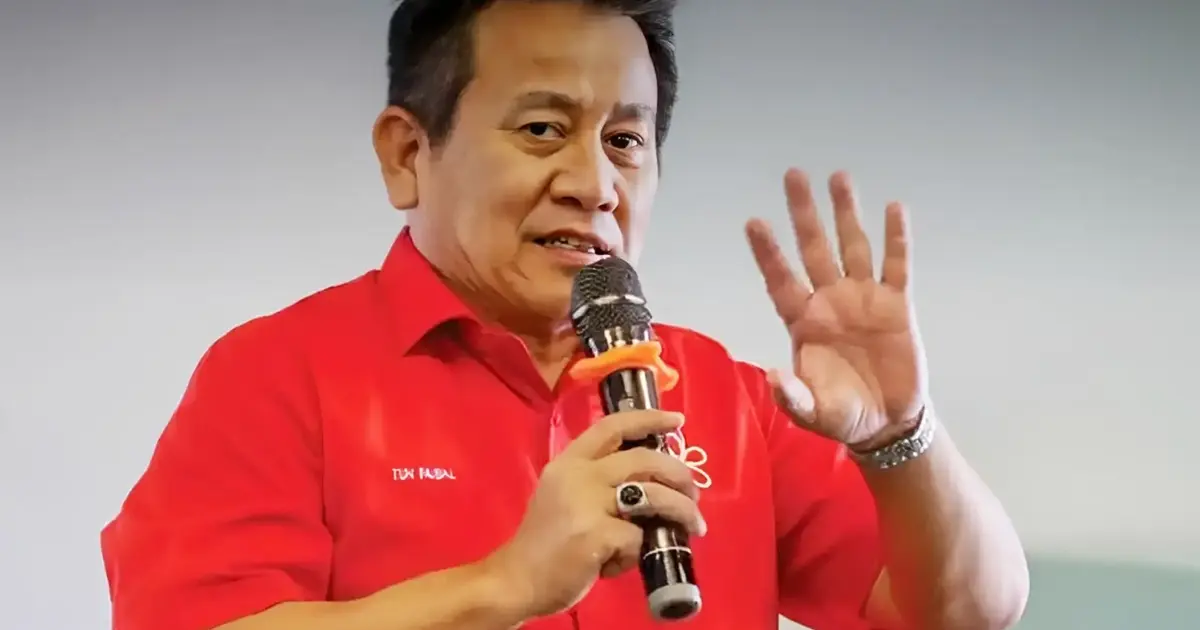
Tun Faisal Ismail Aziz, president of Bersatu, has cast doubt on the utility of an emergency gathering of the Perikatan Nasional coalition's top decision-making body, raising fundamental questions about the bloc's governance framework at a time when internal cohesion appears increasingly fragile. The Bersatu leader's scepticism centres on what he views as a structural inefficiency: if the Supreme Council's resolutions ultimately require separate ratification by individual coalition members before implementation, he argues, convening such meetings becomes an exercise in futility rather than decisive leadership.
This critique surfaces against a backdrop of mounting tensions within Perikatan Nasional, the opposition coalition that was formed to challenge the ruling Pakatan Harapan government. The bloc, comprising Bersatu, PAS, and other component parties, has struggled to maintain unified positions on critical policy matters and parliamentary strategy. The existence of this emergency session itself signals underlying disagreements that coalition leadership deemed sufficiently urgent to warrant an extraordinary convocation, yet Tun Faisal's remarks suggest doubt about whether such forums can genuinely resolve contentious issues.
The structural problem Tun Faisal identifies touches on a persistent challenge facing Malaysian multi-party coalitions: balancing the need for swift, unified action against the legitimate autonomy of individual member organisations. In theory, a Supreme Council comprising senior representatives from each component party should enable rapid consensus-building and coordinated decision-making at the highest level. In practice, as Tun Faisal's observation implies, such councils often function as talking shops where positions are aired rather than definitively settled, with each party reserving the right to seek approval from their own internal structures before committing to collective decisions.
This dynamic reflects deeper questions about coalition discipline and authority within Malaysian politics. Unlike a single-party government where the leader's directives generally flow downward with minimal friction, coalitions operate through negotiation and consensus-seeking. Each component party maintains its own grassroots membership, internal hierarchies, and political constituencies, meaning that decisions taken at the Supreme Council level cannot simply be imposed unilaterally. Member parties naturally insist on consulting their own leadership bodies and, in some cases, their rank-and-file before binding themselves to collective positions.
Tun Faisal's intervention suggests that Bersatu, as one of Perikatan Nasional's major pillars, is growing impatient with a process that appears to slow decision-making without enhancing its legitimacy. The implication is that either the Supreme Council should possess genuine authority to bind member parties to its decisions, or the coalition should abandon the pretence that emergency sessions can produce meaningful results without subsequent ratification. The current arrangement, from his perspective, squanders both time and the political capital required to convene senior leaders in urgent circumstances.
For Malaysian observers, this dispute illuminates a persistent weakness in how opposition coalitions have structured themselves. Perikatan Nasional was formed partly as a counter to Pakatan Harapan's own coalition arrangements, yet it faces analogous coordination challenges. When three or more distinct political entities seek to act as one force, friction at multiple decision-making levels becomes inevitable. The question of which body—the Supreme Council, the coalition secretariat, or individual party leaderships—holds ultimate authority remains unresolved in practical terms.
The Bersatu leader's remarks also carry implications for the coalition's ability to mount effective parliamentary opposition. Legislative business operates according to rigid schedules and deadlines; delays in achieving coalition consensus can mean missed opportunities to challenge government policies or table amendments. If the Supreme Council cannot take binding decisions, Perikatan Nasional risks appearing reactive and disunited when swift, coordinated parliamentary action would strengthen its hand. Tun Faisal's frustration likely stems partly from witnessing such opportunities slip away due to procedural bottlenecks.
Beyond immediate coalition mechanics, Tun Faisal's scepticism reflects a broader reality: Malaysian political coalitions often struggle with questions of governance that stable democracies have largely resolved. The relationship between a coalition's central coordinating body and its member parties, the scope of authority each possesses, and the mechanisms for resolving disputes all require clarity that Perikatan Nasional apparently lacks. Until such questions receive definitive answers, emergency meetings may indeed prove little more than elaborate prelude to the actual decision-making that occurs within individual party structures.
The controversy also suggests friction between Bersatu and other Perikatan Nasional members regarding strategic direction. Bersatu's relatively recent formation and its acquisition of significant parliamentary representation give it leverage within the coalition, but Tun Faisal's comments hint that this leverage is insufficient to prevent decisions he considers poorly conceived from proceeding through formal channels. His public questioning of the emergency session's purpose represents a form of pressure—signalling to coalition partners that Bersatu will not automatically fall into line behind decisions reached in forums it views as lacking genuine authority.
Moving forward, Perikatan Nasional faces a choice: either formalize its decision-making structures with clear protocols stipulating which bodies possess binding authority, or acknowledge that the coalition functions primarily as a parliamentary coordinating mechanism rather than a unified political entity capable of decisive action. Tun Faisal's intervention suggests this debate is no longer confined to backroom discussions but has become a matter of public record, which may further strain coalition unity unless leadership acts to clarify these fundamental questions.
%22%2F%3E%3C%2Fpattern%3E%3C%2Fdefs%3E%3Crect%20width%3D%22100%25%22%20height%3D%22100%25%22%20fill%3D%22url(%23phnm1xg)%22%2F%3E%3Crect%20width%3D%22100%25%22%20height%3D%22100%25%22%20fill%3D%22url(%23phnm1xp)%22%2F%3E%3Ctext%20x%3D%2250%25%22%20y%3D%2250%25%22%20text-anchor%3D%22middle%22%20dominant-baseline%3D%22central%22%20fill%3D%22rgba(255%2C255%2C255%2C0.95)%22%20font-family%3D%22Georgia%2C%20'Times%20New%20Roman'%2C%20serif%22%20font-weight%3D%22700%22%20font-size%3D%22320%22%20letter-spacing%3D%22-0.02em%22%3EPM%3C%2Ftext%3E%3C%2Fsvg%3E)