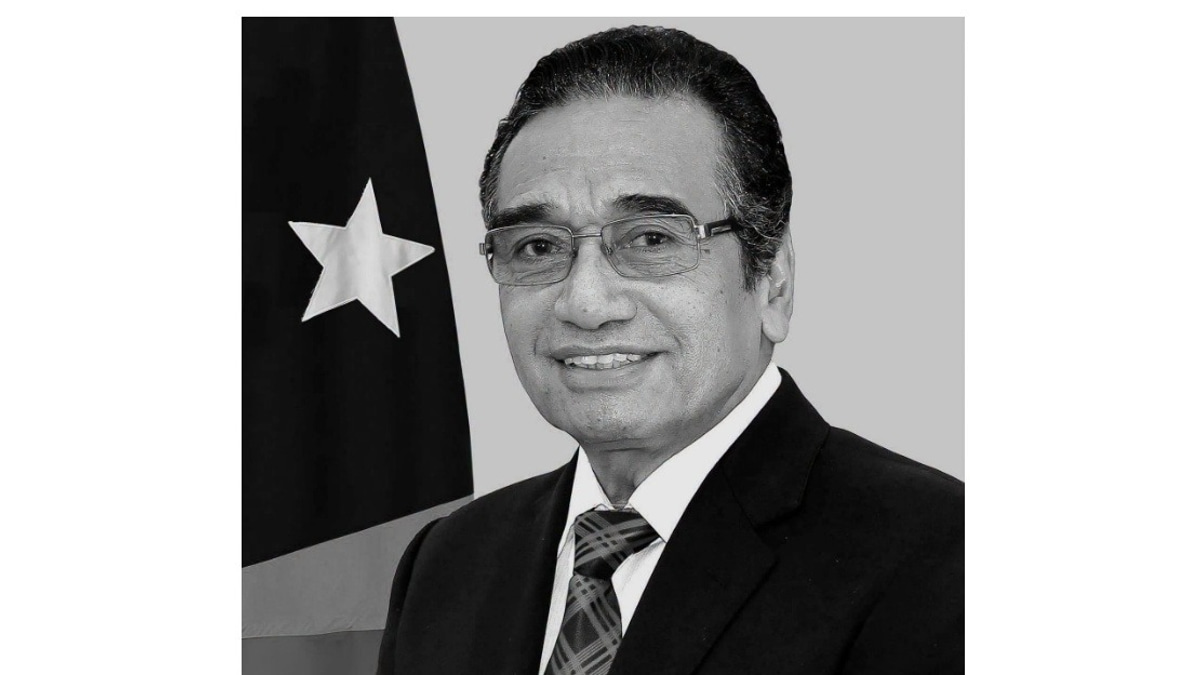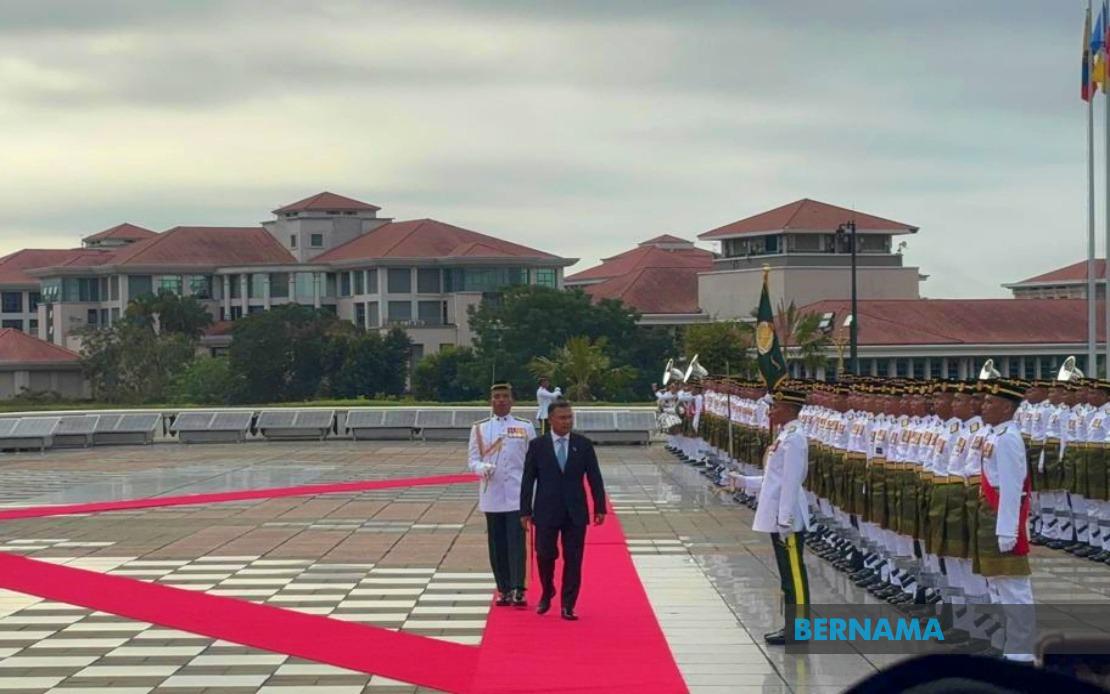
Bangladesh Prime Minister Tarique Rahman touched down in Malaysia on Saturday morning for a two-day state visit that underscores the deepening diplomatic ties between the two nations. The visit, marked by a full ceremonial welcome at Putrajaya's Perdana Putra Complex, signals Dhaka's strategic interest in strengthening relationships across Southeast Asia amid evolving regional dynamics. Rahman's arrival at 9 am was met by Prime Minister Datuk Seri Anwar Ibrahim, with both countries' national anthems played in acknowledgement of the formal occasion.
The ceremonial reception reflected the significance Malaysia places on its South Asian partnerships. A 103-member guard of honour drawn from the First Battalion of the Royal Ranger Regiment, commanded by Major Nur Ahmad Zaim Zahari, lined the grounds as Rahman proceeded through the formal protocols. The presence of senior Malaysian officials—including Deputy Prime Minister Datuk Seri Dr Ahmad Zahid Hamidi, Foreign Minister Datuk Seri Mohamad Hasan, Home Minister Datuk Seri Saifuddin Nasution Ismail, and Communications Minister Datuk Fahmi Fadzil—underscored the high-level nature of the engagement. The assembled diplomatic corps and government representatives signalled broad institutional commitment to the bilateral relationship.
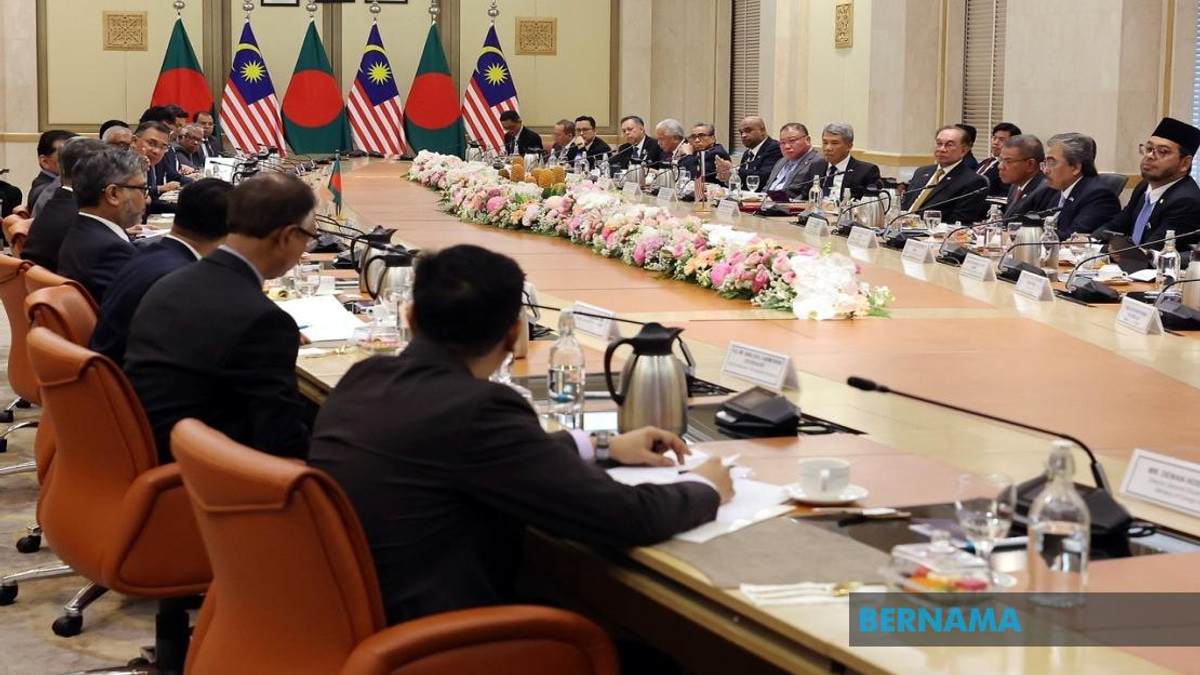
Following the ceremonial elements, Rahman proceeded directly to private talks with Anwar before convening a fuller bilateral meeting that brought together senior ministers and officials from both delegations. These discussions form the substantive core of the visit, with both sides expected to canvas the current state of Malaysia-Bangladesh relations and identify concrete opportunities for expanded cooperation. The agenda encompasses multiple economic and strategic domains, reflecting the complexity of modern bilateral engagement.
Trade and investment constitute natural focal points for the discussions, given the robust commercial relationship already in place. In 2025, bilateral trade reached RM12.18 billion (USD2.84 billion), with Malaysia maintaining a significant surplus. Malaysian exports to Bangladesh totalled RM10.08 billion (USD2.35 billion), dominated by petroleum products that serve as critical energy inputs for Bangladesh's growing industrial base. These energy shipments reflect Bangladesh's continued reliance on hydrocarbon imports to fuel its manufacturing expansion. Conversely, Malaysian imports from Bangladesh amounted to RM2.10 billion (USD0.50 billion), concentrated in textiles, apparel, and footwear—sectors where Bangladesh maintains competitive manufacturing advantages rooted in labour costs and industrial expertise.
Beyond raw trade figures, Bangladesh represents a strategically positioned partner within Malaysia's broader South Asian strategy. The country ranks as Malaysia's second-largest trading partner in South Asia, trailing only India, and functions as both Malaysia's second-largest export destination and second-largest import source within the region. This dual significance—as both outlet for Malaysian goods and source of competitive imports—makes Bangladesh integral to Malaysia's South Asian economic footprint. The ranking reflects the scale and maturity of the bilateral commercial relationship, even as considerable scope for deepening exists.
The conversations are expected to extend into emerging sectors that represent new frontiers for cooperation. Semiconductors represent a particularly important focus, given Malaysia's established position as a regional semiconductor manufacturing hub and the growing importance of chip production to global technology supply chains. Bangladesh, with its substantial domestic market and evolving manufacturing capabilities, represents both a potential customer for Malaysian semiconductor expertise and a location for eventual expanded production networks. Energy cooperation also features prominently, encompassing both conventional petroleum trade and emerging renewable energy opportunities. As both nations contemplate energy security within a carbon-constrained future, conversations around clean energy transition could unlock new investment pathways.
Education and human resource development round out the anticipated discussion topics, reflecting recognition that long-term prosperity depends on workforce capabilities. Malaysia's established universities and technical institutions have historically attracted Bangladeshi students, generating cultural connections and professional networks that extend bilateral relations beyond governmental channels. Enhanced educational partnerships could deepen these ties while addressing Bangladesh's substantial demand for advanced technical training. Agricultural cooperation presents further potential, given Bangladesh's significant agricultural sector and Malaysia's technological sophistication in agribusiness.
The formal agenda includes the signing of cooperation instruments designed to institutionalise commitments emerging from the discussions. A Memorandum of Understanding on Cultural Cooperation will formalise efforts to expand people-to-people exchanges and cultural programming. Two Exchanges of Notes will address counter-terrorism research collaboration and investment promotion frameworks. These instruments, while typically less binding than formal treaties, signal serious intent to advance cooperation and establish mechanisms for sustained engagement. The counter-terrorism research component reflects shared security concerns in a region facing persistent transnational threats, while the investment promotion framework aims to reduce friction in cross-border capital flows.
Anwar's scheduled official luncheon in Rahman's honour provides occasion for informal diplomatic engagement, where substantive discussions can continue alongside the social dimensions of high-level visits. The presence of Rahman's spouse, Dr Zubaida Rahman, alongside Foreign Minister Dr Khalilur Rahman and senior Bangladeshi officials indicates the comprehensive nature of the delegation, ensuring expertise across multiple policy domains can be brought to bear in discussions.
The timing of the visit merits consideration within broader regional contexts. Bangladesh, having navigated significant political transitions in recent years, appears intent on strengthening regional partnerships as it charts its development course. Malaysia, meanwhile, continues positioning itself as a Southeast Asian anchor for engagement across South and East Asia, leveraging its geographic position and diplomatic experience to build productive relationships across the broader Indo-Pacific region. The Rahman visit fits naturally into these strategic trajectories, offering opportunity to advance shared interests while demonstrating commitment to rules-based regional order.
Looking forward, the bilateral relationship appears positioned for deepening engagement across multiple dimensions. While current trade levels remain respectable, the untapped potential in emerging sectors—particularly semiconductors, renewable energy, and digital services—suggests considerable room for expansion. Malaysian companies seeking to diversify supply chains beyond China face an attractive option in Bangladesh, while Bangladeshi investors increasingly seek Malaysian expertise and market access. The institutions and frameworks being advanced during this visit aim to facilitate such commercial deepening while building political relationships capable of weathering inevitable frictions.