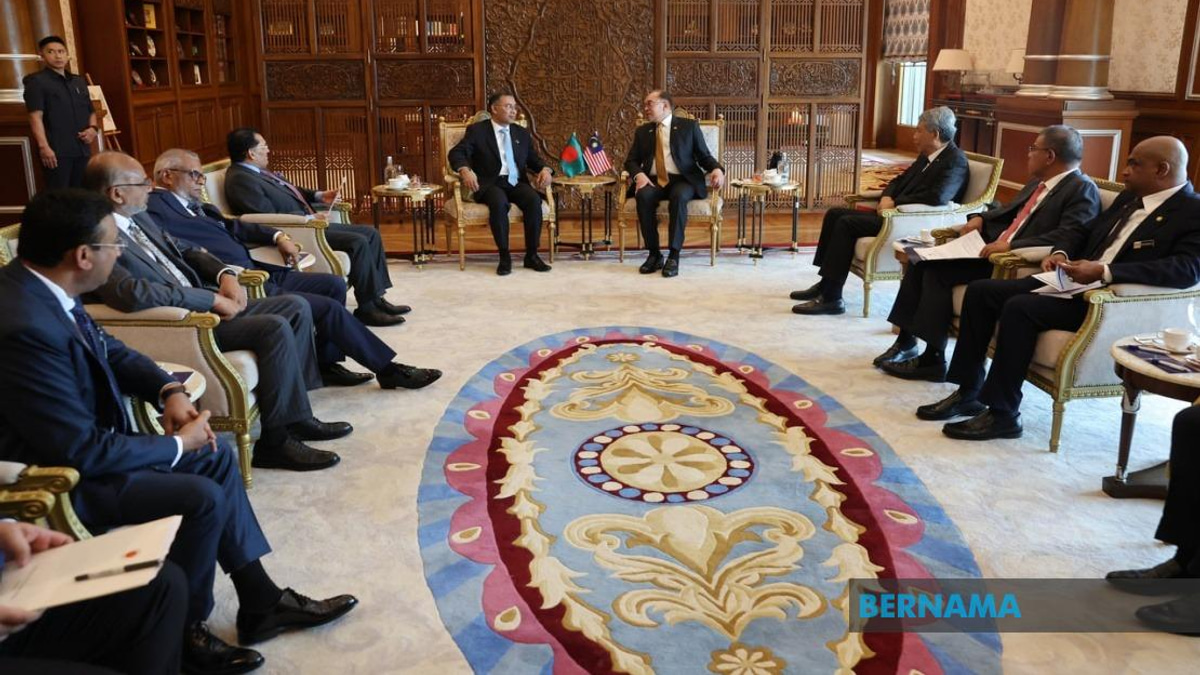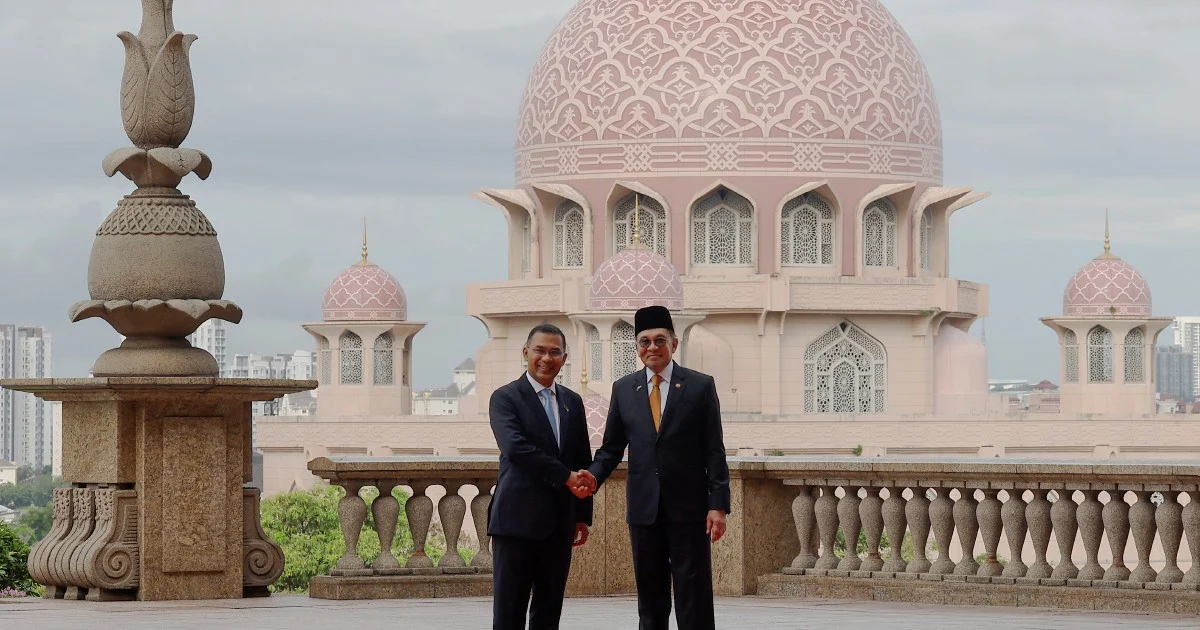
Prime Minister Anwar Ibrahim extended a formal reception to visiting Bangladesh Prime Minister Tarique Rahman at the Perdana Putra Complex in Putrajaya today, marking the beginning of a significant two-day bilateral engagement between the two South Asian neighbours. The official welcome ceremony underscored Malaysia's commitment to strengthening diplomatic ties with Bangladesh, a nation of considerable strategic importance in the Bay of Bengal region and beyond.
The timing of Rahman's visit carries particular relevance for Malaysia's regional positioning. As one of Southeast Asia's leading economies and a key player in regional forums, Malaysia has long maintained robust relations with Bangladesh across trade, defence, and cultural dimensions. The presence of Bangladesh's top political leadership in Putrajaya signals both nations' willingness to deepen multifaceted cooperation amid evolving geopolitical circumstances in South and Southeast Asia.
Bangladesh under Tarique Rahman's leadership has been navigating complex domestic and international challenges. The visit to Malaysia, a nation with which Dhaka shares maritime interests in regional security architecture and trade networks, reflects broader efforts to engage with key partners. For Malaysian policymakers, such high-level visits from South Asian leaders help consolidate connections that extend Malaysia's diplomatic reach beyond its immediate Southeast Asian circle.
The bilateral relationship encompasses substantial economic dimensions. Bangladesh remains an important market for Malaysian goods and services, while Malaysian investors have interests in Bangladesh's rapidly developing economy. The two nations also cooperate through multilateral frameworks including the Organisation of Islamic Cooperation, where both maintain significant roles. Cultural and people-to-people exchanges, supported by Malaysia's sizeable Bangladeshi expatriate community, further strengthen the bonds between their societies.
During his visit, Rahman is expected to engage in discussions with Malaysian government officials on matters ranging from trade and investment to regional security concerns. Both nations share interests in maritime safety, counterterrorism cooperation, and addressing transnational challenges. The visit also provides an opportunity for high-level officials to exchange perspectives on global developments affecting South and Southeast Asia.
For Malaysia, hosting such visits reinforces its credentials as a neutral, respected player capable of engaging productively with nations across different regions. This diplomatic posturing matters particularly in an environment where regional tensions and geopolitical competition are increasingly prominent. By maintaining active engagement with partners like Bangladesh, Malaysia signals continuity and strategic depth in its foreign policy approach.
Bangladesh's importance to Malaysian interests extends to maritime dimensions. As a major Bay of Bengal nation, Bangladesh's cooperation is valuable for regional maritime security initiatives. Malaysian interests in maintaining stable sea lanes and addressing piracy or other maritime challenges align with Bangladesh's own concerns. Such practical cooperation forms a quiet but important foundation for bilateral relations beyond ceremonial exchanges.
The two-day format of Rahman's visit suggests a substantial agenda. Beyond the formal welcome ceremony, the delegation would typically participate in working sessions addressing specific bilateral projects, memoranda of understanding, and strategic consultations. Such visits frequently result in concrete outcomes that benefit citizens of both nations through enhanced cooperation mechanisms.
For Bangladesh, engagement with Malaysia also provides access to Southeast Asian perspectives and potentially serves as a bridge for broader South Asian engagement with the region. Malaysia's experience navigating diverse partnerships and its role in regional organisations makes it an valuable interlocutor for Bangladeshi policymakers seeking to expand their nation's international footprint.
The ceremonial welcome at Perdana Putra Complex, Malaysia's administrative heart, underscores the significance attributed to this visit at the highest levels of government. Such protocols reflect mutual respect and the importance both nations place on their relationship. For Malaysian observers, such engagement demonstrates their government's active foreign policy agenda and commitment to maintaining strategic partnerships across Asia.
Moving forward, the outcomes of Rahman's visit may shape bilateral cooperation frameworks for months ahead. Whether focusing on trade expansion, enhanced security cooperation, or cultural exchanges, such high-level visits create momentum for implementing agreements and addressing challenges collaboratively. For Malaysia and Bangladesh, continuing to invest in robust bilateral relations serves both nations' long-term interests in an increasingly complex regional environment.
The visit also arrives amid broader trends of South-Southeast Asian engagement, where connectivity, trade integration, and diplomatic coordination are becoming increasingly important. Malaysia's role as a bridge between these regions—geographically located in Southeast Asia but maintaining strong ties throughout Asia—positions it well to benefit from and contribute to these developments. Rahman's presence in Putrajaya exemplifies this evolving dynamic.
%22%2F%3E%3C%2Fpattern%3E%3C%2Fdefs%3E%3Crect%20width%3D%22100%25%22%20height%3D%22100%25%22%20fill%3D%22url(%23ph435ojg)%22%2F%3E%3Crect%20width%3D%22100%25%22%20height%3D%22100%25%22%20fill%3D%22url(%23ph435ojp)%22%2F%3E%3Ctext%20x%3D%2250%25%22%20y%3D%2250%25%22%20text-anchor%3D%22middle%22%20dominant-baseline%3D%22central%22%20fill%3D%22rgba(255%2C255%2C255%2C0.95)%22%20font-family%3D%22Georgia%2C%20'Times%20New%20Roman'%2C%20serif%22%20font-weight%3D%22700%22%20font-size%3D%22320%22%20letter-spacing%3D%22-0.02em%22%3EKing%3C%2Ftext%3E%3C%2Fsvg%3E)