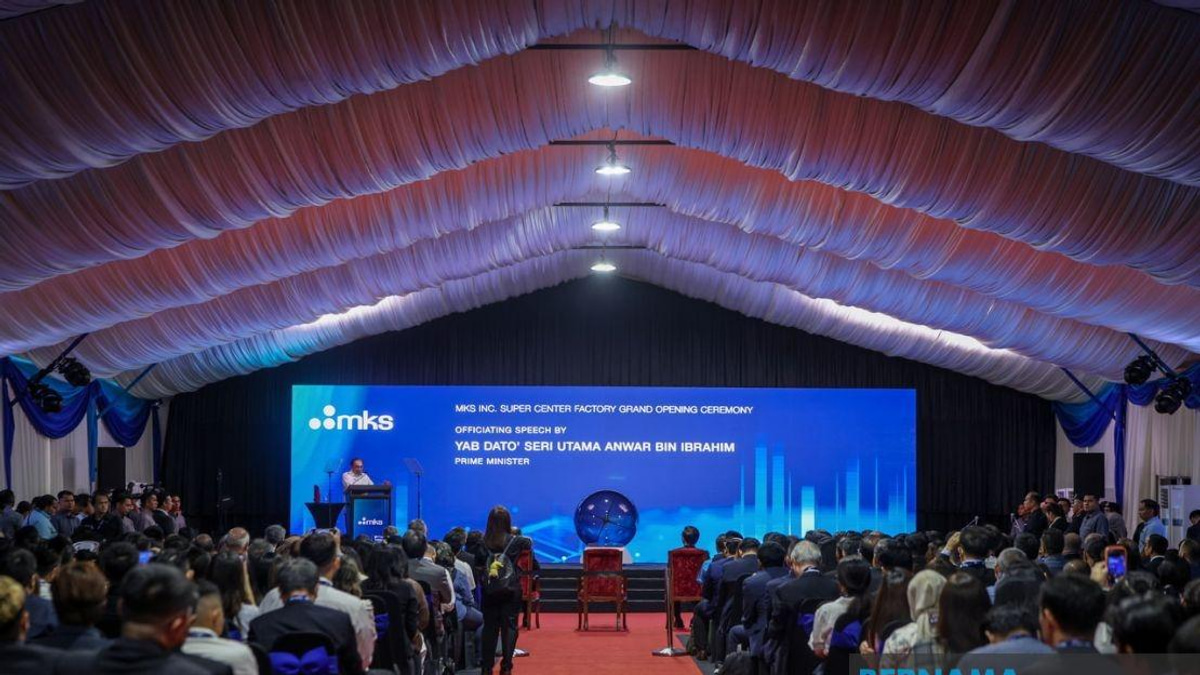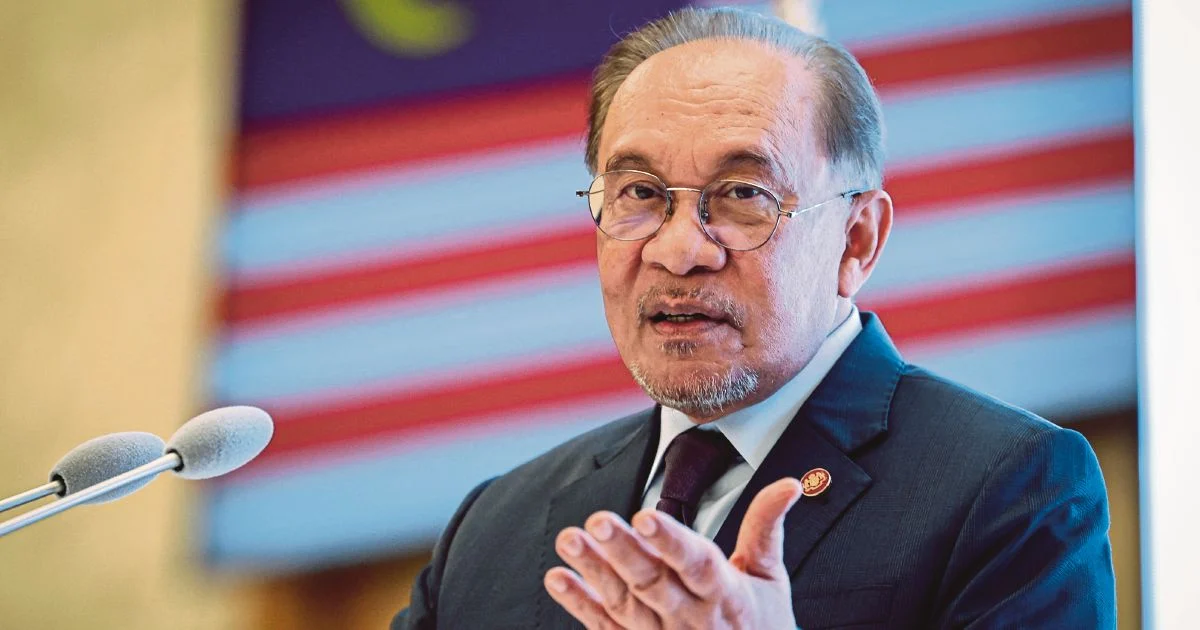
Prime Minister Datuk Seri Anwar Ibrahim has characterized Petronas's entry into one of the world's most significant natural gas reserves as a tangible manifestation of how international investors perceive Malaysia's political maturity and economic fundamentals. Speaking in Batu Kawan, Anwar framed the Turkmenistan venture as evidence that global capital markets view the country as a dependable, unified jurisdiction capable of executing large-scale infrastructure projects. The remarks underscore how Malaysia's leadership interprets foreign investment decisions through the lens of national credibility—particularly significant as the nation navigates post-pandemic economic recovery and positioning itself within competitive regional energy markets.
The assignment of an equity stake to Petronas in a Turkmenistan gas field is strategically substantial given the scale of reserves involved and the international consortium dynamics typically governing such projects. Major energy plays of this nature rarely proceed without rigorous due diligence on partner nations' political environments, currency stability, regulatory frameworks and governance standards. That Petronas secured this role suggests the project's international operators and financiers conducted extensive assessments of Malaysia's investment climate and determined it acceptable for long-term capital deployment. For a prime minister emphasizing national unity and economic resilience, such commercial validation carries symbolic weight beyond the immediate commercial implications.
The timing of Anwar's comments reflects broader narratives the Malaysian government has been promoting regarding restored investor confidence. After years of political instability and leadership transitions, the current administration has positioned itself as a stabilizing force committed to institutional reform, fiscal discipline and international engagement. Energy sector participation at this scale—particularly in a contested geopolitical region like Central Asia—requires partners to demonstrate both technical competence and political reliability. Petronas's track record as Southeast Asia's largest integrated oil and gas company provided the foundational credibility, but the award itself signals that international project developers view Malaysia's current governance trajectory positively.
For Malaysia's energy sector specifically, the Turkmenistan involvement represents geographic and portfolio diversification away from traditional Southeast Asian operations. Petronas has historically concentrated upstream activities in Malaysian waters, Brunei and select international locations, but expanding into Central Asian reserves places the national oil company in competition with global majors and state-owned enterprises from countries like China, Russia and the Middle East. Successfully executing a project in Turkmenistan—a nation with complex geopolitical positioning between Russia, China and Iran—demonstrates Petronas's ability to navigate intricate stakeholder environments and regulatory frameworks distinct from those in Southeast Asia.
The implications for Malaysia's energy security extend beyond shareholding percentages. Access to Turkmen gas reserves could eventually support Malaysia's domestic energy needs or provide feedstock for petrochemical manufacturing, though such arrangements would require substantial infrastructure investment including potential pipeline or liquefied natural gas infrastructure. More immediately, the project generates revenue streams and technical knowledge that strengthen Petronas's financial position and technical expertise base. These capabilities translate into enhanced capacity for other downstream investments, whether in energy transition technologies or conventional hydrocarbon exploration elsewhere in Asia.
Regionally, Malaysia's deepening involvement in Central Asian energy infrastructure reflects broader strategic positioning by Southeast Asian nations to participate in Eurasian economic networks. While ASEAN countries have traditionally concentrated on intra-regional energy cooperation and Middle Eastern supply relationships, moves toward Central Asian engagement signal diversification of energy partnerships and alignment with China's Belt and Road Initiative logic, even if Malaysian officials frame such involvement in nationalist rather than explicitly multilateral terms. This positions Petronas alongside other regional state enterprises expanding beyond traditional geographic comfort zones.
The geopolitical context deserves consideration, as Turkmenistan's gas reserves sit at the intersection of regional competition between major powers. Russia maintains significant influence over Central Asian energy flows through pipeline networks, while China has invested extensively in Turkmenistan energy infrastructure and supply contracts. The United States and European nations, having reduced reliance on Russian gas following geopolitical tensions, view Central Asian diversification as strategically important. Malaysia's role through Petronas provides a non-aligned Southeast Asian presence in these dynamics—neither overtly aligned with Western energy security paradigms nor dependent on Chinese intermediation, though such distinctions remain somewhat theoretical in practice.
From a corporate governance perspective, Petronas's international operations reflect Malaysia's model of state-owned enterprise as geopolitical instrument and commercial actor simultaneously. Unlike some national oil companies operating primarily as development arms of state strategy, Petronas maintains significant operational autonomy and commercial discipline, enabling it to compete credibly alongside multinational energy majors. This hybrid positioning—state-owned but commercially professional—enhances its attractiveness to international project partners who require both governmental backing and professional management standards.
The financial returns from Turkmenistan participation will eventually flow back into Malaysia's government coffers through dividends and royalties, contributing to sovereign wealth and providing funds for development priorities. Given Malaysia's fiscal constraints and ongoing infrastructure needs across transportation, renewable energy and urban development, successful extraction and commercialization of Central Asian gas reserves translates into tangible economic benefits extending beyond Petronas shareholders. The project therefore carries implications for Malaysia's fiscal space and development financing capacity over the coming decade.
Anwar's framing of the Turkmenistan deal as validation of Malaysian stability contains implicit messaging for both international investors and domestic audiences. Internationally, it signals continuity, predictability and openness to large-scale foreign partnerships. Domestically, it projects an image of Malaysia as a nation capable of attracting premium-tier energy opportunities despite regional competition from Indonesia, Vietnam and Thailand. For a government seeking to rebuild investor confidence after previous political volatility, such symbolic reassurance matters alongside actual economic metrics and policy frameworks.
%22%2F%3E%3C%2Fpattern%3E%3C%2Fdefs%3E%3Crect%20width%3D%22100%25%22%20height%3D%22100%25%22%20fill%3D%22url(%23ph1hg20g)%22%2F%3E%3Crect%20width%3D%22100%25%22%20height%3D%22100%25%22%20fill%3D%22url(%23ph1hg20p)%22%2F%3E%3Ctext%20x%3D%2250%25%22%20y%3D%2250%25%22%20text-anchor%3D%22middle%22%20dominant-baseline%3D%22central%22%20fill%3D%22rgba(255%2C255%2C255%2C0.95)%22%20font-family%3D%22Georgia%2C%20'Times%20New%20Roman'%2C%20serif%22%20font-weight%3D%22700%22%20font-size%3D%22272%22%20letter-spacing%3D%22-0.02em%22%3EJamal%3C%2Ftext%3E%3C%2Fsvg%3E)