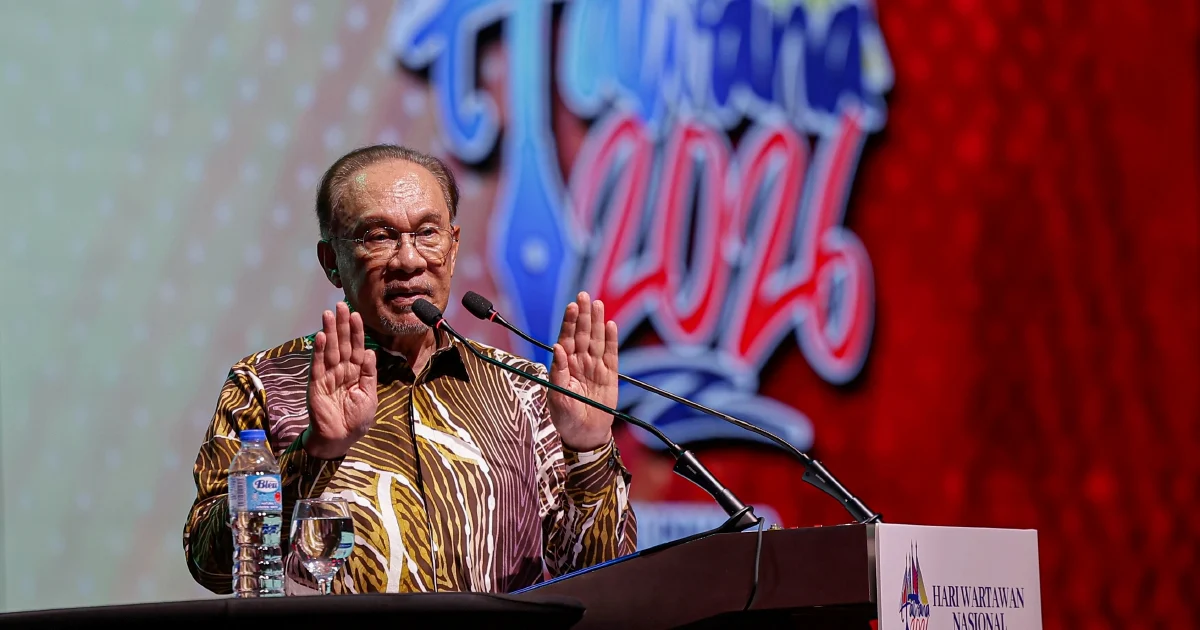
Prime Minister Datuk Seri Anwar Ibrahim has thrown his weight behind the appointment of former Federal Court judge Tan Sri Nallini Pathmanathan as the new chairman of the Malaysian Media Council, signalling the government's commitment to elevating the regulatory body's standing. Speaking in Butterworth, Anwar outlined his belief that Pathmanathan's extensive judicial background would serve as a cornerstone for rebuilding confidence in an institution that has faced questions about its independence and effectiveness in recent years.
The appointment of Pathmanathan, whose tenure on the Federal Court culminated a distinguished legal career, represents a significant leadership transition for the MMC. Her selection underscores an effort to draw on expertise from Malaysia's higher judiciary at a moment when media regulation and institutional credibility remain contentious issues in the domestic political landscape. The Prime Minister's public endorsement suggests the administration views this move as instrumental to addressing long-standing scepticism about the council's role in balancing press freedom with responsible reporting standards.
For Malaysian observers and the media industry itself, Pathmanathan's background offers particular significance. A sitting Federal Court judge brings not only legal gravitas but also an established reputation for judicial impartiality, qualities essential for any regulatory body tasked with adjudicating disputes between publishers, broadcasters, and the public. The expectation implicit in Anwar's remarks is that her judicial credentials would lend authority to MMC decisions, potentially reducing perceptions of political interference or bias that have dogged the council previously.
The Malaysian Media Council's mandate encompasses a broad spectrum of responsibilities, from investigating complaints against media outlets to establishing and monitoring industry codes of conduct. These functions position it at a crucial intersection of government oversight and press autonomy—a space perpetually fraught with tension in any democratic system. By appointing someone rooted in the judiciary rather than the political establishment, the government may be attempting to signal a philosophical shift toward depoliticising media regulation, at least symbolically.
The timing of this leadership change carries weight beyond procedural routine. Malaysia's media environment has become increasingly polarised, with competing narratives about the scope of press freedom, the role of regulatory bodies, and the government's proper relationship with journalism. Public trust in media institutions has eroded alongside trust in other national bodies, partly reflecting global trends but also rooted in specific Malaysian controversies surrounding editorial independence and state pressure on newsrooms. An appointment intended to recalibrate perceptions must contend with these accumulated doubts.
Pathmanathan's judicial experience positions her to navigate one of the MMC's most delicate functions: enforcing media standards without suppressing legitimate reporting or becoming a tool for silencing criticism. The council operates in a complex environment where media owners range from politically-connected conglomerates to independent digital platforms, each with different incentives and constraints. A chairperson with judicial temperament and formal authority may more effectively broker disputes and establish credible precedents than one perceived as politically aligned.
Regionally, Malaysia's media regulatory approach holds relevance for neighbouring democracies grappling with similar tensions. Countries throughout Southeast Asia have experimented with different models of press regulation, from statutory bodies to industry self-governance. The visibility and reputation of the MMC under new leadership could influence how other governments in the region approach media oversight, making the success or credibility of this appointment a matter of broader regional importance.
The government's reliance on judicial credentials to rebuild institutional trust also reflects contemporary debates about depoliticisation of regulatory agencies. In Malaysia, concerns about whether independent bodies genuinely operate free from political pressure have intensified across multiple sectors, from electoral commissions to anti-corruption authorities. By selecting a former judge rather than a political appointee or industry insider, the administration may be responding to broader demands for visible distance between governance bodies and partisan interests.
Yet the true test of this appointment will lie in execution. Anwar's confidence in Pathmanathan's capacity to strengthen the MMC is constructive rhetoric, but outcomes depend on several factors beyond any single individual: whether the council receives adequate resources and autonomy, how decisively Pathmanathan adjudicates contentious cases involving politically sensitive media, and whether her presence demonstrably changes the perceptions of journalists, editors, and the public. These will ultimately determine whether the appointment achieves its stated purpose of rebuilding institutional credibility.
The selection also raises questions about what additional reforms or structural changes might accompany this leadership transition. Credibility-building efforts typically require more than a symbolic figurehead; they demand transparent processes, consistent application of standards, and willingness to rule against powerful interests when warranted. The extent to which the government commits to supporting these deeper institutional changes will likely determine whether Pathmanathan's appointment marks a genuine recalibration of Malaysian media regulation or merely a cosmetic adjustment designed to deflect criticism.