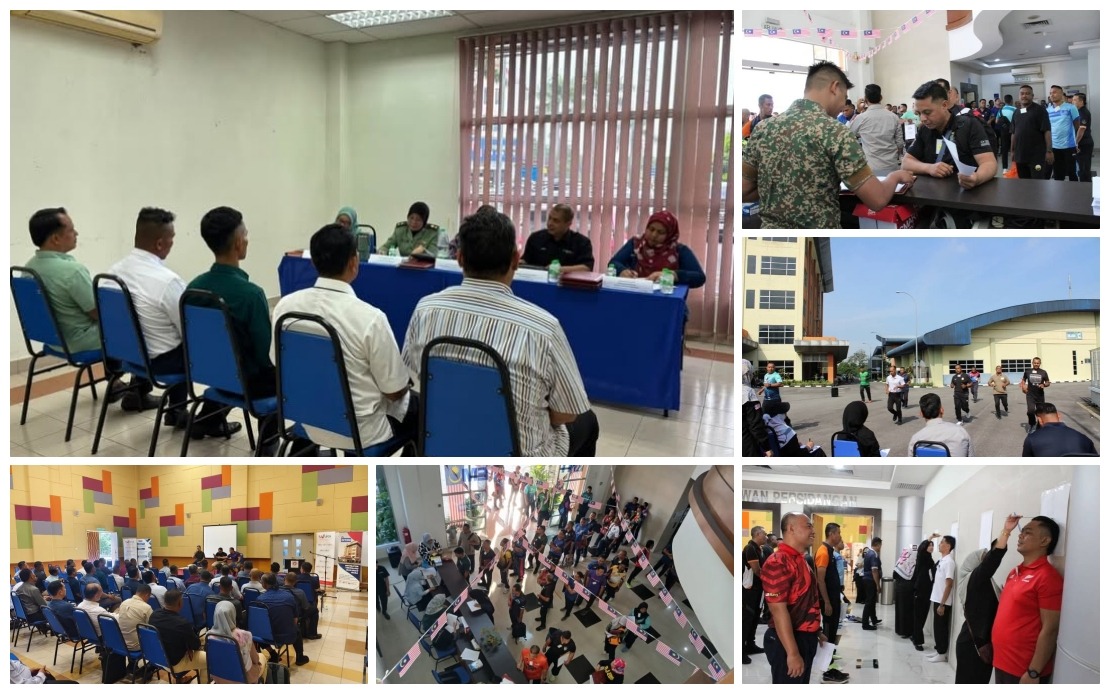
MARA has progressed with its recruitment of Full-Time External Wardens for its MARA Junior Science Colleges (MRSM), with a substantial pool of 147 candidates drawn from former military backgrounds completing physical interview sessions on consecutive days last Monday and Tuesday. The selection process, conducted at the MARA Food Technology Incubator facility in Kepong, represents a significant staffing initiative aimed at strengthening dormitory management across the premier boarding institution network.
According to MARA Chairman Datuk Dr Asyraf Wajdi Dusuki, the candidates who reached the interview stage had already successfully navigated two earlier phases of rigorous online screening before being shortlisted for face-to-face assessment. This multi-tiered approach reflects MARA's commitment to identifying the most suitable individuals for a role that extends well beyond conventional security functions. The selection framework prioritises candidates with military backgrounds, recognising the discipline, leadership experience, and duty-focused mindset that such backgrounds typically cultivate.
The interview process itself incorporated three distinct evaluation components designed to assess candidates holistically. Prospective wardens underwent Body Mass Index screening to ensure they meet established health and fitness standards, completed the Bleep Test—a cardiovascular endurance assessment—and participated in structured face-to-face interviews that evaluate their suitability for the pastoral aspects of the role. This comprehensive approach acknowledges that modern warden responsibilities demand both physical capability and psychological readiness to work with adolescent students in a boarding environment.
The significance of this recruitment drive becomes clearer when one considers MARA's broader educational philosophy and objectives. Wardens occupy a pivotal position within residential colleges, functioning as far more than disciplinarians. Datuk Dr Asyraf Wajdi emphasised that successful candidates must genuinely internalise MARA's educational ethos and serve as mentors, guides, and trusted authority figures for resident students. In the Malaysian context, where boarding schools play a foundational role in national character-building and academic excellence, the quality of warden appointments directly influences student outcomes across multiple dimensions.
This initiative carries particular weight given contemporary concerns about bullying, disciplinary breaches, and social problems affecting adolescents in institutional settings. MARA's explicit intention to address these challenges through improved warden recruitment signals institutional recognition that pastoral care and preventive safeguarding require strategic personnel investment. The presence of trained, professionally-minded wardens can create environments where students feel genuinely secure, supported, and accountable to positive standards of conduct. For MRSM—institutions that traditionally draw top-performing secondary school students destined for higher achievement—establishing such environments remains essential to institutional mission.
The timing of these appointments, with successful candidates commencing duties on July 1, aligns with the academic calendar transition period. This scheduling enables new wardens to familiarise themselves with MRSM operations, establish relationships with existing staff, and prepare for the arrival of students for the new academic term. Such careful coordination demonstrates administrative thoughtfulness regarding implementation timelines and institutional continuity.
Parallel to the male candidate interviews, MARA has scheduled separate assessment sessions for approximately 162 female former military warden candidates, scheduled to commence the following week. This parallel recruitment track underscores recognition within MARA's leadership that gendered dimensions of student welfare matter significantly. Female wardens can provide crucial mentoring, role modelling, and support systems particularly important for female boarding students navigating adolescence away from home. The substantial number of female candidates—comparable to the male cohort—suggests MARA has successfully attracted experienced military women interested in transitioning to educational institutional roles.
The deliberate recruitment of former military personnel reflects pragmatic institutional reasoning. Military backgrounds typically instil discipline, punctuality, hierarchical respect, and systematic approaches to problem-solving—qualities valuable in residential college management. However, the incorporation of face-to-face interview components suggests MARA recognises that military experience alone proves insufficient; successful wardens must also demonstrate interpersonal warmth, empathy, communication skills, and genuine commitment to student development beyond mere rule enforcement.
For Malaysian educational stakeholders, this recruitment initiative signals MARA's willingness to invest substantially in the non-academic dimensions of student formation. Boarding institutions fundamentally shape emerging citizens; the quality of warden appointments therefore carries indirect implications for national human capital development and social cohesion. In an era when Malaysian discourse increasingly emphasises holistic education encompassing character, values, and social responsibility, MARA's strategic attention to warden quality aligns institutional practice with contemporary educational philosophy.
The three-stage selection methodology—online screening followed by physical assessment and interviews—establishes defensible, merit-based appointment procedures. This transparent approach reduces patronage and ensures that successful wardens have demonstrably met objective standards, thereby enhancing institutional credibility and staff morale. For students and parents, knowing that wardens have undergone rigorous selection provides confidence in institutional governance and commitment to duty of care.
Looking forward, the integration of these newly-appointed wardens into MRSM operations will reveal whether the recruitment initiative delivers anticipated improvements in student safety, discipline, and overall residential college culture. Success will depend not only on warden quality but also on supportive institutional structures, adequate resource allocation, and clear professional development pathways. MARA's commitment to this recruitment represents a tangible investment in fulfilling its educational mandate and protecting the welfare of Malaysia's most academically promising young people during crucial developmental years.