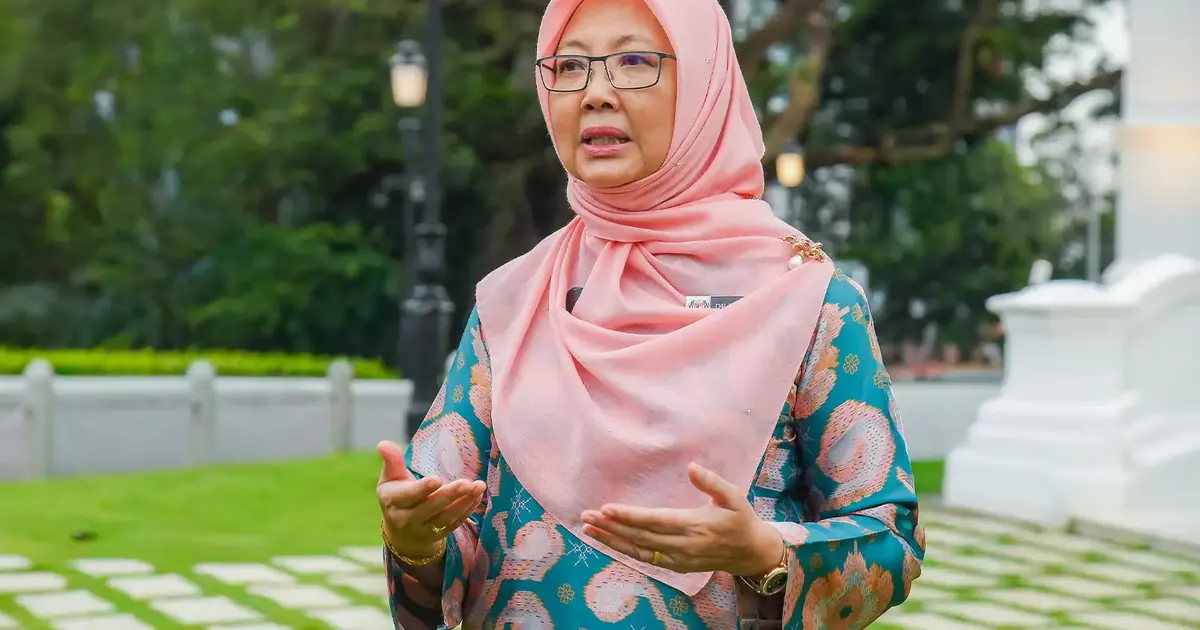
PKR vice-president Zaliha Mustafa has publicly questioned the logic behind Johor Barisan Nasional chairman Onn Hafiz Ghazi's recent demand that the Pakatan Harapan coalition name its poster boy ahead of forthcoming state elections, citing the fundamental uncertainty surrounding whether such a candidate would ultimately be appointed menteri besar.
The political disagreement underscores the complex and often opaque nature of negotiations within Malaysia's coalition politics, where formal campaign figureheads do not automatically translate into executive positions. Zaliha's pushback reflects a broader tension between presenting a unified campaign message and the reality that coalition partners frequently negotiate leadership appointments separately from public campaign strategies. In Malaysia's political environment, designating a single face for an electoral campaign has become increasingly common practice, yet it remains entirely distinct from the formal process of menteri besar selection, which typically involves consultation among coalition members and state-level considerations.
Onn Hafiz's call appears designed to pressure the opposition coalition into making a premature commitment that could prove disadvantageous during post-election negotiations. By publicly demanding that Pakatan Harapan declare its intended menteri besar candidate, the Johor BN chairman may be attempting to lock the opposition into a particular choice or to highlight perceived divisions within the coalition regarding leadership succession. Such tactics are not unusual in Malaysian electoral politics, where opposition coalitions frequently face questions about their internal cohesion and decision-making processes.
For Pakatan Harapan, the timing of such declarations carries significant strategic weight. Prematurely naming a menteri besar candidate could invite targeted criticism from opposition rivals and might constrain the coalition's flexibility in negotiating seat distributions and power-sharing arrangements with component parties. Moreover, naming a poster boy without guaranteeing the menteri besar position creates an awkward situation where the campaign figurehead could be relegated to a different role or portfolio after elections, potentially demoralizing supporters and raising questions about campaign authenticity.
Zaliha's response indicates that Pakatan Harapan intends to maintain strategic ambiguity on this matter at least through the campaign period. The PKR figure's public expression of puzzlement over Onn Hafiz's demand serves multiple purposes: it deflects the pressure while simultaneously questioning the legitimacy of the request itself. By highlighting the logical disconnect between campaign roles and governmental positions, Zaliha addresses Malaysian voters' legitimate concerns about transparency while also protecting her coalition's negotiating position.
Johor represents one of Malaysia's most politically significant states, and control of its governance carries implications beyond the state itself. The peninsula's southern anchor has historically alternated between different political forces, and the current jockeying for position suggests a competitive electoral environment where both coalitions believe victory is achievable. Barisan Nasional has maintained considerable influence in Johor, but Pakatan Harapan's growing strength in urban centers and among younger voters presents a genuine challenge.
The broader context of this disagreement involves the intricate calculations that characterize Malaysian electoral politics at the state level. Unlike federal elections, where the prime ministerial candidate is typically predetermined by the leading coalition, state elections often feature more fluid arrangements where menteri besar positions are genuinely contested between coalition components or negotiated based on electoral performance. This fundamental structural difference explains why opposition coalitions may resist premature declarations that could undermine their negotiating leverage.
For Malaysian voters in Johor, the exchange between these political figures offers insight into the calculations underlying campaign strategies. While Onn Hafiz's demand appears straightforward, it actually reflects sophisticated political maneuvering designed to gain advantage before ballots are cast. Similarly, Zaliha's refusal to engage with the demand on its face value demonstrates how opposition coalitions navigate the tension between transparency and tactical flexibility.
The disagreement also highlights how different political parties within coalitions must balance competing interests. Pakatan Harapan comprises multiple parties with different organizational structures and leadership hierarchies, making unified decision-making more complex than within Barisan Nasional. A premature menteri besar announcement could privilege one coalition member's interests over others, potentially creating internal friction precisely when unity is most valuable.
Looking forward, this exchange suggests that campaign messaging in Johor will likely emphasize policy platforms and performance records rather than personality-centered campaigns. Both coalitions may attempt to position themselves as more competent administrators while leaving menteri besar selections for post-election negotiations. This approach, while less dramatic than campaigns centered around individual candidates, reflects the pragmatic reality of Malaysian coalition politics where flexibility often proves more valuable than early commitments.
The debate between Zaliha and Onn Hafiz ultimately illustrates why Malaysian electoral campaigns frequently focus on broader governance themes rather than leadership personalities. Until formal campaign periods commence and coalition negotiations reach advanced stages, political figures face strong incentives to maintain strategic ambiguity regarding executive appointments. For observers seeking to understand Johor's political trajectory, watching how both coalitions eventually resolve these questions will prove far more revealing than their current rhetorical positioning.
%22%2F%3E%3C%2Fpattern%3E%3C%2Fdefs%3E%3Crect%20width%3D%22100%25%22%20height%3D%22100%25%22%20fill%3D%22url(%23ph29y08g)%22%2F%3E%3Crect%20width%3D%22100%25%22%20height%3D%22100%25%22%20fill%3D%22url(%23ph29y08p)%22%2F%3E%3Ctext%20x%3D%2250%25%22%20y%3D%2250%25%22%20text-anchor%3D%22middle%22%20dominant-baseline%3D%22central%22%20fill%3D%22rgba(255%2C255%2C255%2C0.95)%22%20font-family%3D%22Georgia%2C%20'Times%20New%20Roman'%2C%20serif%22%20font-weight%3D%22700%22%20font-size%3D%22151%22%20letter-spacing%3D%22-0.02em%22%3EMalaysian%3C%2Ftext%3E%3C%2Fsvg%3E)
%22%2F%3E%3C%2Fpattern%3E%3C%2Fdefs%3E%3Crect%20width%3D%22100%25%22%20height%3D%22100%25%22%20fill%3D%22url(%23ph4nq77g)%22%2F%3E%3Crect%20width%3D%22100%25%22%20height%3D%22100%25%22%20fill%3D%22url(%23ph4nq77p)%22%2F%3E%3Ctext%20x%3D%2250%25%22%20y%3D%2250%25%22%20text-anchor%3D%22middle%22%20dominant-baseline%3D%22central%22%20fill%3D%22rgba(255%2C255%2C255%2C0.95)%22%20font-family%3D%22Georgia%2C%20'Times%20New%20Roman'%2C%20serif%22%20font-weight%3D%22700%22%20font-size%3D%22320%22%20letter-spacing%3D%22-0.02em%22%3EKPKT%3C%2Ftext%3E%3C%2Fsvg%3E)