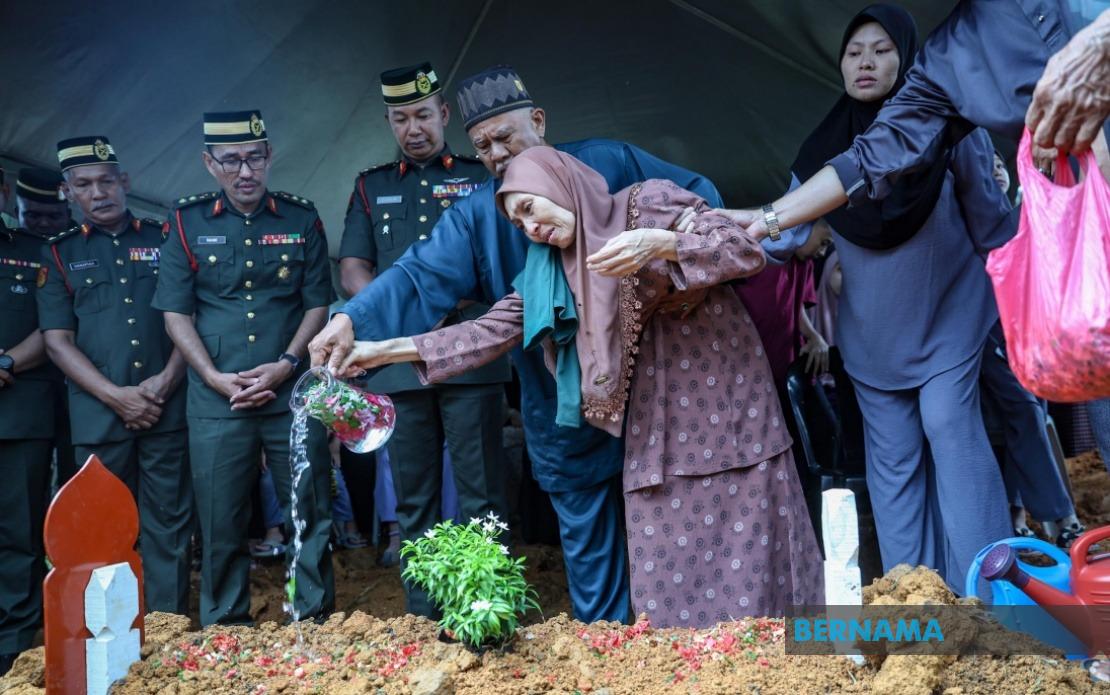
The funeral of Private Siti Khadijah Sungip, a 24-year-old Malaysian Army personnel, took place on June 17 in Kluang, Johor, marking a somber conclusion to a tragic training accident. The young soldier from the First Squadron of the Royal Engineer Regiment died after suffering fatal injuries during grenade throwing exercises at Hobart Camp in Gurun, Kedah, when an explosion occurred during the training session. Her burial at Taman Sri Lambak Muslim Cemetery brought together family members, relatives, military colleagues, and friends to pay their final respects to a soldier whose life was cut short while performing her duties.
The incident that claimed her life occurred at 10.57 am the previous day at the target range facility at Hobart Camp. Private Siti Khadijah and another serviceman, Corporal Norazmi Abu Bakar from the Sixth Battalion of the Royal Malay Regiment, were both confirmed dead en route to Sultan Abdul Halim Hospital in Sungai Petani. The explosion during the training exercise resulted in injuries so severe that neither soldier could be saved, despite emergency medical response. Prior to the funeral proceedings, Private Siti Khadijah's body underwent post-mortem examination at Sultanah Bahiyah Hospital in Alor Setar, with the procedure completed at approximately 2.30 am.
The funeral ceremony itself was marked by formal military honours befitting a service member who died while training. Her body arrived at her family's residence in Taman Sri Lambak at 12.10 pm, accompanied by First Field Troop Leader Lieutenant Muhammad Lutfil Hadi Osman and four members of the First Squadron of the Royal Engineer Regiment from Sangro Camp in Taiping, Perak. The cortege proceeded to Darul Iman Mosque where funeral prayers were conducted, led by Major Mohd Azlan Shah Abdul Razak from the Malaysian Army Field Engineering Institute. The symbolic handover of the national flag, the Jalur Gemilang, to her immediate family represented the military's recognition of her sacrifice, with the ceremony officiated by Brigadier General Datuk Zulhelmy Masdar, Commander of the 7th Brigade.
Private Siti Khadijah's father, Sungip Jais, aged 65, received the national flag from the senior military officer during the 1.15 pm burial ceremony, a gesture that underscored the state's acknowledgment of his daughter's service to the nation. The atmosphere at the cemetery was notably subdued as mourners gathered to witness the final rites of a young woman who had chosen a military career. Her loss represents not only a family tragedy but also raises broader questions about safety protocols during military training exercises, particularly those involving explosives and live ammunition.
The incident highlights the inherent risks that military personnel face during training, even in controlled environments designed specifically for such exercises. Grenade throwing drills are considered essential components of infantry and engineer training, yet they remain among the more hazardous activities conducted by armed forces worldwide. The fact that two soldiers died in the same explosion suggests either a significant failure in safety procedures, a malfunction of equipment, or an unexpected circumstance that overwhelmed standard protective measures. Such incidents, while relatively infrequent in professional military forces with established safety protocols, underscore the demands and dangers of military service.
For the broader Malaysian military community, this tragedy serves as a reminder of the costs associated with maintaining readiness and operational capability. The Malaysian Army has invested considerably in training infrastructure and doctrine, yet accidents can still occur despite best efforts. The presence of senior military leadership at the funeral, including a brigadier general conducting official ceremonies, reflects the institutional recognition of the sacrifice made by serving personnel. This level of formal recognition is intended to honour those who die in service and provide some measure of solace to grieving families.
Private Siti Khadijah's death also adds to discussions about occupational hazards in the armed forces and the need for continuous review of safety measures. While the Malaysian Army is a professional institution with established protocols, training involving explosives requires constant vigilance and periodic reassessment of procedures. Investigations into such incidents typically examine multiple factors including equipment condition, supervision levels, adherence to established procedures, and environmental conditions at the time of the accident. The findings from any formal inquiry into this particular incident may lead to adjustments in how similar training is conducted across the military.
The tragedy brings into focus the personal costs of military service, particularly for young soldiers like Private Siti Khadijah who represent a new generation of Malaysian defence personnel. Her participation in engineering-focused roles demonstrates the evolving nature of military careers in modern armed forces, where technical expertise and combat skills are both required. The fact that she was selected for such specialized training suggests she was considered capable and promising within her unit, making her loss all the more poignant for her colleagues and commanders.
As the military community mourns and her family begins the process of grieving, the incident at Hobart Camp will likely trigger institutional reviews and possibly modifications to training protocols. The investigation process typically involves technical experts, safety officers, and command personnel who will examine every aspect of the incident. Such reviews, while painful for those affected, serve an important purpose in preventing future accidents and ensuring that lessons are incorporated into revised procedures. For Malaysian military personnel and their families, this incident serves as a stark reminder that service involves real risks, even during routine training activities.

%22%2F%3E%3C%2Fpattern%3E%3C%2Fdefs%3E%3Crect%20width%3D%22100%25%22%20height%3D%22100%25%22%20fill%3D%22url(%23ph21o2sg)%22%2F%3E%3Crect%20width%3D%22100%25%22%20height%3D%22100%25%22%20fill%3D%22url(%23ph21o2sp)%22%2F%3E%3Ctext%20x%3D%2250%25%22%20y%3D%2250%25%22%20text-anchor%3D%22middle%22%20dominant-baseline%3D%22central%22%20fill%3D%22rgba(255%2C255%2C255%2C0.95)%22%20font-family%3D%22Georgia%2C%20'Times%20New%20Roman'%2C%20serif%22%20font-weight%3D%22700%22%20font-size%3D%22170%22%20letter-spacing%3D%22-0.02em%22%3EGabungan%3C%2Ftext%3E%3C%2Fsvg%3E)