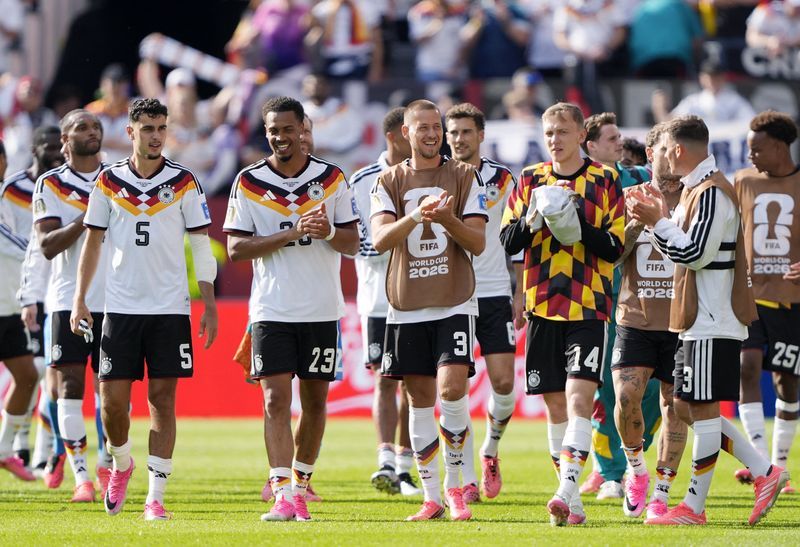
Germany mounted an impressive second-half comeback to overturn a one-goal deficit and dispatch Ivory Coast 2-1 in their World Cup Group E encounter, confirming their progression to the knockout stage and ending a nine-year drought since their last tournament victory in 2014. The match, contested in Toronto before a crowd that included over 100,000 residents of German descent, showcased the Germans' resilience and attacking prowess despite a frustrating opening 45 minutes in which they created eight attempts without finding the net.
The Ivorians struck first through midfielder Franck Kessie, who pounced on a rebound in the first half after teammate Amad Diallo's shot rebounded into space following a cutback from Yan Diomande down the left flank. This goal extended Ivory Coast's impressive tournament record—they have now scored in seven consecutive matches across World Cup competitions, the longest such sequence in their history on the global stage. The early breakthrough appeared to have unsettled Julian Nagelsmann's side, who struggled to convert their dominance of possession into clear-cut opportunities.
Germany's frustration mounted when two apparent goals were disallowed in the first half through refereeing decisions that infuriated both the players and the partisan home crowd. Midfielder Aleksandar Pavlovic's 25th-minute header from a short corner was ruled out for a foul on goalkeeper Yahia Fofana, leaving the German midfielder visibly stunned. Shortly thereafter, forward Jamal Musiala's finish was also chalked off after officials determined he had committed a foul on Ivorian defender Odilon Kossounou during the buildup play. Rather than capitulating, Germany maintained their structured approach and continued to probe methodically through intricate passing combinations.
The introduction of substitute Deniz Undav proved transformative for the German outfit. The versatile forward levelled proceedings in the 68th minute with a controlled volley that demonstrated composure and technical quality, dramatically shifting the momentum of the encounter. His pivotal contribution exemplified his current form—Undav has now accumulated nine goals across his last eight matches, establishing himself as a crucial attacking option for his nation heading into the knockout phase.
Undav's second goal arrived shortly afterwards through a clinical finish. Receiving possession with his back to goal, he executed a swift turn before unleashing a low drive that Fofana could not prevent from finding the back of the net. The combination of timing, movement, and finishing underscored why the German striker has become such a valuable asset during this tournament campaign. His performance vindicated Nagelsmann's tactical flexibility in deploying fresh legs against tiring opposition.
Ivory Coast mounted resistance in the closing stages when Simon Adingra nearly fashioned a chance in the German penalty area, but the opportunity came to nothing as he struggled to create shooting space among congested defending. Germany's response to this pressure proved decisive—they broke quickly down the field, with Nathaniel Brown's low shot subsequently blocked by the Ivorian goalkeeper, further cementing control in the closing moments.
The result leaves Germany atop Group E with six points from two matches, ensuring progression to the round of 32 and extending their tournament longevity. Ivory Coast, by contrast, remain on three points after their second fixture, still harboring mathematical possibilities but facing significant obstacles to advancing from a group that also includes Ecuador and Curaçao. The West Africans' inability to convert their scoring opportunities against a German side that was admittedly vulnerable for extended periods represents a missed opportunity to cement their qualification prospects.
The tactical evolution between the halves illustrated contrasting approaches from both coaching staffs. Germany abandoned some of their passing intricacy in favour of more direct play and positional substitutions that introduced fresh energy into their attacking third. Ivory Coast, meanwhile, attempted to maintain their dynamic attacking shape but found themselves increasingly stretched as the Germans' intensity and precision gradually overwhelmed their defensive structure. This pattern—early promise giving way to sustained continental pressure—proved decisive in determining the match's trajectory.
Looking ahead, Germany face Ecuador in their final group encounter on Thursday in New Jersey, with their progression already secured but seeking to consolidate their position as group leaders. Ivory Coast must confront Curaçao in Philadelphia in what has become an increasingly pressurised fixture for both sides. Ecuador and Curaçao were scheduled to contest their own group match later on Saturday in Kansas City, potentially reshaping the permutations across Group E. For Malaysian and Southeast Asian observers, Germany's demonstration of clinical finishing and tournament experience following an initial setback offers valuable lessons about maintaining composure and adaptation—qualities that often determine success at the sport's highest level.