Two separate bombing incidents struck Thailand's restive southern region on June 19, leaving 11 police officers injured and underscoring the persistent security challenges facing authorities in the country's southernmost provinces. The coordinated nature of the attacks, occurring just over three hours apart, suggests a deliberate targeting of security forces engaged in counterinsurgency operations.
The first attack unfolded in the early morning when assailants detonated an explosive device at 8:10am targeting officers from a border patrol police teacher protection unit on the Ban Pulo Saniyae–Ban Sakai road in Yala province's Thanto district. The blast caused injuries to six officers, with medical personnel distinguishing two of the wounded as requiring critical emergency intervention. Corporal Kittisak Saksang sustained severe facial injuries from shrapnel, while Corporal Poraphat Wongruaydee suffered potentially life-threatening chest trauma accompanied by temporary loss of mobility, though he remained conscious immediately following the explosion.
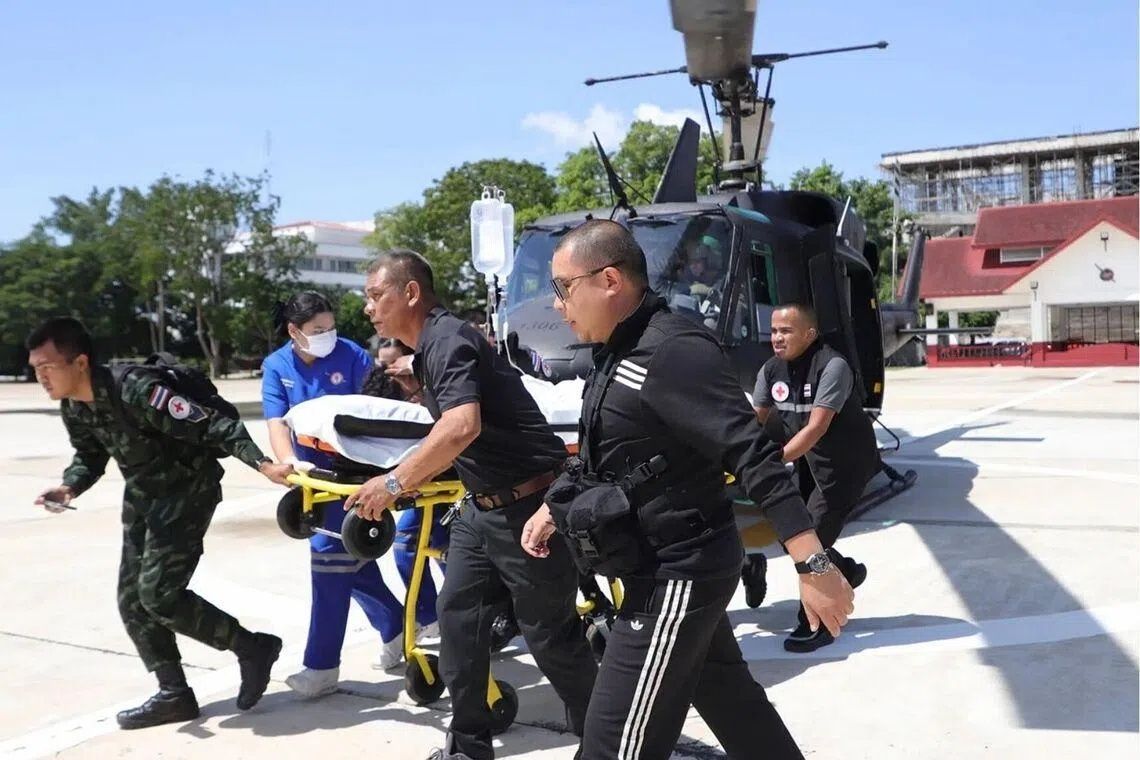
The severity of Wongruaydee's condition prompted an unusual response from medical authorities. After initial treatment at Thanto Hospital, both critically wounded officers were transported by military helicopter to the regional Yala Hospital. Upon evaluation at the larger facility, doctors determined that Wongruaydee required urgent surgical intervention to address blood accumulation in his pleural cavity—the space surrounding the lungs—and to repair damaged lung tissue. The hospital subsequently issued a public appeal for blood donations of all types to support his emergency procedure and other wounded personnel requiring transfusions.
The second bombing occurred at 11:30am the same day, targeting members of the Pattani Police Special Operations unit in nearby Mayo district. Officers returning from deployment of a security checkpoint at Ban Khuan Yi became the target of an explosive attack that wounded five personnel—Sergeants Anuchit, Bunyawat, Wisitphon, Aphisit and Sumit. Each sustained chest injuries consistent with blast trauma from a roadside device. All five were transported to Mayo Hospital where they received treatment for their injuries.
The back-to-back nature of these incidents reflects a troubling pattern of coordinated violence in Thailand's southernmost provinces. The region has experienced decades of intermittent insurgent activity, with various armed groups historically targeting government officials, security personnel, and Buddhist civilians in campaigns seeking greater autonomy or independence for the Muslim-majority area. Law enforcement and military operations to counter these groups frequently become focal points for retaliatory violence.
For Malaysian and broader Southeast Asian observers, the attacks carry particular significance. The Yala and Pattani areas lie directly adjacent to Malaysia's Kelantan state, and cross-border dynamics have long complicated security arrangements in the region. Armed groups operating in Thailand's south have occasionally sought refuge in Malaysian territory, prompting ongoing bilateral coordination between Thai and Malaysian security agencies. Any escalation in southern Thailand violence can create spillover effects and complicate the management of the shared border.
Response from Thai authorities was swift, with explosive ordnance disposal teams and forensic specialists immediately securing both attack sites. Police cordoned off the areas to prevent further harm and to collect evidence that might identify the perpetrators. Investigators face the ongoing challenge of distinguishing between different militant groups operating in the region, each with distinct organisational structures, motives, and international connections. The coordinated timing suggests either a single organisation capable of executing simultaneous operations across multiple provinces, or a degree of coordination among separate factions.
The injury profile from both attacks—predominantly chest trauma and blast-related wounds—indicates the use of anti-personnel devices optimised to maximise casualties among security personnel. The specific targeting of border patrol units and special operations police suggests attackers possessed intelligence about officer movements and checkpoint locations. Such operational knowledge raises questions about potential intelligence leaks or community-level information flows that might assist militant planning.
These incidents occur within a broader context of complex peace efforts and sporadic violence in Thailand's Deep South. Government initiatives aimed at dialogue with separatist groups have produced mixed results, with some factions engaging in negotiations while others continue armed campaigns. The persistence of attacks despite various peace initiatives underscores the fragmented nature of the insurgency and the difficulty in achieving comprehensive conflict resolution when multiple groups with divergent objectives operate in the same territory.
The demand for blood donations also highlights the humanitarian dimensions of the conflict. Medical facilities in rural southern provinces often struggle with resource constraints, making emergency procedures challenging when multiple trauma cases arrive simultaneously. The public appeal reflects genuine shortages and the toll that security operations exact on civilian healthcare systems. International observers increasingly note that protracted conflicts in Southeast Asia impose indirect costs on civilian populations through degraded medical services and diverted resources.
For Malaysian policymakers and security analysts, these developments warrant close monitoring. Cross-border militant activity, refugee flows, and weapons trafficking across the Thailand-Malaysia frontier remain persistent concerns. Enhanced coordination between Thai and Malaysian law enforcement appears necessary to prevent safe havens and to track suspects attempting to flee across international boundaries. Regional cooperation mechanisms like the Cooperative Mechanism for Preventing and Combating Transnational Crime have relevance here, though their effectiveness depends on sustained political commitment.
Authorities in both Yala and Pattani provinces have intensified security measures following the attacks, likely increasing checkpoints and patrols in the immediate aftermath. However, such reactive measures, while important for short-term security, do not address underlying grievances that sustain the insurgency. Long-term peace in Thailand's southern provinces likely requires continued parallel efforts at security operations, community engagement, and political dialogue to address the historical, religious, and administrative concerns that have fuelled separatist sentiment for decades.