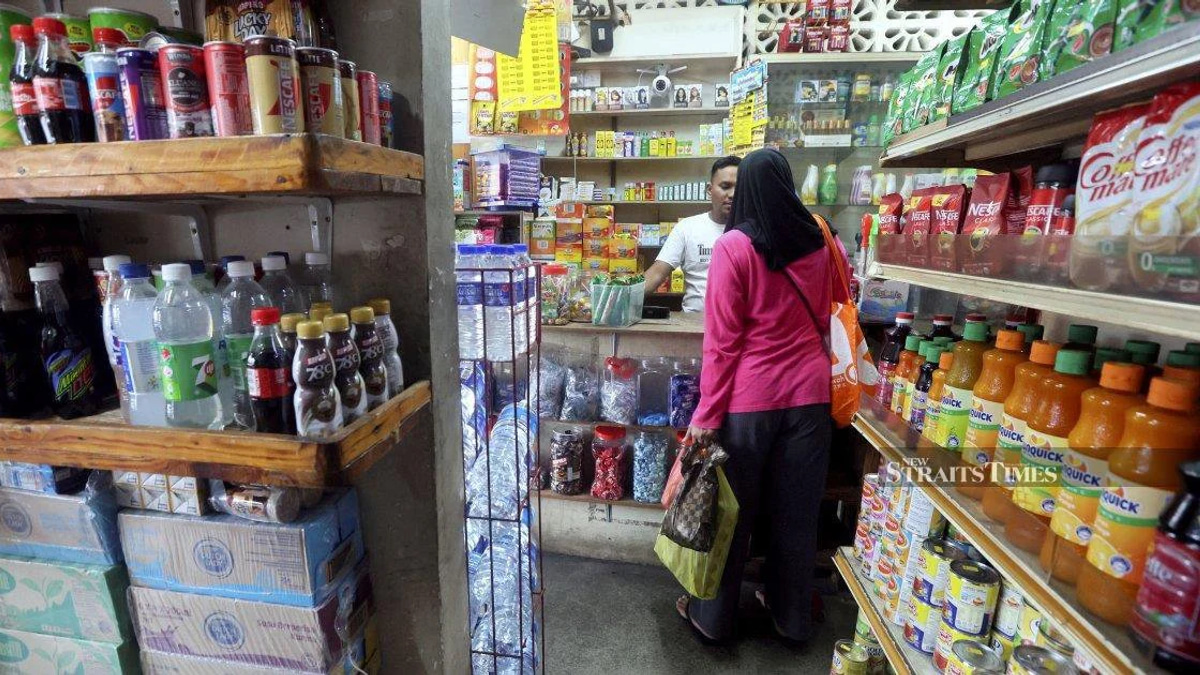
Deputy Finance Minister Liew Chin Tong has unveiled a RM9.8 billion government financing initiative designed to democratise access to microfinance for Malaysia's hawker and small business community. The substantial allocation, channelled through six major financial institutions, represents a concerted effort to prevent small entrepreneurs from being sidelined in the nation's economic development agenda. Speaking at the Dataran Puchong Permai Farmers' Market during a grassroots outreach programme, Liew emphasised that the initiative addresses a critical gap in financial accessibility for traders operating at the margins of the formal economy.
The scale of this allocation signals the government's recognition that informal and semi-formal traders—from street food vendors to home-based entrepreneurs—form the backbone of Malaysia's local economy but face persistent barriers when seeking working capital. Traditional banking channels often require collateral, formal business registration, or credit histories that many hawkers lack. By deploying RM9.8 billion through targeted microfinance channels, the government aims to bypass these institutional hurdles and inject capital directly into the grassroots economy where it can catalyse business expansion and employment creation.
The six institutions spearheading this initiative represent a deliberate mix of public and development-focused entities. Amanah Ikhtiar Malaysia, Bank Simpanan Nasional, Agrobank, Bank Rakyat, TEKUN Nasional, and the Companies Commission of Malaysia collectively bring different lending philosophies and customer bases to the table. This diversified approach acknowledges that no single institution can adequately serve the heterogeneous needs of Malaysia's sprawling informal sector, which ranges from fruit sellers to handicraft producers to small manufacturing operations.
Early results from the flagship Dataran Puchong Permai Farmers' Market site demonstrate the programme's traction at street level. Within the initial rollout period, 12 hawkers secured financing approvals, with Amanah Ikhtiar Malaysia leading at seven recipients, followed by Bank Simpanan Nasional with three and Agrobank with two. While these figures remain modest, they represent proof of concept for a model that brings loan officers and advisory services directly to trading communities rather than requiring traders to navigate bureaucratic premises and procedures.
The "Mikro Kredit Turun Padang" programme—literally "microfinance goes out to the grassroots"—embodies a strategic pivot toward outreach-based finance. Rather than confining lending operations to branch offices, the government is trialling a mobile model that establishes temporary advisory and application centres at farmers' markets and community gathering points. This approach reduces transaction costs for borrowers, shortens the application-to-approval timeline, and allows lenders to assess creditworthiness through direct observation of business operations and community reputation rather than reliance on paper credentials.
Prior to the Puchong event, similar microfinance campaigns had been conducted at the Taman Melawati Farmers' Market, Kelana Jaya Farmers' Market, and Bandar Tasik Permaisuri Farmers' Market. This geographical expansion across the Klang Valley suggests the government is testing the model's viability in different neighbourhoods and trader demographics before potential nationwide scaling. Each market presents distinct vendor profiles and economic conditions, offering valuable feedback on how the programme adapts to local contexts.
Beyond the immediate capital infusion, Liew underscored the Ministry of Finance's commitment to gathering actionable feedback from traders themselves. Rather than imposing top-down solutions, the government is positioning this initiative as bidirectional, with grassroots concerns being synthesised and elevated to the highest policy-making levels. Liew indicated that trader feedback collected during outreach events would be formalised and presented to the Prime Minister during budget deliberations, creating a formal channel for microfinance concerns to influence fiscal policy.
This feedback mechanism carries particular significance in Malaysian governance, where informal economic activities often operate beneath the radar of conventional policy-making institutions. By institutionalising a process to capture trader grievances and suggestions, the government acknowledges the need for greater representation of informal sector interests in budgetary and regulatory discussions. Many hawkers and small traders have historically complained about arbitrary enforcement of regulations, inadequate market infrastructure, and limited access to training and technology—issues that organised feedback loops might help address.
The RM9.8 billion figure warrants contextualisation within Malaysia's broader fiscal landscape and development priorities. While substantial, this allocation must compete with demands for healthcare, education, and infrastructure spending. However, its particular virtue lies in its targeting of financial inclusion and economic empowerment at the community level, addressing inequality through capital access rather than welfare transfers. Microfinance scholarship increasingly demonstrates that providing working capital to small traders yields higher employment multipliers than many alternative government expenditures, as traders typically hire family members and apprentices while reinvesting profits into their operations.
For Southeast Asian economies grappling with informal sector integration, Malaysia's microfinance expansion offers a replicable model. Countries such as Vietnam, Indonesia, and Thailand face similar challenges in extending financial services to hawkers and small traders operating outside formal banking channels. The combination of dedicated government capital, multiple lending institutions, and community-based delivery mechanisms represents a practical template that can be adapted to regional contexts, though success will ultimately depend on implementation rigour and the responsiveness of participating institutions to borrower needs.
The initiative also reflects evolving thinking about financial inclusion in Malaysia. Previous microfinance efforts often emphasised individual liability groups and informal savings cooperatives, which generated limited capital mobilisation. By contrast, this RM9.8 billion programme leverages formal institutional balance sheets to fund lending, circumventing the capital constraints that hampered earlier community-based approaches. Yet the programme's success will hinge on maintaining the accessibility and simplicity that attracted traders to grassroots markets in the first place, resisting the mission creep toward bureaucratic complexity that has undermined previous financial inclusion initiatives.
Looking ahead, the critical challenge involves scaling this model without sacrificing the direct engagement and responsiveness that characterises the pilot phase. As the programme expands geographically, sustaining regular outreach events and advisory services in each market will require sustained funding and institutional commitment. Furthermore, the six participating institutions must develop standardised yet flexible lending criteria that accommodate the informal nature of many traders' businesses—whose income streams may be seasonal, undocumented, or difficult to conventionally verify—while maintaining prudent risk management. The coming months will reveal whether Malaysia's RM9.8 billion microfinance commitment translates into genuine transformation in capital access for the nation's trading communities.