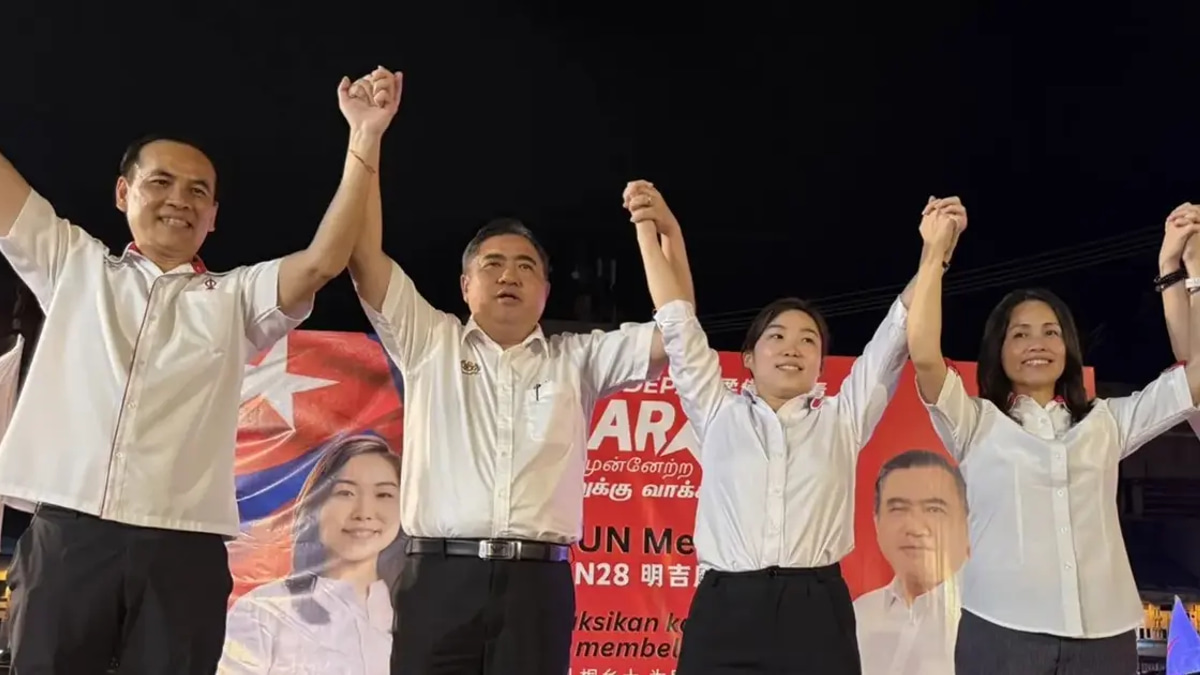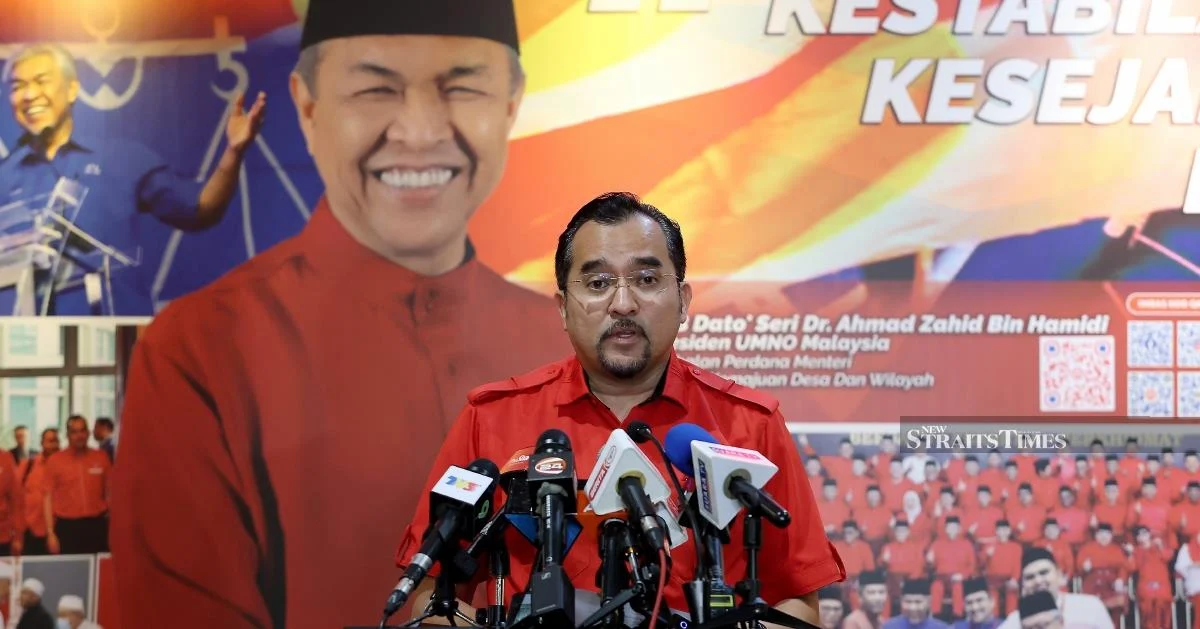
Umno has signalled its intention to conduct cleaner election campaigns in Johor and Negri Sembilan, with the party's leadership ruling out personal attacks and negative campaigning. The commitment, articulated by party secretary-general Datuk Dr Asyraf Wajdi Dusuki, represents a deliberate strategic choice to elevate the tone of political discourse in the two forthcoming state contests.
The pledge to avoid mudslinging marks a notable departure from historical patterns in Malaysian politics, where state elections have frequently been characterized by acrimonious exchanges and character assassination. By anchoring its messaging to substantive governance concerns rather than personal criticism of opponents, Umno aims to demonstrate political maturity and focus voter attention on concrete proposals for improving livelihoods.
This approach reflects broader frustrations within Malaysia's electorate over the quality of political debate. Successive surveys and anecdotal evidence suggest that ordinary Malaysians increasingly prefer politicians who articulate clear, actionable solutions to economic challenges, infrastructure deficiencies, and social concerns rather than trading barbs with rivals. Umno's repositioning may therefore be simultaneously a principled stance and a calculated response to voter sentiment demanding substantive engagement on issues that directly affect household prosperity.
The Johor and Negri Sembilan contests carry significant weight in the Malaysian political landscape. Both states serve as important bases for coalition partners and represent crucial testing grounds for ideas and messaging strategies that may later inform national political calculations. Success in these elections would boost coalition morale and provide momentum heading toward broader electoral contests, while setbacks could rattle confidence within the ruling alliance.
For Johor specifically, maintaining strong support has become strategically vital, given the state's size, economic importance, and role as a manufacturing and services hub. Negri Sembilan, meanwhile, holds symbolic and practical importance as a traditionally Umno-friendly state where the party has deep organizational roots. Both territories offer opportunities to demonstrate renewed political competence and responsive governance.
Umno's commitment to policy-driven campaigning also reflects internal party calculations about its broader positioning. Having navigated turbulent years marked by internal divisions and external political challenges, the party appears intent on rebuilding its image as a serious, solutions-oriented force in Malaysian governance. Positioning itself as the champion of pragmatic, evidence-based policymaking creates space for meaningful differentiation from opponents while rehabilitating the party brand among middle-class and professional voters who have grown skeptical of conventional political theatre.
The emphasis on policy offerings signals an intention to campaign on concrete deliverables and administrative achievements rather than ideological appeals or identity-based messaging. This could encompass infrastructure development, economic stimulus measures, healthcare provision improvements, and educational investments—areas where state governments wield considerable influence and where tangible results can be demonstrated to communities.
However, translating campaign pledges into consistent behavior throughout the election period presents inherent challenges. Local candidates, grassroots operatives, and allied organizations may prove harder to discipline than central party messaging, particularly in competitive contests where temptation exists to deploy personal attacks against rival candidates. Maintaining message discipline across dispersed party structures requires sustained organizational effort and clear accountability mechanisms.
The commitment also occurs within a broader context of Malaysian politics where coalition partners and opposition parties will simultaneously conduct their own campaigns. The competitive environment means that any unilateral restraint from mudslinging could theoretically allow opponents greater latitude for negative attacks. Whether Umno's pledge creates expectations for reciprocal cleanliness from other political forces remains to be seen, and maintaining the moral high ground may require exceptional discipline.
From a Southeast Asian perspective, Malaysia's approach to state-level electoral contests influences regional perceptions of democratic practice and political civility. How political parties conduct themselves in these contests sends signals about the maturity of democratic institutions and the quality of civic engagement in the region. A clean campaign focused on policy substance could reinforce positive regional narratives about Malaysian democracy.
Umno's positioning also reflects recognition that voter priorities have shifted measurably in recent years. Cost-of-living pressures, employment quality, and access to services matter more to ordinary citizens than partisan rhetorical flourishes or personal scandals involving political figures. By aligning campaign focus with genuine voter concerns, Umno positions itself to convert preferences into electoral support more effectively than campaigns built around personal attacks.
The path forward will ultimately be determined not by rhetorical commitments but by actual performance on the ground as campaigns unfold. Observers of Malaysian politics will monitor whether Umno and its candidates maintain discipline and integrity throughout the election period, or whether the pressures and competitive dynamics of actual campaigning overwhelm initial commitments to political civility. The credibility of Malaysian politics and Umno's own reputation will partly depend on how faithfully the party honours its pledge.

%22%2F%3E%3C%2Fpattern%3E%3C%2Fdefs%3E%3Crect%20width%3D%22100%25%22%20height%3D%22100%25%22%20fill%3D%22url(%23ph21o2sg)%22%2F%3E%3Crect%20width%3D%22100%25%22%20height%3D%22100%25%22%20fill%3D%22url(%23ph21o2sp)%22%2F%3E%3Ctext%20x%3D%2250%25%22%20y%3D%2250%25%22%20text-anchor%3D%22middle%22%20dominant-baseline%3D%22central%22%20fill%3D%22rgba(255%2C255%2C255%2C0.95)%22%20font-family%3D%22Georgia%2C%20'Times%20New%20Roman'%2C%20serif%22%20font-weight%3D%22700%22%20font-size%3D%22170%22%20letter-spacing%3D%22-0.02em%22%3EGabungan%3C%2Ftext%3E%3C%2Fsvg%3E)