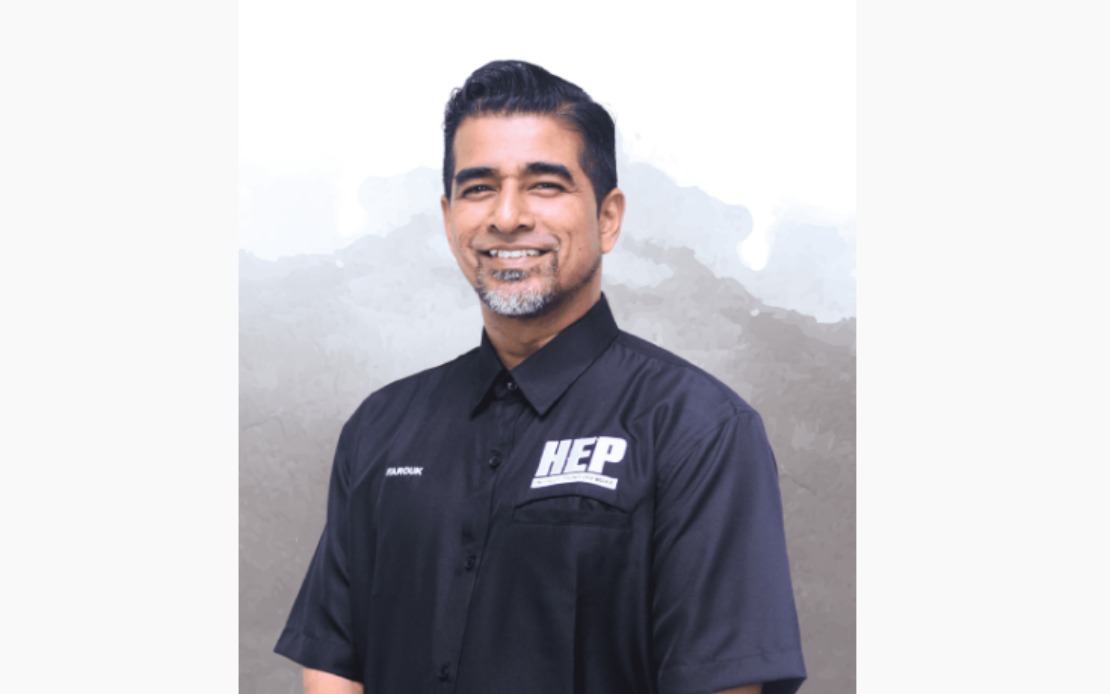
Universiti Teknologi MARA's Kelantan branch is actively discouraging economically disadvantaged students from declining tertiary education offers, pointing to a comprehensive array of financial support mechanisms designed to alleviate the burden of university costs. The push comes as competition for places in Malaysia's public universities intensifies, making institutional support increasingly crucial for students from lower-income households who might otherwise view higher education as financially unattainable.
Meer Zhar Farouk Amir Razli, Deputy Rector for Student Affairs at UiTM Kelantan, emphasises that prospective students and their families should not assume that PTPTN loans represent their only pathway to funding tertiary studies. The university operates multiple parallel assistance channels that work in tandem to create a more comprehensive safety net, reflecting a growing awareness among Malaysian higher education institutions that financial barriers remain a significant obstacle to educational equity. These mechanisms include direct zakat assistance—tapping into religious endowments traditionally reserved for those in genuine hardship—alongside dedicated welfare funds and campus-based support facilities.
The Dapur MADANI initiative, housed within residential colleges, specifically targets the day-to-day living expenses that often prove most burdensome for students from poor backgrounds. Rather than addressing only tuition fees, this programme recognises that accommodation, meals, and basic necessities can accumulate into insurmountable costs that force talented students to abandon their studies mid-way. By providing subsidised dining and resource facilities directly at residential colleges, UiTM Kelantan creates an ecosystem where students can focus on academic performance rather than worrying about survival expenses during each semester.
Meer Zhar's comments emerge from the UiTM Kelantan Branch Rector's Cakna Programme, a collaborative initiative with local non-governmental organisations aimed at identifying and supporting newly admitted students requiring assistance. This programme represents a shift towards proactive intervention rather than reactive aid—the university actively seeks out vulnerable students before they encounter crisis points that might derail their educational trajectories. The approach acknowledges that many eligible students from poor households may lack the confidence or knowledge to approach authorities requesting help, necessitating institutional outreach rather than waiting for applications.
The human dimension of this institutional push emerged during the Cakna Programme implementation, where UiTM presented a laptop to Norzarra Dhania Amir Abdullah, a 19-year-old student from a low-income household in Kota Bharu. The gesture extends beyond symbolic support—technology access directly impacts academic performance and employability in Malaysia's increasingly digitalised higher education landscape. For students like Norzarra, whose family income depends entirely on their mother's restaurant work following their father's disabling illness four years ago, such equipment provision can mean the difference between keeping pace with coursework and falling behind peers with greater resources.
Norzarra's journey exemplifies the decision-making calculus faced by Malaysian students from economically vulnerable backgrounds. She had previously received an offer from UiTM Sarawak but reluctantly declined, unable to manage the financial and geographical distance from her family. As the eldest of seven siblings, declining the opportunity represented a pragmatic choice given her family's dependency on her eventual earning capacity to improve their circumstances. The geographic coincidence of her subsequent offer from the Kelantan campus—closer to home and involving reduced relocation costs—restored a path she had believed closed, illustrating how structural factors like campus location significantly influence educational access for poor students.
The distinction between UiTM Kelantan and UiTM Sarawak in Norzarra's calculus reveals how Malaysian higher education inequality operates at granular levels. A student's proximity to a campus can determine whether tertiary education remains theoretically available or practically achievable. UiTM's dispersed campus network across Malaysia should theoretically improve access, yet geographic distribution only benefits students when financial assistance accounts for location-specific costs. Norzarra's experience suggests that without explicit recognition and mitigation of these distance factors, spatial distribution alone remains insufficient to democratise higher education access.
Meer Zhar's emphasis on encouraging students to seek information before rejecting offers targets a critical communication gap in Malaysian higher education. Many students and parents from disadvantaged backgrounds lack social capital networks to navigate institutional support systems—they may not know that zakat assistance exists, understand how to apply for welfare funds, or recognise that campus facilities can substantially reduce living costs. When universities actively disseminate this information directly to applicants, they remove informational barriers that disproportionately affect families without tertiary education experience.
The intensification of competition for public university places places acute pressure on institutions to ensure that selection processes actually identify and retain talented students rather than merely filtering by financial capacity to afford attendance. Malaysia's drive towards expanded higher education access rings hollow if qualified students decline places because inadequate information about financial support systems creates false impressions of unaffordability. UiTM Kelantan's proactive stance suggests a recognition that institutional responsibility extends beyond admitting students to ensuring they can actually enrol and complete their degrees.
For policymakers examining Malaysia's persistent higher education equity gaps, these institutional interventions offer both promising practices and cautionary indicators. The existence of zakat assistance, welfare funds, and facilities like Dapur MADANI demonstrates that universities possess mechanisms to support disadvantaged students—yet their scattered deployment and apparent invisibility to many families suggests systemic communication failures. Scaling successful models like UiTM Kelantan's approach across the public higher education sector could significantly reduce the invisible attrition that occurs when capable students decline places believing themselves unable to afford attendance.
The implications extend beyond individual student trajectories to Malaysia's broader development agenda. When talented students from poor backgrounds exit the educational pipeline prematurely due to perceived financial barriers rather than actual unaffordability, the country loses potential human capital and perpetuates cycles of intergenerational poverty. Norzarra's pursuit of a Diploma in Management represents an investment in human potential that generates returns across multiple sectors—yet this return materialises only because she received both an institutional offer and explicit information about affordability mechanisms.
Moving forward, the challenge facing Malaysian universities involves transforming UiTM Kelantan's targeted outreach into systematic institutional practice. This requires stronger integration between admissions offices, financial aid departments, and student support services to identify vulnerable acceptances and proactively offer assistance before they become rejections. It also demands continuous evaluation of whether existing support mechanisms actually reach their intended beneficiaries or whether gaps between available and accessed assistance persist. Only through such systematic approaches can Malaysia genuinely claim to offer merit-based higher education access regardless of family income.

%22%2F%3E%3C%2Fpattern%3E%3C%2Fdefs%3E%3Crect%20width%3D%22100%25%22%20height%3D%22100%25%22%20fill%3D%22url(%23ph21o2sg)%22%2F%3E%3Crect%20width%3D%22100%25%22%20height%3D%22100%25%22%20fill%3D%22url(%23ph21o2sp)%22%2F%3E%3Ctext%20x%3D%2250%25%22%20y%3D%2250%25%22%20text-anchor%3D%22middle%22%20dominant-baseline%3D%22central%22%20fill%3D%22rgba(255%2C255%2C255%2C0.95)%22%20font-family%3D%22Georgia%2C%20'Times%20New%20Roman'%2C%20serif%22%20font-weight%3D%22700%22%20font-size%3D%22170%22%20letter-spacing%3D%22-0.02em%22%3EGabungan%3C%2Ftext%3E%3C%2Fsvg%3E)