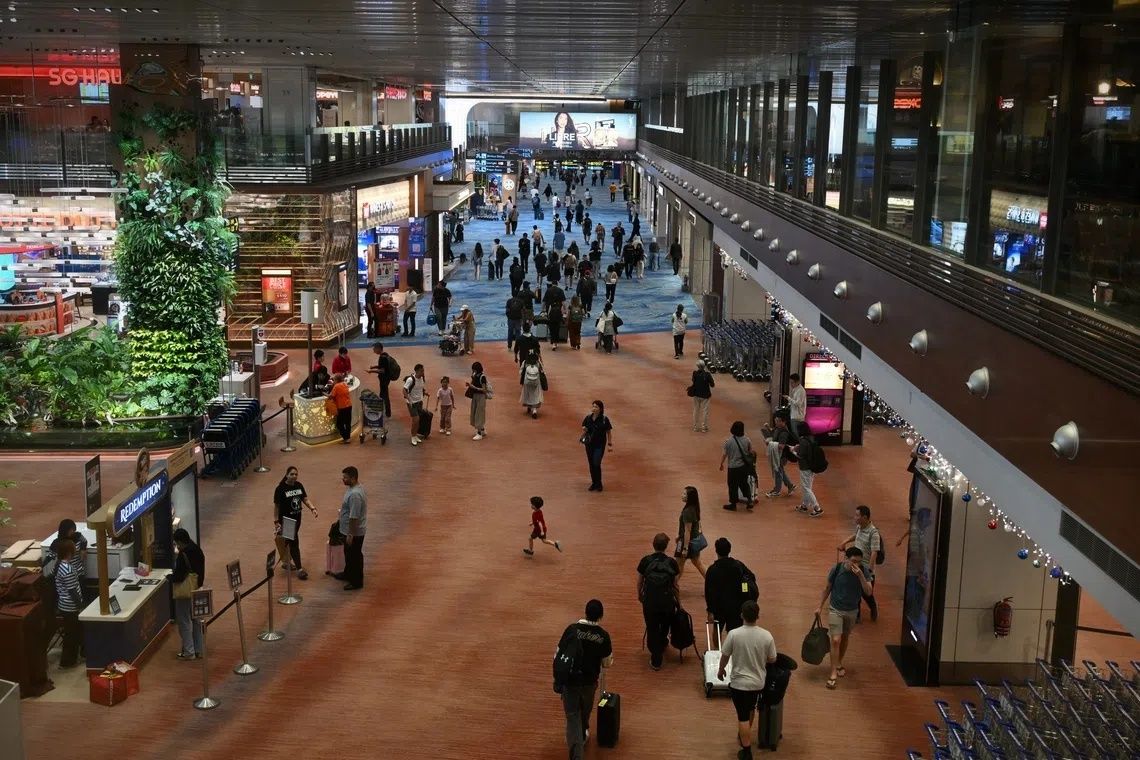
Singapore's police have secured arrests in two separate shop theft incidents at Changi Airport involving high-value perfume merchandise, with one case spanning more than eight months before the offender could be detained. The 37-year-old Australian suspect and a 50-year-old American man are scheduled for court appearance on August 17, according to a police statement released on August 16. Both individuals face charges related to theft offences that carry potential sentences of up to seven years imprisonment, substantial fines, or both under Singapore law.
The first incident came to light on November 19, 2025, when a retail assistant working at a shop in the transit zone of Changi Airport Terminal 2 noticed two boxes of premium perfume missing from a display unit. Security camera recordings revealed that an individual had removed the merchandise—valued at approximately $430—at 4:50pm without completing any purchase transaction. The suspect departed Singapore before law enforcement personnel could locate him, seemingly evading immediate consequences for the theft.
What makes this case particularly notable is the delayed apprehension mechanism that ultimately led to the Australian man's downfall. Rather than remaining a cold case, the investigation maintained momentum over the subsequent months. On August 4, more than eight months following the original November theft, the suspect made the critical error of transiting through Changi Airport once more. This return journey provided authorities with the opportunity to finally intercept and arrest him, demonstrating the persistent nature of modern airport security protocols and cross-border law enforcement coordination.
The second case involved the American suspect and unfolded rapidly in the early hours of August 5. At approximately 1:25am, a retail worker at a shop located in the transit area of Changi Airport Terminal 1 discovered that a box of perfume had vanished from a display shelf. CCTV footage captured the individual taking the merchandise—valued at just over $310—at 12:40am and departing the store without payment. Crucially, airport police officers stationed in the terminal managed to apprehend the suspect before he could board his outbound flight, preventing his departure and enabling immediate intervention.
What initially appeared to be a single-item theft unraveled into a more extensive pattern of organised retail crime once investigators conducted a comprehensive review of security footage. The American suspect's activities across the airport were far more prolific than the initial incident suggested. Additional CCTV analysis revealed that the same individual had stolen two further boxes of perfumes and a display tester bottle from separate retail locations within the terminal's transit zone. The cumulative value of all three items recovered from this suspect exceeded $717, indicating a systematic approach to selecting merchandise across multiple outlets.
The contrasting outcomes of these two cases illustrate different operational realities at Changi Airport. In the Australian man's situation, the theft occurred, and the individual successfully departed the country, creating an investigation that required months of follow-up work and international coordination to reach closure. However, the American suspect's misfortune came from immediate detection and the swift response of airport personnel who prevented the offender from boarding his flight. In this case, airport security measures functioned to intercept the crime in real time rather than requiring retrospective investigation.
Assistant Commissioner of Police M. Malathi issued a statement emphasizing Singapore's uncompromising approach toward retail crime, particularly in high-traffic airport environments. He underscored that the police force treats shop theft cases with considerable seriousness and remains committed to holding offenders accountable regardless of circumstances. His remarks carried a warning directed at potential criminals that contemporary surveillance infrastructure has substantially transformed detection capabilities across the retail sector, making successful evasion increasingly difficult.
The official statement from the police hierarchy highlighted the technological dimension of modern law enforcement, noting that the widespread deployment of CCTV systems by retailers has fundamentally altered the landscape of retail crime investigation. Malathi pointed out that even in situations where offenders initially evade immediate detection and leave the jurisdiction, the investigative process ultimately yields identification and arrest. This represents a significant shift from historical policing contexts where travellers could disappear into international flows without consequence.
The implications for the region are considerable. Southeast Asia's major transport hubs—including those in Malaysia, Thailand, and Indonesia—face similar challenges with transient populations and the concentration of high-value consumer goods in duty-free environments. The Changi Airport cases demonstrate that sustained investigation and information-sharing protocols can bridge geographical and temporal gaps. For Malaysian airports and retailers, the cases underscore the importance of comprehensive CCTV infrastructure and clear protocols for information retention and analysis that extends beyond immediate staff shifts.
The police unit responsible for airport security at Changi has committed to strengthening collaboration with retail stakeholders to prevent and deter shop theft at the facility. This partnership approach acknowledges that security cannot rest solely with law enforcement but requires active participation from retail management, staff training, and sophisticated inventory controls. The commitment signals that Singapore views airport retail crime not as an inevitable consequence of high-volume passenger processing but as a controllable problem through coordinated effort.
For regional readers, these cases carry lessons about the evolving nature of retail security and law enforcement coordination. The eight-month gap between the Australian suspect's initial theft and his eventual arrest suggests that international flight patterns and passport data can be effectively integrated into investigation workflows. This capability has implications for how other regional jurisdictions approach transnational retail crime. Additionally, the rapid apprehension of the American suspect demonstrates that alert retail staff and coordinated airport security remain essential components of loss prevention.
The sentencing hearing on August 17 will provide clarity on how Singapore's courts weigh these particular theft cases within the broader framework of retail crime jurisprudence. The courts' approach will likely influence how other regional governments calibrate their own responses to similar incidents. For businesses operating duty-free and airport retail environments throughout Southeast Asia, these prosecutions signal that comprehensive security measures yield results and that perpetrators face genuine legal consequences rather than merely temporary inconvenience.

