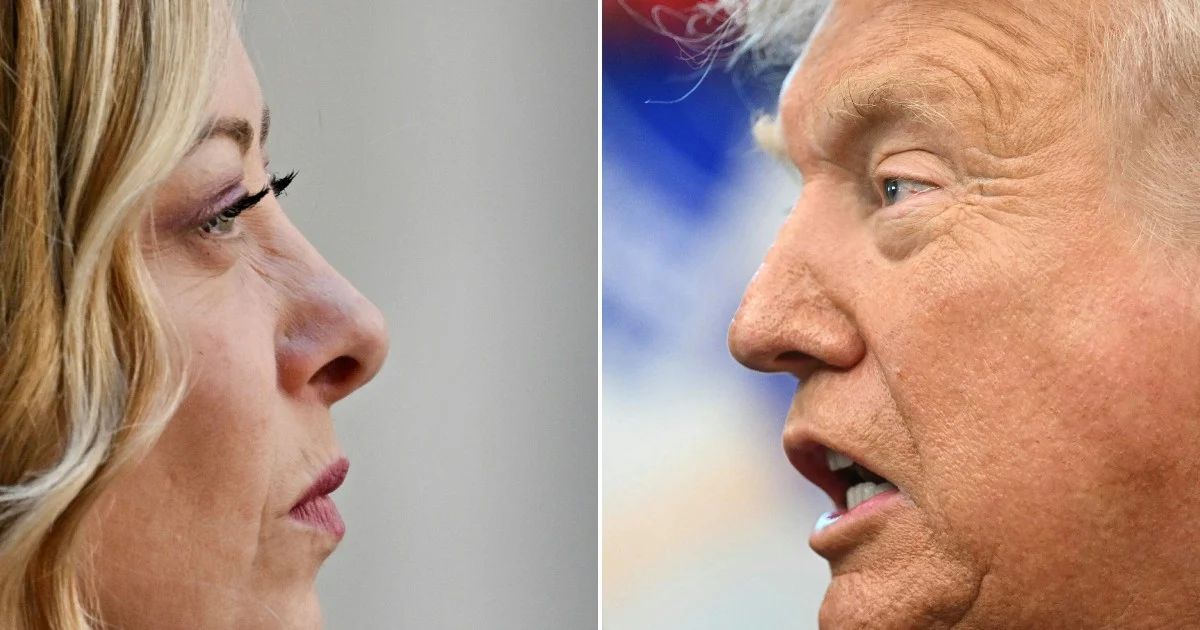
The relationship between Washington and Rome hit fresh turbulence this weekend when US President Donald Trump levelled fresh accusations against Italian Prime Minister Giorgia Meloni, claiming she had made repeated requests for a joint photograph. The allegations emerged from Trump's camp on Saturday, suggesting underlying friction between two conservative leaders who might otherwise be expected to coordinate closely on Western alliance matters. The specificity of Trump's complaint—centring on a seemingly trivial matter of personal photography—masks deeper tensions that observers say reflect genuine strategic divisions between the American administration and Italy's government.
The dispute carries particular significance given the role both nations play within G7 forums and broader transatlantic relationships. Italy, as one of Europe's three largest economies and a founding member of NATO, maintains a delicate position as it seeks to balance American interests with independent European policy preferences. For Southeast Asian observers, such fractures within traditionally aligned Western powers signal potential shifts in how the West might coordinate on regional issues affecting Asia-Pacific trade, security partnerships, and alignment with China.
Trump's framing of the photograph request as a diplomatic grievance suggests he views it as symptomatic of broader disagreements. His administration has been pushing NATO members more aggressively on defence spending commitments and military contributions, positions where Italy has sometimes sought flexibility. Similarly, Trump's approach to Iran sanctions and nuclear negotiations has diverged from European preferences on multiple occasions, with Rome occasionally seeking dialogue channels that Washington has deemed counterproductive. By linking the photograph incident to these policy disagreements, Trump appears to be signalling that he views Italy's leadership as transactional or insufficiently aligned with his administration's worldview.
Meloni's position as Italy's first female Prime Minister and a politician from what Western media characterises as the populist right has complicated her standing with traditional transatlantic institutions. While she has generally backed NATO positions and condemned Russian aggression in Ukraine, her government's independent foreign policy posture on issues ranging from EU fiscal rules to migration has occasionally frustrated both Brussels and Washington. The photograph dispute, whatever its surface-level absurdity, touches on questions of respect and protocol that matter in international relations, even if unspoken.
The timing of Trump's escalation warrants consideration. G7 summits typically feature carefully choreographed photographic opportunities where leaders are positioned according to diplomatic protocol and relationship dynamics. If Meloni sought additional bilateral photography sessions, it could reflect either her desire to enhance Italy's profile or an attempt to signal stronger bilateral ties to domestic audiences in Rome. Trump's public airing of such requests—rather than addressing them through private diplomatic channels—represents a deliberate choice to escalate rather than contain the disagreement.
For nations across Southeast Asia monitoring great power dynamics, such fissures within Western alliance structures have tangible implications. A weakening of NATO cohesion or G7 unity could affect how the West coordinates on issues affecting Asia-Pacific security, trade relationships, and technology standards. When established allies openly squabble over seemingly minor matters, it often signals fundamental trust deficits that extend to substantive policy areas. Malaysia and other regional countries increasingly factor Western unity into their own strategic calculations, particularly regarding technology partnerships, security arrangements, and economic alignment.
The Iran dimension adds another layer of regional relevance. Italy has historically maintained trading relationships with Tehran and has sought to preserve nuclear deal frameworks that Trump's administration has repeatedly challenged. How Rome and Washington resolve disagreements over Iran policy could influence their broader capacity to present united diplomatic fronts on other Middle Eastern issues that affect shipping lanes and energy security relevant to Southeast Asia.
Meloni's government has not yet responded publicly to Trump's specific accusations, though Italian diplomatic sources have historically preferred managing such disputes privately rather than engaging in public back-and-forth. This restraint could reflect either confidence that the disagreement will pass or strategic calculation that public argument would only deepen the rift. The absence of immediate Italian counter-messaging suggests Rome may be considering whether this confrontation serves its interests or whether de-escalation through quiet channels would better preserve the relationship.
The photograph row illustrates broader questions about alliance management in an era where traditional diplomatic courtesies sometimes clash with populist leaders' communication styles and transactional approaches to international relations. Trump's willingness to publicly criticise allied leaders over matters that previous administrations would have handled discreetly represents a different operating model for American leadership. Whether this approach strengthens or weakens American alliances remains contested, but it has clearly created new uncertainties about how traditional partnerships function.
For Malaysia's foreign policy establishment, these developments reinforce lessons about not assuming alliance permanence. The United States' relationships even with foundational allies like Italy face strain under current leadership, suggesting that all bilateral relationships exist within contexts of competing interests and personality dynamics. As Southeast Asian nations navigate their own partnerships with various Western powers, understanding these fault lines helps explain why some Western partners may prove less reliably coordinated than their public statements suggest.
Moving forward, whether Trump and Meloni can compartmentalise their disagreements or whether this incident hardens into a more fundamental rupture remains to be seen. Historical precedent suggests that G7 and NATO relationships, despite public spats, typically find ways to function because the structural incentives for cooperation outweigh individual grievances. However, the frequency of such incidents during Trump's presidency indicates a more volatile alliance environment than existed previously, with consequences that ripple beyond Europe into Asia-Pacific calculations about Western reliability and unity.