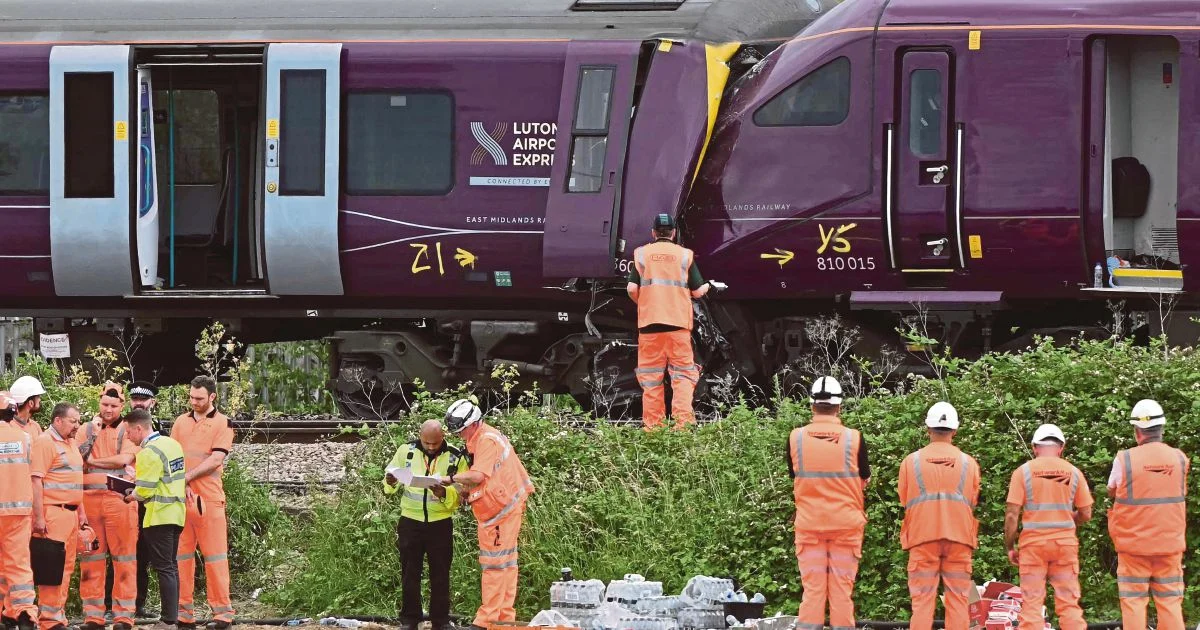
A serious train collision that unfolded north of London on Friday resulted in the death of a driver and left dozens of passengers requiring medical attention, prompting immediate investigation by UK authorities into what caused the accident. The incident, which occurred in the Bedford area, saw nine of the 28 hospitalized victims classified as critically injured, with emergency services responding swiftly to manage the scale of casualties across multiple medical facilities in the region.
Accident investigators moved into action on Saturday morning to examine the debris and gather evidence from the collision site. Determining the precise circumstances that led to the two trains coming into contact has become the priority for the inquiry team, as early reports suggest this was not a minor fender-bender but a substantial impact that caused considerable damage to both rail vehicles and raised immediate safety concerns about the rail network's infrastructure and operational procedures in that section.
The location of the incident near Bedford places it within one of England's busier transport corridors, a route that carries substantial daily passenger numbers commuting to and from London and other major population centres. The timing and conditions of the collision will form crucial aspects of the investigation, as investigators attempt to establish whether human error, mechanical failure, signalling problems, or environmental factors played a role in the accident's causation.
British rail safety has faced heightened public scrutiny in recent years amid broader concerns about network maintenance and operational standards across the country's ageing infrastructure. This collision near Bedford will inevitably reignite discussions about investment in rail systems, driver training protocols, and the effectiveness of collision-avoidance technology now being deployed across modernized segments of the UK network. The death of a professional driver, whose role requires extensive training and experience, suggests the collision possessed considerable force and perhaps unfolded with limited opportunity for preventative action.
For Malaysian readers familiar with local rail networks including Kereta Api Tanah Air and other regional operators, this incident underscores recurring challenges faced by rail systems across developed and developing economies alike. Network expansion and modernization demand significant capital investment, yet older sections of track and equipment continue operating in many jurisdictions, creating potential vulnerability points where operational procedures become even more critical in preventing accidents. The presence of nine critically injured passengers indicates the serious nature of train collisions, where the confined space and lack of protective barriers mean injury patterns tend toward severity when impacts occur.
The investigation will examine multiple technical dimensions, including recorded data from both trains' systems, communications between drivers and signalling centres, maintenance records for the specific track section, and visibility conditions at the time of the collision. Witness testimony from passengers and railway personnel will complement this technical evidence, providing investigators with a comprehensive understanding of events leading to impact. Modern trains typically record substantial operational data that proves invaluable in accident reconstruction, allowing investigators to establish speeds, braking applications, and exact timing sequences.
International standards governing rail safety mean that UK investigators' findings will carry implications beyond British borders, as railway operators worldwide monitor outcomes from major incidents to identify any universal design or procedural vulnerabilities. The recovery of passengers and the driver's family will likely unfold over extended periods, with some of the nine critically injured facing lengthy rehabilitation should they survive their injuries. The psychological impact on surviving passengers, many of whom likely witnessed traumatic scenes, represents an often-overlooked consequence of transport accidents that extends far beyond immediate physical harm.
Regulatory bodies overseeing UK rail operations may face pressure to accelerate safety reviews or mandated infrastructure improvements should the investigation reveal preventable factors contributed to the collision. This particular incident carries added weight given that train collisions, while relatively rare in developed rail networks, represent some of the most catastrophic transport accidents when they do occur due to the forces involved and passenger concentration. The Bedford collision serves as a sobering reminder that rail safety requires constant attention, investment, and vigilance across all operational aspects.
The coming weeks will reveal whether this collision resulted from isolated human error that might affect only a single operator, systemic issues within the local rail operation that could affect broader service patterns, or infrastructure deficiencies requiring substantial corrective investment. For regional transport authorities across Southeast Asia, where rail network expansion continues in countries like Malaysia, Thailand, and Indonesia, such incidents abroad provide opportunities to review domestic safety standards and ensure that growth in capacity does not compromise operational safety or maintenance protocols essential to protecting passenger welfare.
%22%2F%3E%3C%2Fpattern%3E%3C%2Fdefs%3E%3Crect%20width%3D%22100%25%22%20height%3D%22100%25%22%20fill%3D%22url(%23ph3e4fag)%22%2F%3E%3Crect%20width%3D%22100%25%22%20height%3D%22100%25%22%20fill%3D%22url(%23ph3e4fap)%22%2F%3E%3Ctext%20x%3D%2250%25%22%20y%3D%2250%25%22%20text-anchor%3D%22middle%22%20dominant-baseline%3D%22central%22%20fill%3D%22rgba(255%2C255%2C255%2C0.95)%22%20font-family%3D%22Georgia%2C%20'Times%20New%20Roman'%2C%20serif%22%20font-weight%3D%22700%22%20font-size%3D%22320%22%20letter-spacing%3D%22-0.02em%22%3ENew%3C%2Ftext%3E%3C%2Fsvg%3E)