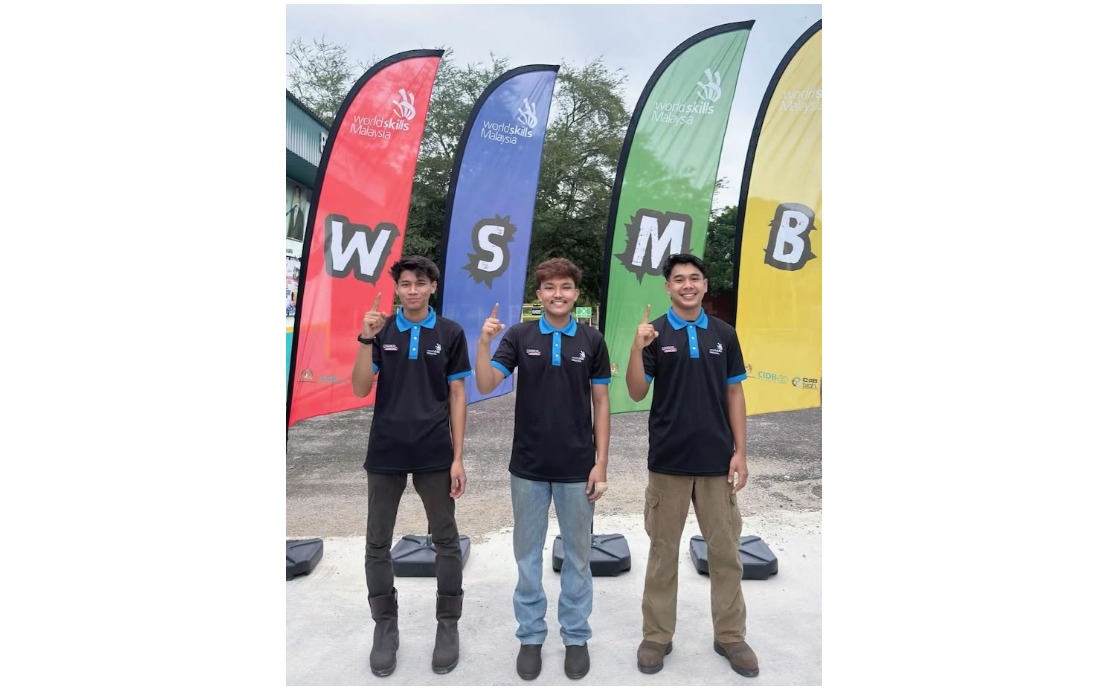
Three and a half decades after its establishment, WorldSkills Malaysia Belia (WSMB) continues to fulfil its original mandate of identifying and nurturing construction sector professionals who can compete on the global stage. The programme, which has undergone several transformations since its inception in 1990 as the Malaysian Skills Champion Competition, represents a sustained commitment to workforce development in an industry critical to the nation's infrastructure ambitions.
The journey of WSMB reflects Malaysia's evolving approach to vocational excellence. Initially launched under the vision of fourth Prime Minister Tun Dr Mahathir Mohamad, the initiative was renamed Anugerah Tangan Emas Perdana Menteri from 1991 to 2006, before becoming MySkills during the 2007-2013 period. Since 2014, it has operated under its current WSMB identity, a rebranding that signals alignment with the global WorldSkills movement and its emphasis on international benchmarking. This evolution underscores how successive administrations have recognised the strategic importance of technical skills development to economic competitiveness.
Today, the programme operates through partnerships with the Malaysian Construction Academy (ABM) and CIDB Technologies, both accredited by the Construction Industry Development Board. These training hubs are equipped with facilities meeting international standards, ensuring that participants are exposed to the same equipment, methodologies and quality benchmarks they will encounter in professional settings. This infrastructure investment reflects recognition that aspirational standards cannot be taught in outdated facilities; participants must work with the tools and technologies that define contemporary industry practice.
Mohd Hafiz Dasahi, chief executive of CIDB Technologies, frames WSMB as more than a competition—it functions as a talent incubator designed to reshape the construction industry landscape. His perspective emphasises that today's investment in human capital directly determines tomorrow's competitive advantage. By ensuring training curricula are rooted in demonstrated industry needs rather than theoretical frameworks, and by integrating emerging technologies into practical modules, the programme creates graduates ready for immediate workplace deployment at internationally competitive skill levels.
The welding specialisation provides a concrete example of WSMB's rigorous approach. According to Zarulhakim Abdul Rahim, head of welding at CIDB Technologies, participants face multifaceted assessment criteria encompassing measurement precision, workmanship quality, procedural compliance, time efficiency, analytical problem-solving and occupational safety adherence. This comprehensive evaluation mirrors real-world standards, where defective welds can compromise structural integrity with potentially catastrophic consequences. Beyond technical competency, the competition cultivates psychological resilience, self-discipline and the professional mindset necessary for workers to continuously upgrade their capabilities in response to technological change.
Industry stakeholders actively participate in programme delivery, recognising that alignment between training providers and employers strengthens institutional credibility. Lincoln Energy and Vinxus Mark, companies operating in the welding technology sector, contribute practical equipment, consumables and technical mentorship. This corporate engagement ensures participants gain experience with the specific machines and materials they will encounter professionally, while companies gain insight into emerging talent capable of adopting their preferred systems and standards.
Participants themselves articulate how WSMB transforms their career trajectories and professional aspirations. Ahmad Syafie Dasuki, 20, from Tumpat, Kelantan, draws on nearly two years of workshop experience in Teluk Kalong, Terengganu, describing WSMB as an accelerant that elevated his foundational knowledge to internationally recognised competency levels. His participation has validated his career choice and exposed him to cutting-edge technological applications within his field, positioning him for advancement opportunities that would be unavailable through workshop experience alone.
Muhammad Fazran Md Rashid @ Yusoff, 21, currently employed in Kulim, Kedah, similarly credits WSMB with consolidating technical skills while fostering psychological attributes—confidence, discipline and sustained ambition—essential for long-term career success in demanding technical fields. His desire to develop into an experienced, highly skilled practitioner reflects how the programme cultivates career aspiration beyond mere employment, encouraging participants to envision themselves as specialised professionals commanding respect and compensation commensurate with their capabilities.
Mohd Sahmi Irfan Sulaimi, 20, from Setiu, Terengganu, exemplifies the multiplier effects of participation. Beyond immediate skill enhancement, he emphasises how WSMB builds professional networks, establishes relationships with industry mentors and creates downstream career opportunities. This networking dimension extends participant value beyond competition medals or certificates, creating relational capital that often proves decisive when employment or advancement decisions materialise. His encouragement to younger workers reflects internationalisation of opportunity perception—the understanding that excellence in technical fields increasingly unlocks regional and global possibilities.
The programme's significance extends beyond individual participant trajectories to systemic industry requirements. Construction, manufacturing, oil and gas, energy and maritime sectors require workforces demonstrating world-class technical precision and safety consciousness. WSMB addresses this structural demand by institutionalising international standard benchmarking within Malaysia's vocational development architecture. By channelling ambitious young workers through competitive pathways that emphasise technological mastery and procedure compliance, the programme contributes to quality improvement across multiple economic sectors simultaneously.
Furthermore, WSMB strengthens institutional coordination between training providers and industry employers, creating feedback loops that ensure curricula remain responsive to technological evolution and market transformation. This collaborative framework prevents the common vocational training failure mode—where institutions teach outdated techniques because curriculum review processes move too slowly to track technological change. By maintaining continuous engagement with industry practitioners and equipment manufacturers, WSMB embeds adaptability into its operational model.
For Malaysia's regional competitive positioning, WSMB represents significant strategic asset. Southeast Asian economies increasingly compete for high-value manufacturing and infrastructure contracts, where workforce quality functions as decisive differentiator. By systematically developing construction workers capable of meeting international standards and successfully competing at WorldSkills competitions, Malaysia signals to multinational investors and regional employers that its technical workforce ranks among Asia's most capable. This reputational advantage supports broader economic objectives around higher-wage employment and advanced manufacturing establishment.
Looking forward, WSMB's sustained relevance depends on continued institutional investment, industry partnership expansion and promotion of vocational pathways as legitimate alternatives to university education. The programme demonstrates that technical excellence need not follow academic trajectories, and that competition-based skill development can produce professionals whose capabilities exceed those developed through conventional classroom instruction. As Malaysia pursues its ambitions for industrial upgrading and infrastructure development, initiatives like WSMB that systematically cultivate technical excellence will prove increasingly valuable to national economic strategy.

