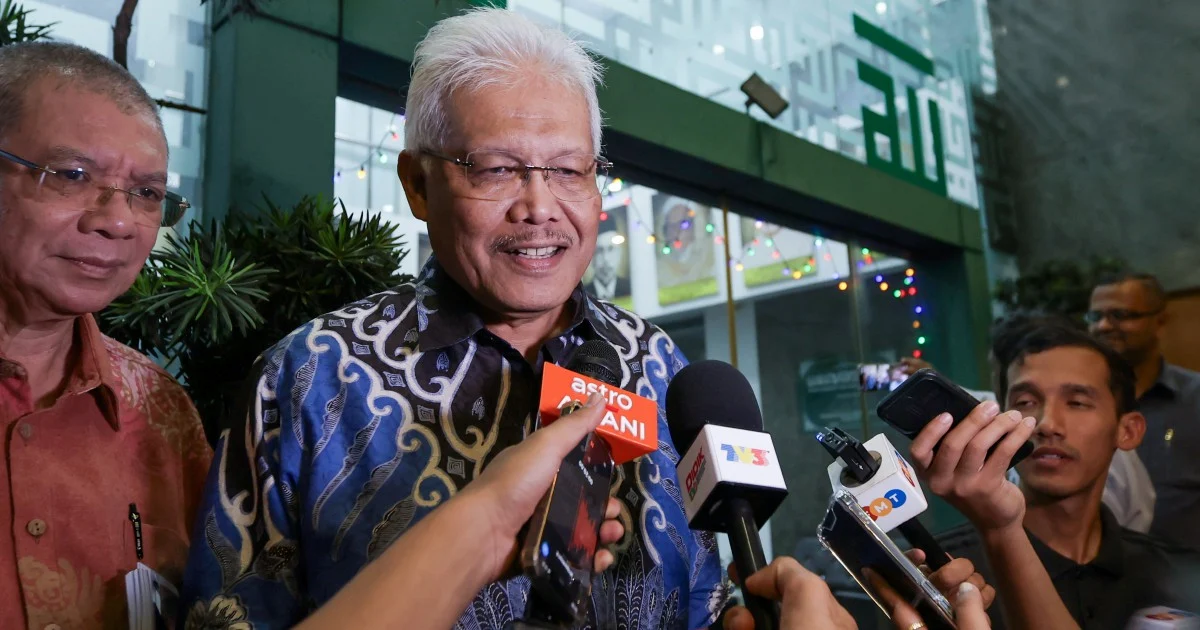
Datuk Seri Takiyuddin Hassan, serving as chief whip for Perikatan Nasional, has filed an official notification with the office of the Dewan Rakyat Speaker confirming the reappointment of Datuk Seri Hamzah Zainudin to the position of opposition leader. This procedural step underscores the formal machinery through which parliamentary leadership transitions are documented and authenticated within Malaysia's legislative system.
The notification represents a significant moment in Malaysia's evolving political landscape, where Perikatan Nasional has sought to strengthen its parliamentary standing and institutional roles. Hamzah Zainudin's reappointment consolidates the coalition's position as the primary opposition bloc in the current Dewan Rakyat, a status that carries considerable institutional weight and procedural advantages in parliamentary proceedings.
Peikatan Nasional's strategic positioning of Hamzah as opposition leader reflects the coalition's broader efforts to maximize its influence within parliament despite not holding the reins of government. The opposition leader role grants formal recognition, speaking privileges, and the ability to shape parliamentary agendas and discourse. For Malaysian stakeholders monitoring political developments, this appointment signals continuity in opposition leadership and underscores the coalition's organizational coherence.
The formal notification process itself merits attention. Malaysian parliamentary conventions require such official documentation to establish the legitimacy of designated parliamentary office holders. By submitting this notification through the chief whip's office—the traditional conduit for such communications—Perikatan Nasional adheres to established protocols, thereby ensuring that Hamzah's reappointment receives formal recognition and carries full parliamentary standing.
Hamzah Zainudin brings considerable political experience to this role, having previously held ministerial positions and parliamentary responsibilities. His reappointment suggests that Perikatan Nasional values continuity in leadership, particularly at a time when opposition coalitions must maintain unity and strategic direction to effectively counter government initiatives and articulate alternative policy positions.
This development carries implications for regional political observers tracking Southeast Asian parliamentary dynamics. Malaysia's legislative opposition continues to assert itself as a crucial institutional counterbalance, with formal positions and recognized leadership structures essential to maintaining democratic accountability. The systematic notification of leadership appointments demonstrates the maturity of Malaysian parliamentary institutions, even amid fluid political alignments.
For Malaysian voters and constituents, the opposition leader's role extends beyond ceremonial recognition. This position enables the opposition to coordinate policy responses, mount structured parliamentary challenges to government proposals, and present unified alternatives on crucial national issues. Hamzah's reappointment thus carries substantive consequences for parliamentary discourse and legislative oversight.
Peikatan Nasional's cohesion around this leadership decision also reflects the coalition's ability to present a unified front despite comprising multiple political parties with distinct constituencies and agendas. Such coordination proves essential for opposition effectiveness, particularly in a parliament where government coalitions can leverage numerical advantages. The formal reappointment signals that the coalition remains organizationally functional and strategically aligned.
The timing of this notification occurs against a backdrop of Malaysia's broader political realignment. Opposition leadership has become increasingly consequential as parliament expands its scrutiny of executive actions and budgetary allocations. An officially recognized opposition leader provides focal points for parliamentary opposition voices, enabling more effective legislative engagement and scrutiny of government performance.
Looking forward, Hamzah's reappointment may influence how opposition parties coordinate their parliamentary strategies across multiple policy domains. From economic legislation to governance reforms, the opposition leader shapes debate framing and directs institutional responses to government proposals. This responsibility extends to representing opposition concerns within parliament's formal structures and engaging with international parliamentary delegations and bodies.
The notification also establishes clear institutional records regarding parliamentary leadership, ensuring that Malaysia's legislative history accurately reflects the formal offices and designations within each parliamentary term. Such documentation supports parliamentary research, institutional continuity, and adherence to established protocols governing parliamentary administration.
Moving forward, observers should monitor how Hamzah leverages this formally recognized position to advance opposition legislative agendas, shape parliamentary discourse on priority issues, and potentially coordinate broader political strategies among Perikatan Nasional component parties. The effectiveness of opposition leadership often depends on both formal institutional recognition and the political capital brought to the role by individual leaders and their supporting coalitions.
%22%2F%3E%3C%2Fpattern%3E%3C%2Fdefs%3E%3Crect%20width%3D%22100%25%22%20height%3D%22100%25%22%20fill%3D%22url(%23ph58ve7g)%22%2F%3E%3Crect%20width%3D%22100%25%22%20height%3D%22100%25%22%20fill%3D%22url(%23ph58ve7p)%22%2F%3E%3Ctext%20x%3D%2250%25%22%20y%3D%2250%25%22%20text-anchor%3D%22middle%22%20dominant-baseline%3D%22central%22%20fill%3D%22rgba(255%2C255%2C255%2C0.95)%22%20font-family%3D%22Georgia%2C%20'Times%20New%20Roman'%2C%20serif%22%20font-weight%3D%22700%22%20font-size%3D%22170%22%20letter-spacing%3D%22-0.02em%22%3EMinistry%3C%2Ftext%3E%3C%2Fsvg%3E)