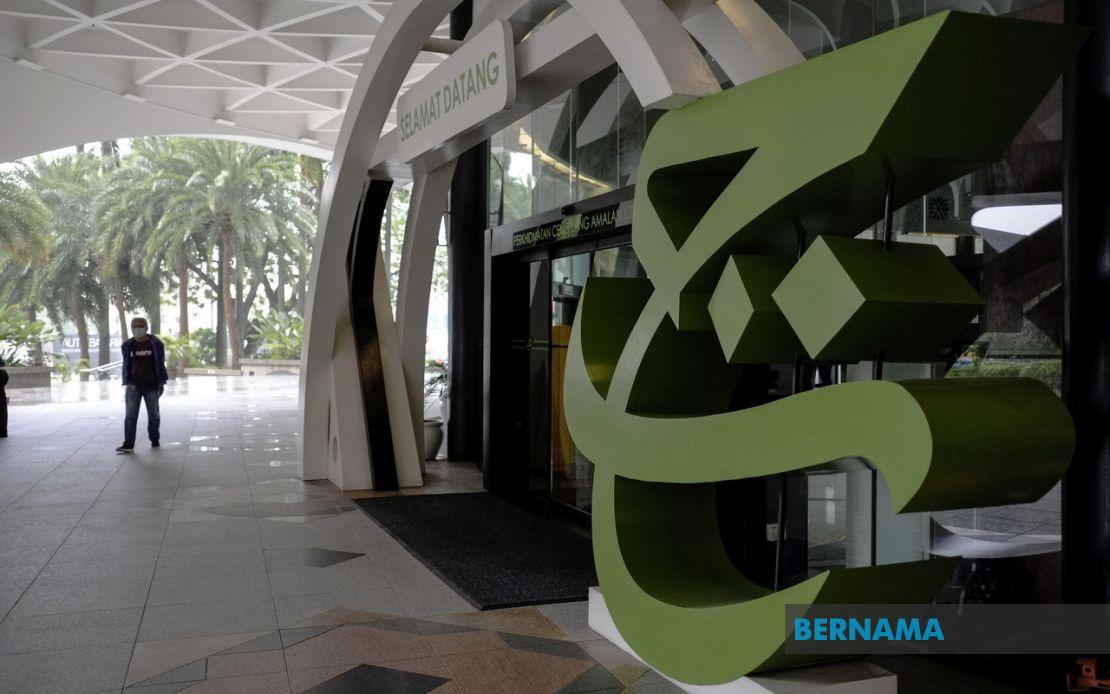
Tabung Haji, the Malaysian Islamic pilgrim fund, has made substantial progress in recovering from a significant financial crisis that threatened the institution's ability to serve over 9 million members seeking to perform the hajj pilgrimage. A fully declassified Royal Commission of Inquiry report released in August confirms that the fund's comprehensive restructuring and recovery plan has successfully restored its financial position after grappling with RM12.6 billion in investment losses that came to light in 2015. The findings represent the first comprehensive official assessment of how far the institution has come since implementing emergency measures nearly a decade ago.
The recovery operation was executed in two phases. Under the 2018 Recovery Plan, RM10 billion of the accumulated losses were directly addressed through government intervention, while the remaining RM2.6 billion was progressively resolved through to the end of 2025. This dual-track approach allowed Tabung Haji to continue its core pilgrimage operations while systematically working through the crisis. The deliberate timeline reflected the reality that such a large financial restructuring could not be rushed without risking further damage to the institution's credibility among the Muslim community it serves.
The government and Tabung Haji leadership have completed approximately 75 percent of the recommendations issued by the Royal Commission, demonstrating measurable commitment to institutional reform. The remaining quarter of recommended measures are now being prioritized for implementation, with officials pledging to accelerate this process. These outstanding recommendations focus primarily on three interconnected areas: strengthening corporate governance structures, enhancing investment discipline and risk management protocols, and establishing clearer regulatory oversight to prevent similar crises from recurring. For Malaysian depositors and the wider Southeast Asian Islamic finance sector, this shows movement toward preventing a repeat of what many analysts regard as a governance failure rather than merely a market downturn.
The tangible results of the recovery efforts are evident in Tabung Haji's operational performance. Last year, the fund's investment income reached RM4.64 billion, marking the highest annual returns achieved since 2018 and approaching levels seen before the original financial difficulties emerged. This recovery in earnings capacity has enabled the institution to begin rebuilding confidence among its depositors. The improvement reflects both stabilized underlying assets and more disciplined investment decision-making, suggesting that management has internalized lessons from the losses.
A cornerstone of the recovery strategy involved transferring underperforming and problematic assets to Urusharta Jamaah Sdn Bhd (UJSB), a government-created special purpose vehicle designed to absorb distressed holdings. This transfer totaled RM19.9 billion in book value, though the assets' market value at the time was approximately RM9.7 billion—a difference that represented a RM10.2 billion premium paid by the government to shield Tabung Haji's balance sheet. While this arrangement successfully isolated troubled assets from the main institution, it also created contingent liabilities that depend on sustained government financial capacity and commitment.
Yet the Royal Commission has cautioned that while the recovery plan achieved its immediate objective of stabilizing Tabung Haji's finances, it should not be mistaken for a permanent solution addressing all underlying structural weaknesses. The commission identified several critical areas requiring continued attention, particularly the adequacy of corporate governance frameworks, the relevance of the original Tabung Haji Act 1995 in today's financial environment, and the sophistication of risk management controls across investment operations. These institutional weaknesses, the commission argued, create conditions where similar accumulation of losses could theoretically recur unless addressed comprehensively.
A significant vulnerability flagged by the commission concerns the financial commitments supporting UJSB's sukuk issuances, which were backed by government letters of support and carry annual profit rates of 4.05 percent and 4.10 percent. The commission expressed concern about whether the government can sustainably service these obligations and provide the annual cash allocations previously committed by the Cabinet. Should the government face fiscal constraints in future years, its ability to maintain these payments could be compromised, potentially forcing Tabung Haji to declare profit distributions to depositors without adequate underlying cash resources—a scenario that would signal renewed distress.
Tabung Haji has begun carefully reacquiring some assets from UJSB, with transactions demonstrating that asset values have stabilized since the original transfer. In 2024, the fund repurchased land at Tun Razak Exchange for RM270 million, substantially below its original transfer price of RM400 million, and acquired the UJ Estates oil palm plantation for RM695 million, similarly below the RM800 million initial transfer price. These repurchases signal confidence that asset values have recovered sufficiently to justify bringing holdings back into the main fund, though they also reveal that the initial transfer prices embodied a government subsidy to enable the restructuring.
Improvement in depositor returns has accompanied the financial stabilization. The annual profit distribution rose from 1.25 percent in 2018—a devastating figure that threatened to undermine public confidence in the fund—to 3.25 percent in 2024 and 3.5 percent in the current year. While these returns remain modest compared to pre-crisis levels, they represent substantial progress in restoring depositor value. However, these distributions have been calculated after accounting for RM2.6 billion in impaired assets that could not be transferred to UJSB at the end of 2018 due to specific contractual or legal complications, meaning the reported returns reflect realistic accounting rather than optimistic estimates.
For Malaysian policymakers and the wider Islamic finance industry across Southeast Asia, the Tabung Haji case demonstrates both the possibility of recovery from severe institutional crises and the necessity of ongoing vigilance. The fund now claims significantly strengthened financial positioning and has begun accumulating reserves intended to support long-term sustainability. However, the Royal Commission's final conclusion emphasizes that sustained reforms in governance, regulation, and risk management remain non-negotiable requirements for safeguarding the institution's future resilience. The implicit message is clear: financial recovery alone is insufficient without institutional transformation that addresses the original governance failures that allowed losses to accumulate undetected for years.

