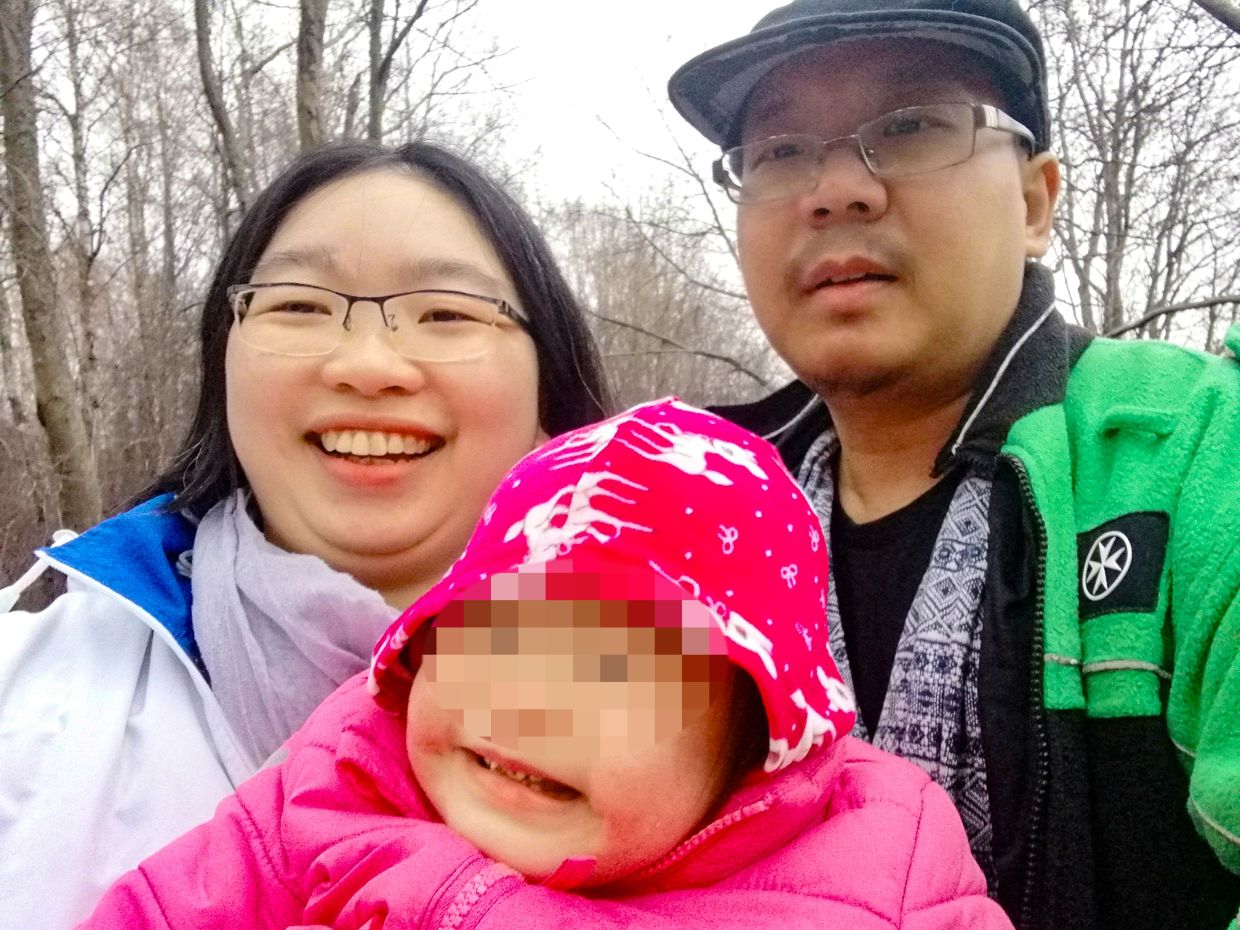
A Swedish court has closed off a final legal avenue for a Hong Kong couple seeking to overturn a guardianship order that would transfer their four-year-old daughter, Lily, to her foster parents. The court's June 10 ruling effectively blocked Tsang and Kwan's ability to challenge the Social Welfare Committee's application, determining that judicial review of social welfare decisions falls outside the court's jurisdiction. The couple must now await a formal pronouncement from authorities before any further legal action becomes possible, leaving their custody prospects in legal limbo.
The Swedish Social Welfare Committee had issued its formal recommendation on June 3, asserting that Lily required protection from what it characterised as a "rootless and insecure existence" under her biological parents' care. The committee's language was uncompromising, emphasising that the child deserved a home defined by "warmth, routines, predictability and safety." Officials noted that Tsang and Kwan had demonstrated neither willingness to engage with nor understanding of their daughter's fundamental needs, making continued assessment of their parenting fitness necessary before any custody reconsideration could occur. The girl, who has lived with her designated foster family since May 2024, would be officially assigned to them as "specially appointed legal guardians" if the court approved the committee's application.
The trajectory of this family's legal troubles reveals a pattern of compounding crises stretching across multiple jurisdictions and years. Lily was born at home in Finland in October 2021, the couple's second child. Their first daughter, born at home in 2019, died at one month old, which prompted Finnish authorities to investigate the parents for alleged negligence. When authorities declined to register Lily's birth—partly because her parents' permanent residence was listed as Hong Kong rather than Finland—the family relocated to Sweden, hoping for a fresh start.
That relocation, however, produced fresh complications. Swedish police arrested both parents on suspicion of money laundering, and as investigations proceeded, Lily was placed under social welfare protection in December 2023. Although the money laundering allegations were eventually dropped, the guardianship dispute persisted, driven by the welfare committee's accumulated concerns about the parents' capacity to provide a stable environment. What began as a criminal matter thus transformed into a child protection matter, with Swedish social services proceeding on grounds entirely separate from the fraud investigation.
In the interim, Tsang and Kwan took to social media, launching a "Save Lily" campaign page where they posted family photographs and supporting documents aimed at mobilising public sympathy for their cause. The strategy reflected their desperation, as conventional legal remedies proved unavailing. Tsang subsequently told media that the Swedish court's refusal to entertain their challenge felt particularly unjust, saying officials "did not even allow us the opportunity to challenge its irrationality." The phrasing captured a family's sense of being locked out of the judicial process itself, unable even to present arguments to a judge.
Yet the couple's travails have not been confined to Sweden. After returning to Hong Kong, they had another home birth and welcomed a baby boy, Danny, earlier this year. This most recent child presented a fresh flashpoint with authorities. Hong Kong's Birth Registry refused to register Danny without DNA evidence confirming the parents' biological relationship to the infant—a standard requirement the couple resisted submitting. That refusal triggered intervention by the Department of Health and social services, resulting in Danny's placement under the care of the Social Welfare Department despite his parents' release on bail.
The situation surrounding Danny introduces a critical parallel to Lily's case while also suggesting potential vulnerabilities in the couple's current standing with Hong Kong authorities. Whether Tsang and Kwan can eventually regain custody of their three-month-old son hinges on social workers' further assessment of their parenting capabilities and the Hong Kong court's judgment, scheduled for hearing later this month. The couple's repeated pattern of home births without timely registration, compounded by their resistance to standard administrative procedures, has raised red flags with authorities across two countries, prompting interventions framed around child welfare rather than parental rights.
Recently, the couple brought Danny, under government social worker supervision, to a Department of Health maternal and child health centre for medical examination. The assessment found no physical irregularities, a modest positive development. Yet this clinical clearance addresses only one dimension of child welfare; the court's forthcoming decision will weigh the broader question of whether the parents can provide the stable, secure home environment that social welfare systems across Scandinavia and Asia consider non-negotiable.
The broader significance of this case extends beyond one family's personal tragedy. It illustrates the tension between parental rights and child protection mandates, particularly when families navigate multiple legal jurisdictions with differing standards and procedures. For Hong Kong readers and others across Southeast Asia where home births and alternative healthcare choices carry their own regulatory complexities, the case underscores how resistance to standard registration and documentation processes can cascade into profound legal consequences. The Swedish system's decision to prioritise the child's established stability with foster parents over the biological parents' claims reflects a philosophy of child welfare that prioritises continuity and security over biological connection alone—an approach increasingly common in developed welfare states but one that raises difficult questions about parental rehabilitation and second chances.

%22%2F%3E%3C%2Fpattern%3E%3C%2Fdefs%3E%3Crect%20width%3D%22100%25%22%20height%3D%22100%25%22%20fill%3D%22url(%23ph21o2sg)%22%2F%3E%3Crect%20width%3D%22100%25%22%20height%3D%22100%25%22%20fill%3D%22url(%23ph21o2sp)%22%2F%3E%3Ctext%20x%3D%2250%25%22%20y%3D%2250%25%22%20text-anchor%3D%22middle%22%20dominant-baseline%3D%22central%22%20fill%3D%22rgba(255%2C255%2C255%2C0.95)%22%20font-family%3D%22Georgia%2C%20'Times%20New%20Roman'%2C%20serif%22%20font-weight%3D%22700%22%20font-size%3D%22170%22%20letter-spacing%3D%22-0.02em%22%3EGabungan%3C%2Ftext%3E%3C%2Fsvg%3E)