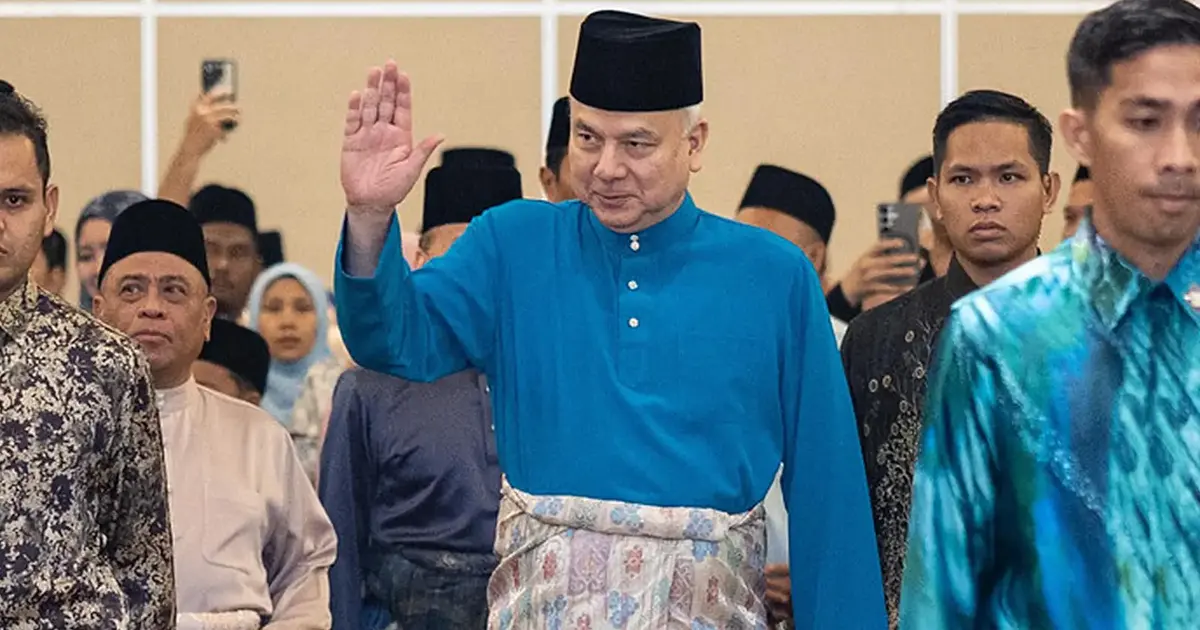
Sultan Nazrin Shah, the Deputy Agong, has delivered a pointed reminder to those in positions of authority that steering a nation requires measured judgment rather than reactionary impulse. In remarks addressing the broader governance landscape, the royal figure underscored that the trajectory of any country ultimately rests not with individual leaders alone, but with the collective will of its population to function as an integrated whole.
The Deputy Agong's caution against emotional and impulsive decision-making carries particular weight given Malaysia's complex political terrain. Over recent years, the nation has witnessed several instances where rapid policy shifts or unexpected political manoeuvres have generated uncertainty among citizens and investors alike. His intervention suggests growing concern within the institution of the monarchy about the need for institutional stability and thoughtful deliberation in matters of state.
At the heart of Sultan Nazrin's message lies an assertion that national prosperity cannot be achieved through unilateral action or decisions made in the heat of the moment. Rather, he has positioned cooperation as the cornerstone of sustainable development. This framing aligns with constitutional principles enshrined in the Federal Constitution, which emphasises the social contract binding the diverse population of Malaysia together. The Deputy Agong's statement effectively reinforces the idea that Malaysia's strength derives from its ability to balance competing interests while maintaining social cohesion.
The emphasis on mutual respect forms another pillar of his address. In a multiethnic, multireligious nation where communal relations have occasionally been tested by inflammatory rhetoric or divisive policies, the call for respect across societal divides carries evident relevance. Such sentiment echoes traditional constitutional safeguards and the foundational philosophy underpinning Malaysia's independence, yet its repetition by a senior royal figure suggests ongoing concerns about whether these principles remain adequately reflected in contemporary governance.
Harmony, the third element cited by Sultan Nazrin, extends beyond mere absence of conflict. It implies an active commitment to creating environments where diverse groups can coexist productively, where economic opportunities can be broadly shared, and where institutions function with integrity. The Deputy Agong's invocation of this concept addresses not merely political leaders but implicitly calls upon civil society, the private sector, and ordinary citizens to participate in building and maintaining such conditions.
The timing of these remarks warrants consideration within Malaysia's broader political context. The nation continues navigating post-pandemic economic recovery, managing inflationary pressures, and addressing persistent concerns about institutional credibility. In this environment, calls from the monarchy for reasoned governance take on heightened significance, as they signal institutional concern about the direction of public affairs without entering the realm of partisan politics.
Sultan Nazrin's position as Deputy Agong carries constitutional weight, though it differs from the direct executive authority exercised by the Prime Minister or state governments. Nonetheless, the monarchy in Malaysia retains considerable moral and constitutional authority, and interventions from senior royal figures often represent attempts to shape the broader climate within which political actors operate. His warning about emotional decision-making may be directed toward various constituencies—ministers and officials who implement policy, politicians who craft legislation, or even the broader public discourse that influences political behaviour.
The reference to citizens' willingness to cooperate and live harmoniously shifts emphasis from leaders to the population itself. This framing acknowledges that governance effectiveness depends partly on public compliance and social trust. When citizens lose confidence in institutions or when communities become polarised, even well-intentioned policies struggle to achieve intended outcomes. Conversely, where populations demonstrate commitment to common purposes and mutual accommodation, governments can more effectively implement their agendas.
For Malaysia specifically, this message resonates with longstanding constitutional commitments to unity in diversity. The social contract established at independence presumed that different ethnic and religious groups would negotiate outcomes benefitting the broader whole rather than maximising zero-sum advantages for particular communities. Contemporary Malaysia has often struggled to sustain this balance, with periodic episodes of communal tension and accusations that specific groups receive unfair treatment. Sultan Nazrin's call for renewed emphasis on cooperation and respect implicitly asks political actors to recall these founding principles.
The implications for Southeast Asia more broadly warrant note as well. Many nations in the region face similar challenges: managing ethnic and religious diversity, balancing development ambitions with social stability, and maintaining institutional integrity amidst populist pressures. The Deputy Agong's reminder that emotional governance proves counterproductive offers a cautionary tale relevant far beyond Malaysia's borders, particularly for democracies where political competition can sometimes incentivise inflammatory rhetoric over deliberative problem-solving.
Moving forward, Sultan Nazrin's intervention establishes a benchmark against which future governmental decisions can be evaluated. Should leaders proceed with policies appearing driven by moment-to-moment political calculations rather than long-term strategic thinking, his words will likely resurface in public discourse as reminders of alternative approaches. Conversely, instances where leaders demonstrate restraint, seek consensus, and emphasise institutional stability will be highlighted as exemplifying the royal's vision of responsible governance.
The Deputy Agong's statement ultimately constitutes both a diagnosis and a prescription. The diagnosis suggests that contemporary governance exhibits tendencies toward impulsive action that undermine national interests. The prescription calls for renewed commitment to cooperation, respect, and harmony as active rather than passive virtues. Whether political actors heed this counsel will substantially determine whether Malaysia can sustain the social peace and institutional stability necessary for navigating present challenges and future opportunities.

%22%2F%3E%3C%2Fpattern%3E%3C%2Fdefs%3E%3Crect%20width%3D%22100%25%22%20height%3D%22100%25%22%20fill%3D%22url(%23ph21o2sg)%22%2F%3E%3Crect%20width%3D%22100%25%22%20height%3D%22100%25%22%20fill%3D%22url(%23ph21o2sp)%22%2F%3E%3Ctext%20x%3D%2250%25%22%20y%3D%2250%25%22%20text-anchor%3D%22middle%22%20dominant-baseline%3D%22central%22%20fill%3D%22rgba(255%2C255%2C255%2C0.95)%22%20font-family%3D%22Georgia%2C%20'Times%20New%20Roman'%2C%20serif%22%20font-weight%3D%22700%22%20font-size%3D%22170%22%20letter-spacing%3D%22-0.02em%22%3EGabungan%3C%2Ftext%3E%3C%2Fsvg%3E)