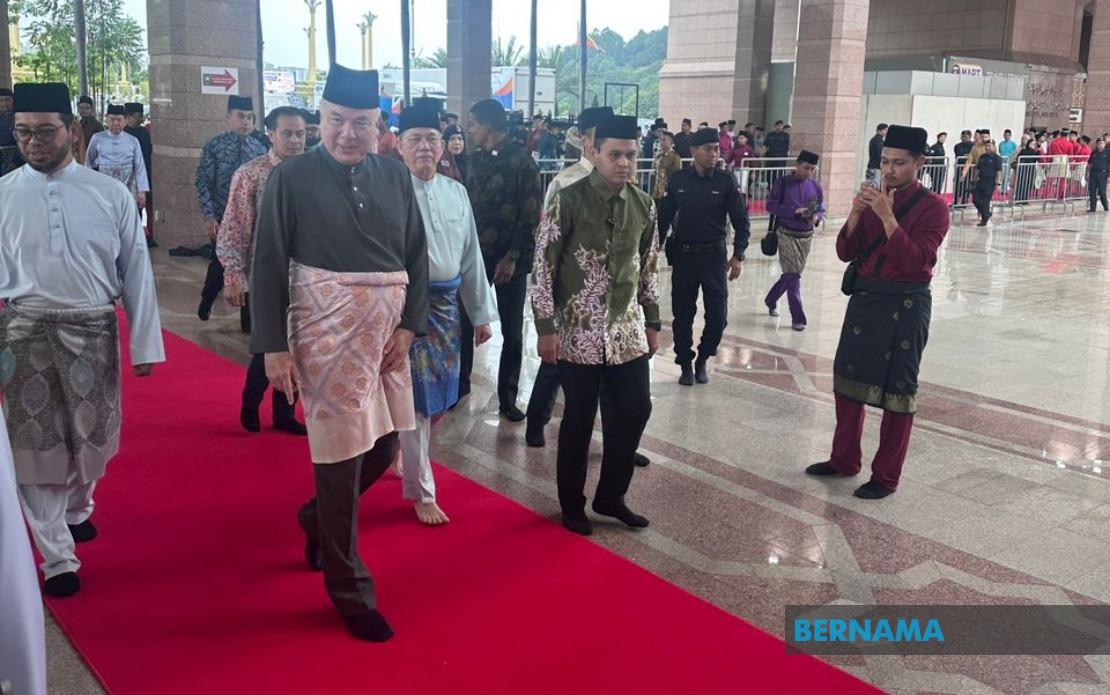
During the National Level Maal Hijrah 1448 Celebration at the Putra Mosque in Putrajaya on June 17, Deputy Yang di-Pertuan Agong Sultan Nazrin Shah delivered a forceful address on the perils of impulsive leadership and the virtues required to guide a nation through turbulent times. His intervention came as Malaysia continues to grapple with complex political and economic challenges that demand measured responses from those in authority. The event, which drew approximately 5,000 attendees and carried the theme "MADANI Dihayati, Ummah Diberkati," provided a platform for the royal to articulate a vision of governance rooted in Islamic principles and practical wisdom.
The Sultan directed his remarks squarely at the country's leadership establishment, emphasising the considerable damage inflicted when decision-makers allow emotions and personal sentiment to override rational judgment. He articulated a concern that appears increasingly relevant in contemporary Malaysian politics: the tendency of leaders to prioritise immediate political gain or personal advantage over the sustainable welfare of the nation. Such behaviour, he suggested, inevitably transfers the burden of poor governance onto ordinary citizens who bear the actual costs of recklessness. The implication was clear—those in positions of authority carry a profound responsibility to think beyond the next news cycle or election campaign.
Speaking to the importance of deliberative governance, Sultan Nazrin emphasised that composure, transparency, and circumspection must anchor all significant decisions. Leaders must ground their choices in thoroughly researched information and considered judgment rather than reactive impulses. This philosophy stands in stark contrast to the fragmented, often emotionally charged nature of contemporary political discourse, both in Malaysia and across Southeast Asia. The Sultan's intervention suggests that without a return to principles of careful thought and measured response, governments risk losing the confidence of their populations and undermining institutional stability.
The Deputy Ruler drew instructive parallels from Islamic history to reinforce these principles. The figure of Abdullah bin Uraiqit, who served as guide during the Hijrah despite not being Muslim at the time, illustrated an important lesson: Islamic governance has historically valued competence, integrity, and reliability above all else, regardless of sectarian considerations. This reference carries particular resonance for Malaysia, a multi-religious federation where institutional effectiveness depends upon merit and trustworthiness transcending narrow religious or communal boundaries. The example suggests that effective governance requires moving beyond parochial thinking to embrace broader criteria of excellence and ethical conduct.
Beyond the mechanics of decision-making, Sultan Nazrin articulated a broader philosophical concern about the spiritual and moral condition of the nation. He lamented what he characterised as a declining spirit of sacrifice within the Muslim community, a quality he identified as foundational to every significant achievement. The Sultan distinguished between genuine sacrifice—the willingness to subordinate personal comfort and interest to collective good—and the largely rhetorical invocations of sacrifice that dominate political discourse. This distinction carries immediate relevance for Malaysian society, where social cohesion increasingly depends upon citizens' willingness to compromise and work toward shared objectives despite competing interests.
The concept of sacrifice, as articulated by Sultan Nazrin, encompasses more than material loss. It requires courage, perseverance, and an unflinching commitment to principles beyond momentary advantage. In the Malaysian context, this formulation challenges both individual citizens and collective institutions to transcend narrow self-interest. The Sultan's concern that this spirit is becoming "increasingly rare and, at times, merely rhetorical" reflects an observation about contemporary culture that extends well beyond Malaysia's borders. The erosion of genuine commitment to collective welfare in favour of performative gestures represents a genuine threat to social stability.
The Sultan also invoked the historical example of the Medina Charter as a template for contemporary unity and governance. This seventh-century document successfully harmonised the interests of diverse communities—Muslims, Christians, and Jews—through principles of tolerance and equitable administration. The parallel to modern Malaysia is unmistakable: a nation comprising multiple religious and ethnic communities requires institutional frameworks and leadership approaches that genuinely accommodate diversity rather than merely tolerating it. Sultan Nazrin's emphasis on just and wise governance as the foundation for such unity suggests that institutional legitimacy depends upon fair treatment and transparent decision-making, not merely formal compliance with legal structures.
The celebration of Maal Hijrah itself, according to Sultan Nazrin, should function as far more than a calendar commemoration or nostalgic reflection on distant history. Rather, it represents an occasion for critical national self-examination, a moment when citizens and leaders alike should assess past mistakes and their underlying causes. This invitation to self-reflection has particular salience in Malaysia, where political polarisation and social divisions have intensified in recent years. The Sultan's framing suggests that genuine progress requires honest evaluation of what has gone wrong and determination to pursue different approaches, guided by established Islamic principles and practical wisdom.
The Ruler's intervention also carries implicit criticism of a contemporary tendency toward what might be termed historical escapism—the pretence that looking backward to golden ages offers solutions to present challenges. Instead, Sultan Nazrin advocates extracting lessons from history while maintaining focus on building a stronger future. This forward-oriented perspective, grounded in ethical principles, offers a counterweight to both utopian fantasies and cynical despair about Malaysia's trajectory. It posits that national improvement remains possible through adoption of wiser governance approaches and restoration of the sacrificial spirit necessary to implement necessary changes.
The attendance of Deputy Prime Minister Datuk Seri Fadillah Yusof and Minister in the Prime Minister's Department (Religious Affairs) Dr Zulkifli Hasan at the Putrajaya event ensured that the Sultan's remarks reached senior levels of government. Whether such high-level attendance reflects genuine receptiveness to the royal critique or represents merely ceremonial acknowledgment remains to be observed through subsequent government decisions and policy directions. The coming months will reveal whether Malaysia's leadership takes seriously the Sultan's call for more thoughtful, sacrifice-oriented, and unity-focused governance or whether the established patterns of reactive decision-making and narrow self-interest persist.
Ultimately, Sultan Nazrin's address articulates a vision of national leadership and citizenship grounded in Islamic ethics and practical wisdom. For Malaysia and its Southeast Asian neighbours, the challenge lies in translating such principles into institutional practice. The Sultan's emphasis on careful deliberation, genuine sacrifice, inclusive unity, and honest self-reflection offers a template for governance that could address many of the region's contemporary challenges. Whether politicians and citizens prove willing to embrace such an exacting standard remains the fundamental question shaping Southeast Asia's political future.

%22%2F%3E%3C%2Fpattern%3E%3C%2Fdefs%3E%3Crect%20width%3D%22100%25%22%20height%3D%22100%25%22%20fill%3D%22url(%23ph21o2sg)%22%2F%3E%3Crect%20width%3D%22100%25%22%20height%3D%22100%25%22%20fill%3D%22url(%23ph21o2sp)%22%2F%3E%3Ctext%20x%3D%2250%25%22%20y%3D%2250%25%22%20text-anchor%3D%22middle%22%20dominant-baseline%3D%22central%22%20fill%3D%22rgba(255%2C255%2C255%2C0.95)%22%20font-family%3D%22Georgia%2C%20'Times%20New%20Roman'%2C%20serif%22%20font-weight%3D%22700%22%20font-size%3D%22170%22%20letter-spacing%3D%22-0.02em%22%3EGabungan%3C%2Ftext%3E%3C%2Fsvg%3E)